Showing posts with label Psychology. Show all posts

Sunday, September 15, 2013

Psychology of Sustainable Behavior

It's a tough balance in offices trying to move towards institutional changes in sustainability. There are often many changes that occur, regardless of how the occupants consume. Higher efficiency heating and cooling equipment, or renewable energy sources can reduce our overall environmental impacts without changing our daily lifestyles. It is also a quick way to reduce our environmental footprints.

But, on the other hand, there is something to be said about the individual initiative to reduce our own consumption levels. While seemingly not as quick and impactful, there is always a place for small scale changes. And, one of the biggest misconceptions about individual behavior changes towards sustainability is that our individual actions are too small to make an impact.

Christie Manning, Assistant Professor of Environmental Studies and Psychology at Macalester College, has investigated this topic in a recent paper, "The Psychology of Sustainable Behavior" (Minnesota Pollution Control Agency, 2009). She discusses why we are not always rational decision makers, and that despite a lot of evidence backing man-made climate change and the need to reduce global levels of greenhouse gas emissions, many of us don't take action.

Her paper explains that while we have a rational side that understands rules and logic, there is also an associative side that works in parallel with the rational. This side is the one that takes cues to other, non-rational, associations we might have for any image, object, idea, or words. For example, she discusses the idea of biking to work. While the benefits of lowered transportation costs, and exercise appeal to the rational side, there is always the side that reacts badly to the thought of helmet-hair or coming into work sweaty. While quantification points towards biking, there is another, more personal side to us that just doesn't want to.

This happens almost everywhere. I find myself printing out articles to read so I can take notes, even though I am fully capable of this digitally on my computer. On days when I am in a rush, I find myself forgoing the reusable shopping bag, or my coffee mug, for the disposable versions. So, Manning offers some seven suggestions, based on psychological studies.

Tip 1: "Make sustainable behavior the social default"

This is already true in the Netherlands, where curbside composting is as common as recycling for us. Don't let anyone see you throw it into a garbage bin instead of the compost bin, as neighbors are known to find it socially objectionable if you don't compost. To establish this type of social default, Manning suggests communicating that there is social proof. You may not need to show that the whole country is doing it, but you can give evidence that a large group of people are "being green." In addition, being able to show off sustainability is also a part of the social default. Being able to demonstrate that you are, like many others, acting sustainably, helps positively reinforce behaviors and encourage more of it.

Tip 2: "Emphasize personal relevance"

Rather than referring to the abstract environment or polar bears, the key to creating individual change is to make it relevant to that individual. And, unless they have a pet polar bear, or are personally invested in the icebergs in the North Pole, messages about these abstract issues are not going to hit home. Instead, issues must be catered to the individual's worldview, and their location. This requires determining who your audience is, what matters to them, and how to frame the issue in a way that is significant to them.

Tip 3: "Make hidden information visible"

This doesn't mean that the challenges of climate change should not be conveyed to people. Making this type of abstract information understandable to people can also be an important factor. There are many graphic designers, artists, and other industries that try to overcome perceptual barriers. Chris Jordan's photography captures ideas of waste and consumption in his mosaics. Also, this type of communication can be used as a feedback system, giving people updates about their progress, and helping motivate continual action.

Tip 4: "Foster mindfulness"

The fourth tip is to "foster mindfulness." Awareness of what is going on around makes the decision towards sustainable behavior much more lasting. For example, understanding that there are vampire loads to appliances left plugged in, even when in standby , can help people make the conscious decision to turn off, or even switch off appliances at the power strip.

Tip 5: "Create opportunities for competence, skills, and knowledge"

According to Manning, people are more drawn to activities that they feel they have autonomy and knowledge about. Thus, hands-on approaches, and letting people try strategies , or conveying effective strategies to people can help give a clear sense of direction when they are faced with a decision in the future. For example, the MetroTransit offers a bike rack test station at the Minnesota State Fair, and at St. Paul office. Users who might have been intimidated to use the bus bike rack when faced with traffic, an impatient bus driver, and a bus-full of people eager to get to their destinations, can now try out how to secure the bike and release the racks, without all the pressure. This allows one less barrier to get in the way of biking somewhere.

Tip 6: "Make change a byproduct of other events"

This tip is based on our habit-prone human natures. Making sustainable behavior something that you must opt-out of, rather than opt-in to, can make the sustainable behavior the habit. Alternately, when we do change major elements of our lives, such as job changes, or moves, it is a good time to intervene and propose other changes. For example, the last time I moved, I received a coupon book with cleaning supplies. Since I was in flux and had nothing at the time, I opted to get what the coupons indicated. If chemically-benign and safer cleaning agents were introduced at the time, I'd likely have gone for those options instead.

Tip 7: "Balance urgency with realistic hope"

The doomsday threats and constant message of having to change, or else…. has the potential to move people to gravitate towards inaction. Manning suggests goals that seem achievable. This can be done by establishing goals that people can tackle on a daily basis, instead of goals of saving the world. These incremental goals should also be expressed as such, in smaller portions, over time. For example, most goals for sustainability are set in stages - 10% reductions by 2015, followed by 30% reductions in 2030. Phasing helps make the goal seem much more achievable, and gives people small wins to feel motivated to continue.

Many of these suggestions seem like common sense - why wouldn't we present information that is relevant to the audience? However, despite the simplicity, there are often many cases where it is not done. With so many audiences in the sustainability realm, many reports and studies attempt to appeal to all of them with the most data and the most chapters possible, hoping one will stick. However, the result is that not many of the general public are captured with these types of data-filled reports. Even when presented with scientific data, from an expert that has spent years studying and understanding climate science, people are still doubtful. Thus, taking Manning's suggestions to heart, and carefully constructing audience analysis, and establishing goals and messages that will inspire people rather than turn them off to sustainability will be an important next-step in our Institutional Sustainability project.

Sources:
Manning, Christie. (Sept. 2009) "The Psychology of Sustainable Behavior." Minnesota Pollution Control Agency. Full report found at http://www.pca.state.mn.us/index.php/topics/preventing-waste-and-pollution/sustainability/sustainable-communities/psychology-of-sustainable-behavior-report.html

Source:http://blogs.mnhs.org/node/73

Wednesday, October 3, 2012

Psychology of Sustainability series on Urban Times


Psychology Of Sustainability

Let's get to the bottom of how our behaviors and related thoughts, whether as an individual or group, directly influence long term sustainability on a scale that includes areas of technology, policy, economics, community, and beyond. Informed by the reasearch publication, The Psychology of Sustainable Behavior, four Urban Times minds from different walks of life come together to think about and engage us in discussion of one of the biggest and most relevant complex issues of our time. Join us and share your own experiences.
c

Psychology of Sustainability – An Introduction

Sustainability. Everyone has heard the word. It is one of the hot terms of the day. But what does it mean? Here we will explore the subject from all angles, looking for answers to the questions that trouble our world. »
by NICOLAS SAMPSON editor on 19th Sep 2012

myanmar nun

Measuring What Matters: The Happy Planet Index and More

In July of 2006, Nic Marks, the founder of the Centre of Well-Being at the nef (new economics foundation), published a report that quickly went viral. It was called the »
2 days ago by CAROLYN BRAJKOVICH
Earth_seen_from_Apollo_17

A Macro Perspective on the Psychology of Sustainability: Optimism vs. Realism

All of our individual actions add up to impact the planet on a macro scale. Meanwhile, natural events, policies, philosophies and human nature itself drive behavior at »
6 days ago by RYAN KAPSAR
humpback_whale_margaret_river

The Unpredictable Side of Sustainability

In many ways, sustainability is about the long term. It is rarely ever about quick fixes or sudden glimmers of inspiration. However, there are times that a small group of vocal people do some amazing things despite »
by RYAN KAPSAR on 25th Sep 2012
(CDC) Public Health Library and Information Center (PHLIC) in Atlanta, Georgia

Views From Big Windows Affect Small Windows

There are big problems, and then there are BIG problems. Looking around at what we’re doing to our planet, it’s easy to see that we’re now living in the middle of quite a few very big problems. How do we save our »
by CAROLYN BRAJKOVICH on 19th Sep 2012
Photo courtesy of reallyboring at flickr.com
I shall refract myself, yes, I shall no longer be known as the prism – Bruce Dickenson

Green Feedback Loop: The People’s Kaleidoscope – Part 1

I shall refract myself, yes, I shall no longer be known as the prism – Bruce Dickenson The kaleidoscope. It is a delightful child’s toy full of fascination and »
by EVE ALLEASE editor on 19th Sep 2012

Thursday, August 18, 2011

The Psychology of Social Change: Nick Cooney's Change of Heart

Especially as new advocates for social change, we expect that it's only a matter of people learning the truth about an issue before they change their habits and choices. And then we learn that's not necessarily so. Case in point: The more global climate change is in the news, the fewer people who seem to actually care that it's an important issue or believe that it's human-caused. Social psychologists have been studying the choices, habits and motivations of people for decades, and they're discovering that it's neither straightforward nor simple.

There have been quite a few books published recently about the psychology of change, motivation, and choices. One that all humane educators and advocates for social change should read is Change of Heart: What Psychology Can teach Us About Spreading Social Change by Nick Cooney.

If you've read books by Dan Ariely or Daniel Pink or the Heath brothers, you'll recognize most of the studies and examples included in Cooney's book. But Cooney doesn't just hash out relevant research; he offers specific examples of what activists might want to do differently and the approaches that might be most effective for spreading social change.

I was going to write a review of Cooney's book, but then I discovered how many wonderful bloggers have already written about him; so I'm going to share a couple those instead.

Erik Marcus of Vegan.com and Jasmin Singer of Our Hen House both do a great reviews of Cooney's book from an animal advocacy perspective.

SocialBrite has an excerpt from Nick's book about the power of using social networks and connectors for positive social change.

And, Mercy for Animals did a nice brief interview with Cooney (most of the reviews have been from animal advocacy organizations so far, even though the book offers ideas for social changers of all stripes.)

Grab the book and a highlighter (unless it's from the library, then skip the highlighter) and settle down for some fascinating and useful reading.

~ Marsha
http://humaneconnectionblog.blogspot.com/2011/01/psychology-of-social-change-nick.html

Friday, April 9, 2010

On Closing the Culture Gap


 by Paul Ehrlich / April 8, 2010

Climate change, biodiversity loss, nuclear conflict—all are caused by human activity. We need a way to reorganize and refocus the sciences and humanities with a “Millennium Assessment of Human Behavior.”

Many are aware that climate disruption may cause horrendous problems, but few seem to realize that this peril is not the only potentially catastrophic one and may not even be the most serious threat we face. Humanity finds itself in a desperate situation, but you’d never know it from listening to the media and the politicians. Loss of the biodiversity that runs human life-support systems, toxification of the planet, the risk of pandemics that increase in lockstep with population growth, and the possibility of nuclear resource wars all could be more lethal. We are finally, however, starting to understand the patterns of culture change and the role of natural selection in shaping them. And since everything from weapons of mass destruction to global heating is the result of changes in human culture over time, acquiring a fundamental understanding of cultural evolution just might be the key to saving civilization from itself.

The change will begin with clearing up the misapprehensions; even climate disruption, for instance, is widely misunderstood. Sea-level rise, displacing tens of millions of people, may be the least of it. Changing patterns of precipitation, which likely will be continuous over the next millennium, will make vast problems for agriculture. So will the melting of mountain snows and glaciers that are so critical to the flows of water upon which food production depends. Furthermore, the temperature sensitivity of crops and impairment of natural pest controls will make maintaining crop yields in many areas ever more difficult. Melting of the Himalayan “water tower” (the ice and snow on those mountains and on the Tibetan plateau), combined with reduced productivity of wheat and rice, now imperils the nutrition of some 1.6 billion nuclear-armed people in south Asia. Worldwide, we face the possibility of today’s billion hungry people becoming several billion starving to death.

To help avert such an outcome, humanity must revise civilization’s water-handling infrastructure for maximum flexibility. And that could be a minor chore compared with the necessary restructuring of the world’s energy economy in the next few decades, or addressing the racism, sexism, and economic inequity that make environmental problems so difficult to solve in the first place.

Educated people generally realize that humanity’s negative impacts on our life-support systems are tightly tied to population size; for instance, the more people, the more greenhouse gases are added to the atmosphere. But few realize that the 2.5 billion people projected to be added to the human population by midcentury will have a much greater destructive impact than the last 2.5 billion. People are smart and therefore naturally use the most concentrated, highest-grade resources first. So each additional person must be fed from more marginal land, equipped with objects made of metal won from poorer ores, supplied with water from more distant sources or expensively purified, and so on. Similarly, while politicians and many economists believe that increasing consumption is the cure for all economic ailments, it is only because they do not understand that the human economy is a wholly owned subsidiary of nature’s economy. They have not yet learned that it is the aggregate consumption of Homo sapiens that is destroying our natural capital. They are unwitting victims of the culture gap.

For most of our species’ existence, all members of hunter-gatherer bands possessed virtually the entire body of their group’s non-genetic information—its culture. But since the agricultural revolution, and especially in the past century or two, that situation has changed completely. No living person knows even a billionth of the cultural information possessed by humanity. No reader of Seed could assemble a 747 from its parts, let alone tell how each part was manufactured, where, and from what. Of course, there’s no way to close that enormous culture gap now. But critical parts of it could be filled in, so that most people would know, for example, what an ecosystem service is, the difference between ozone depletion and climate disruption, the biological significance of skin pigmentation, and the importance of the second law of thermodynamics.

Scientists today believe that such critical information must be disseminated and quickly acted upon to avoid catastrophe. But that is not happening, as indicated by the “much talk, little action” status of climate change. The central need is clearly not for more natural science research (although in many areas it would be very helpful). Rather, the social sciences and humanities need to be reorganized and refocused—“rebooted”—to provide better understanding of human behaviors and how they can be altered. Our civilization must move toward the formation of a sustainable, empathic, global family. Its members must be able to cooperate intensively to deal with global problems before it is too late.

That’s why a group of natural scientists, social scientists, and scholars from the humanities decided to inaugurate a Millennium Assessment of Human Behavior (MAHB, pronounced “mob”). It was so named to emphasize that it is human behavior, toward one another and toward the ecosystems that sustain us all, that requires both better understanding and rapid modification. The idea is that the MAHB might become a basic mechanism to expose society to the full range of population-environment-resource-ethics-power issues, and sponsor research on how to turn that knowledge into the required actions. Perhaps most important, the MAHB would stimulate a broad global discussion involving the greatest possible diversity of people, about what people desire, the ethics of those desires, and which are possible to meet in a sustainable society. It would, I hope, serve as a major tool for altering the course of cultural evolution.

The MAHB would differ from other global efforts such as the IPCC and the Millennium Ecosystem Assessment in that public input and outreach would play a much more dominant role. Local MAHB discussion groups are already forming, and I hope that the MAHB will kick off with a world megaconference around 2012 on the scale of the United Nations Conference on Environment and Development that was held in Rio de Janeiro two decades earlier. The purpose of the MAHB conference would be to initiate a continuing global discussion, creating the MAHB as a new, semipermanent institution. The whole MAHB program is now at a preliminary stage, and the need for input from those accustomed to working in the social sciences and humanities, in the media, in the business community, in NGOs, as well as the general public, is obvious.

The really big MAHB issue is how to ethically reorganize global civilization and consciously reshape its norms so that humanity can transition to a sustainable and fair society. Finding convergence will be challenging: There are few ethical universals, and it is highly unlikely that many will be agreed upon soon, although most ethical systems do converge on some basic elements (for instance, murder and cheating are wrong).

We clearly need an international discussion of such contentious topics as the degree to which wealth should be redistributed from rich to poor, what people owe to future generations, or the kind of population-control programs that are ethically justified. Such discussions should involve not just “leaders” but as many diverse publics as possible. Humanity’s future hangs on finding broad agreement on such major eco-ethical decisions. One role of the MAHB would be to facilitate discussion and debate of those usually ignored topics. The MAHB could also serve as a rallying point for myriad organizations now fighting for environmental quality and social justice. The discourse would emphasize that our brilliant, dominant species has undermined its own life-support systems. It now faces a daunting array of self-generated threats, ones that the human family could cooperatively organize to fight and, with luck, overcome by avoiding the first collapse of a global civilization.

Paul R. Ehrlich is Bing Professor of Population Studies at Stanford University and president of Stanford’s Center for Conservation Biology.

Dr. Ehrlich hopes that MAHB can become the focus of badly needed new, coordinated efforts by social scientists, scholars in the humanities, members of the business community, and the media alike. If you are willing to get involved, go to the MAHB website.


Tuesday, March 2, 2010

The Psychology of Sustainable Behavior

The Psychology of Sustainable Behavior (2009)The Psychology of Sustainable Behavior: A handbook introducing research-based tips from psychology to help you in efforts to empower sustainability in your personal life, community, and workplace. (2009)

How does one bring about voluntary change? It requires an understanding of the complex, interacting factors that influence behavior. 

Psychology, the scientific study of human behavior, can provide valuable insight into these factors, and how they can be overcome. With the help of psychology, environmental programs can focus their resources on specific, cost-effective methods. Unfortunately, few people working directly on solving environmental problems are aware of the many psychological findings that could be helpful in shaping environmental programs. 

This handbook introduces research-based tips from psychology to empower sustainability in your personal life, community, and workplace. The recommendations are based on empirical research—many years of psychological studies and findings published in peer-reviewed academic journals. 

The handbook focuses on studies and findings most relevant to sustainability and sustainable behavior change. Tips for success are supported by research and specific recommendations.

Author: Christie Manning, Ph.D.

Wednesday, May 27, 2009

Emotional Intelligence


Emotional Intelligence

Search EQI.org

Emotional Intelligence Theory and Background

Developing and Using Emotional Intelligence

Developing aDnd Using Emotional Intelligence

Definition

History

Competencies, Skills and Intelligence

Ability, Skill, Potential

Conformity vs. Intelligence

Motivation, Conformity, and EI

EI and Fool´s Gold

War, Peace and EI

Emotional Intelligence Tests

Academic Issues

Listening

Understanding

Conflict Resolution

Feeling Words List

Emotional Awareness

Emotional Literacy

Emotional Honesty

How to Develop EI -- Top 10 Suggestions

EQ for Everybody Online Book

Empathy

Anger

Depression

Resentment


EQ FOR TEACHER

My Personal Philosophy

I believe we would all be happier if we followed one simple principle:

Mutual respect for each other's feelings.

To get to this point, though, we first need two things. We need to:

1. Know how we feel.
2. Communicate how we feel.

Once we have mastered the first two steps, we can begin work on the lifelong challenge of respecting each other's often conflicting feelings and needs. Success requires Emotional Intelligence.

A Few of My Underlying Beliefs

I believe things work better when people do things voluntarily rather than out of force, coercion, bribery or fear.

I believe our emotions provide us with the means to know ourselves and that this self-knowledge is the key to our happiness.

I believe children start out basically happy, empathetic and "good."

I believe that all of the child's emotions are valid.

The Importance of Emotional Intelligence

Given my philosophy and beliefs, it is easier to understand why I feel so strongly about the need to raise our children's emotional intelligence by teaching them the relevant emotional skills.

Foremost among these skills is emotional self-awareness and emotional literacy. This means more than just teaching them to say "I feel angry. I feel sad." Instead, it means giving them a precise vocabulary with which to express themselves, particularly with respect to their negative feelings, since the positive ones take care of themselves. For example, I advocate we teach them to say:

I feel punished. I feel criticized. I feel afraid. I feel mocked. I feel underestimated. I feel controlled. I feel lectured to. I feel confused. I feel bored.

There is tremendous potential power behind these words when they come from the honest mouths of young children who have not yet learned to hide their true feelings. I say "potential" power because the potential depends entirely on having at least one adult who will listen to them, who will hear them and who will respond.

When we teach children to express themselves, we are helping them begin to take responsibility for their own emotional needs. We do this by teaching them to first identify and then to communicate their feelings and needs. When we do this, we are empowering them in a very tangible way. If we then respect their feelings, and we teach all children mutual respect for feelings, I have no doubt whatsoever that we will live to see a different world--a world where problems are solved by mutual respect rather than by force, power and violence.

Another skill essential to high emotional intelligence is empathy. I believe children are by nature empathetic, and research supports this belief. What we need to do, then, is find ways to nurture this innate empathetic ability.

In my experience, children want to make friends, not enemies. One way we all make friends is by finding out what we have in common. And the way we do this is through empathy, compassion and understanding.

To really understand, though, requires that we be adept at listening and asking the right questions. We need to ask, for example, not just "what happened?" but, "how did you feel?"

It has been said that to understand all is to forgive all. I believe emotional intelligence is absolutely essential to real understanding, as well as real forgiveness.

And when the brain is stimulated with positive feelings--when it is energized--it simply learns better. But when a child is afraid or confused, his cognitive brain shuts down, so he cannot learn. Years ago, John Holt recognized this when he said children fail because they are scared, bored, and confused.

Beyond this, there are health reasons for learning to manage our emotions. Laughter strengthens the immune system. Stress, fear and worry weaken it. In other words, nature speaks to us through our emotions.

Let us see, then, how we can help our children by raising their emotional intelligence.

First, a note about the organization of this booklet. I have designed this to be a condensed version of my complete book on EQ for Teachers, which is currently in the process of a second edition revision. Because it is meant to be used as a brief reference manual, it is organized into alphabetically-arranged sections.

As a guide, I suggest you begin with reading the sections titled Definitions of Emotional Intelligence, Awareness, Empathy, Validation and Emotional Literacy. Next I would suggest Respect and Invalidation.

Thank you for your interest in my work.

Steve Hein

Gainesville, Florida
April 2, 1998


Discipline

Discipline is one of the most controversial topics in the educational community. Throughout both the nation and the world, opinions differ greatly regarding the use, effectiveness and need for discipline in our classrooms. Personal definitions of discipline often stem from deep-rooted and emotionally divisive religious and cultural beliefs. Tragically, these various beliefs have often resulted in defensiveness and heated conflict. These overwhelming emotional reactions make it extremely difficult for reason, objectivity, new ideas or even abundant scientific research to prevail.

Many people point to societal problems as evidence of a lack of discipline. Though the term is commonly used to mean punishment, the thesaurus reveals a variety of synonyms for the word discipline:

  • chastisement, correction, punishment
  • control, moderation, restraint
  • conduct, habit, method, order, regimen
  • development, exercise, indoctrination, preparation, training

One dilemma, then, is: what do we mean by the word discipline? Clearly, there is a huge difference between chastisement and development, for example.

Let's think for a moment what an emotionally literate child might say if he were "disciplined." It is highly unlikely he would say, "I feel disciplined" or "I feel developed." He is more likely to say, "I feel punished."

Remember that the root word of discipline is "disciple." A disciple is a follower, but we don't get children to follow us by punishing them. We get children to follow us by meeting their needs and by earning their respect, not demanding it.

To better understand a child's emotional thought process, it might be helpful for you to think about how you feel when you are punished. What feelings were programmed into your brain's deepest emotional circuits when you were punished as a child? Did those feelings help you feel better about yourself? In other words, did they bolster your self-esteem and self- confidence? Or did they create feelings of shame, guilt and embarrassment? Did they ever produce feelings of resentment, hostility or defiance? Did you feel loved, supported, and understood when you were punished? Did you feel helped and nurtured?

Before you decide to punish a child, ask yourself this question: How do you want them to feel? This question though, begs a larger question. What is the goal of "discipline"? Is it to get children to behave according to your (or society's) expectations or is it to help them learn to develop the self-discipline they need to achieve their own goals later in life?

Your students' self-esteem, self-concept, and self-worth are all riding on how you answer these questions.

------- Note: The book Punished by Rewards (Alfie Kohn) presents the findings from numerous research studies on the use of punishment and rewards. Life Skills 101 for Teachers (Norma Spurlock) offers a non-punitive approach to child development.

Wednesday, April 22, 2009

Regenerative Youth Project

Oct 17 2009 - 9:00am
Oct 17 2009 - 2:00pm
Growing into healthy and fully functional human animals requires ample time interacting with wild nature, time to play, be curious, be open-eyed and alive, and discover how we fit in, how we are connected with our biological world.

—Jon Young, Ellen Haas, Evan McGowan, Coyote’s Guide to Connecting with Nature

Being the Change We Wish to See in the World

RYPWe believe that when young people are opened to living as a part of nature and living purposefully, they act on inspiration and become leaders of change. Our vision is to help young people find firm roots themselves and deeply connect to the life around them.
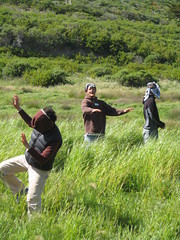
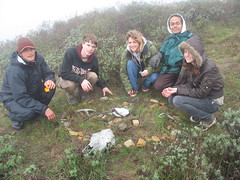
The Regenerative Youth Project (RYP) is an 8-month journey for teens and young adults that explores our relationships to nature, self, and community, as well as the stories we tell ourselves about those connections. This closely mentored experience fosters an embodied and integral awareness of participants’ inner and outer worlds through immersive practices in nature awareness, creative expression, and the ecology of leadership.

RYP Curriculum

Using the inherent healing that comes with a restored connection to nature, the RYP helps foster empowerment and healthy human development. The core curriculum of RYP program includes three major areas of focus:

  • Connection to Nature
  • Connection to Self
  • Connection to Community

Connection to Nature

Of all the things we can do to create a healthier society, perhaps the easiest and most available step (even in the city) is to reintroduce children and teens—and adults too—to the natural world.

–Bill Plotkin, PhD, Nature and the Human Soul

RYP immerses you into the cycles that operate our natural world. Supported by the curriculum, you will grow and transform with the seasons: celebrating in the fall, losing leaves in the winter and sprouting new growth in the spring.

We facilitate structured and unstructured nature sits and wanders, allowing space for personal relations to form with place and nature’s rhythms. We provide visceral and technical experiences to increase your understanding of the natural world, so that you can begin to feel like an integral part of the ecosystem.

You’ll learn and practice:

  • Earth living skills — shelter, water, fire, food
  • Sensory awareness expansion and applications
  • Awareness of hazards in nature
  • Wild crafting — basketry, dreamcatchers, tools, medicine bags, natural pigments
  • Journaling and researching
  • Using curiosity as a mentoring tool
  • Naturalist inventory skills
  • Mammal track identification and natural history
  • Tree and plant identification and natural history
  • Basics of ecology, ecological indicators and keystone species
  • Heritage species
  • Bird identification and the basics of bird language
  • Experiencing and exploring baseline behaviors, tracking and recognizing concentric rings

Connection to Self

Knowing others is intelligence, knowing oneself is true wisdom.

—Lao Tzu, Tao Te Ching

Culturally and individually, we explore our past through stories, studies, and ancestral tracking. Practicing awareness and observation of the present activities in your own and others’ lives will become tools to connect you to an opportunity of choice. A personal project is built into the program that allows you to create the story you wish to live in the future and outlines action points to get there.

These are some of the tools we’ll use:

  • Inner tracking
  • Designing your life/ ideal scenes
  • One-on-one mentoring
  • Facilitation and presentation skills
  • Effective communication strategies
  • Making and honoring commitments
  • Project management
  • Body awareness
  • Peacemaking and non-violent communication

Connection to Community

For we who are alive at this time — whether we like it or not — are entering a rite of passage into the future. This rite is both personal and collective. We are no longer separate strands in the web of life, but the very weavers of the web that holds us all.

—Anodea Judith, Waking the Global Heart

If you travel together for 8 months, you naturally create the bond of a community. To encourage this, we use many community-building tools during the program ranging from facilitation and meeting protocol to ceremony. Agreeing on a healthy foundation — with compassion and peacemaking as two strong pillars supporting us — we can lead our communities back into alignment with the natural environment.

Through the RYP program, we want to empower each of you with tools necessary to make a substantial contribution to your community. We will review and practice cultural organization models, observe cosmologies and creation stories to gain perspective on our own, and describe aspects of a healthy and balanced community.


Some of the community building skills you’ll develop include:

  • Peacemaker principles
  • Art of mentoring
  • Art of questioning
  • Observation
  • Storytelling
  • Mapping
  • Applied cultural technology
  • Ceremony
  • Creative arts and improvisation
  • Design
  • Permaculture principles

Friday, March 20, 2009

Chicken Soup for the Soul in the Classroom

Changing the World: One Student at a Time, and One Story at a Time
by Anna Unkovich

Five Things You Can Do To Foster Happiness in Your Classrooms
Creating an emotionally honest and safe learning environment may not be easy, but Anna lends you a hand with her insightful guide to fostering happiness in your classroom.

  1. Create a climate where students feel safe to experience a wide range of feelings. They cannot express joy without also accessing their sorrow, anger, or frustration. In addition, they must learn how to communicate these feelings in appropriate ways. Ultimately, this empowers them to cope with life.

  2. Read to students at every level, every day. My college students enjoy hearing a good story as much as my younger students did. Stories make heart-to-heart connections: student-to-self, student-to-student, and student-to-teacher. Stories provide a quick access to feelings, and follow-up writing is a good way to express these emotions.

  3. Research shows that successful people read. You need not be an English teacher to model reading for your students. I know math, Spanish, and science teachers who regularly read to their students. You can read short, motivational stories, or pages from a book that relate to your subject matter—perhaps a book on Nikola Tesla, President Obama, or anyone who captures your passion, for it is your passion that will shine through and connect with your students.

  4. Choose stories that present the messages that you desire—stories of hope, determination, overcoming obstacles—true stories of personal empowerment. For me, the daily dose of Chicken Soup significantly and positively changed classroom behavior. Lost time spent reading more than compensated for less time spent disciplining.

  5. Practice random acts of kindness, and create classroom projects where students can experience the joyfulness of giving, and where they recognize their connection with, and responsibility toward others on this planet.


Cover of Chicken Soup for the Soul in the Classroom
With over 35 years experience as a teacher and coach, Anna now devotes much of her time to writing and motivational speaking. She is a co-author of
Chicken Soup for the Soul in the Classroom and education director for the Pay It Forward Foundation. She chooses to find her happiness every day in life's simple pleasures, including a good book, a solo motorcycle ride, and a walk on the beach with her husband.


*******

My advice for those who are looking to start making change in their communities is to never give up and to understand that we can make a difference. It takes time, blood, sweat, and tears. It’s one thing to mobilize people to attend and be a part of a project. At the same time, it is also significant to organize groups and establish relationships with your community to build an understanding of love and justice.

Students and teachers are in this together, and we must continue to fight for quality education as a constitutional right!

Finding Happiness Beyond the Classroom
by Chris Goodman