Showing posts with label Green. Show all posts

Saturday, May 13, 2023

Voice of Trees - The story of a man who planted a forest in India

Source: www.bigshortfilms.com

Many of us know about Padma Shri. Jadav 'Molai' Payeng - the forest man of India who created 1360 acres of dense green forest in Assam, single-handedly. When we got lucky to shoot a film on him, so many things were running in our mind. But when we got up close with Jadav, we were swept clean by his simplicity and noble pursuit. How he walked the way for the past 35 years to build the forest that flourishes now with Elephants, Rhinos, Tigers and more was simply stunning. Had he been doing it for his own wellness, he’d have stopped after planting a tree or more near his house. But a whole big forest in the remote district of Jorhat? It is so hard to comprehend his commitment, passion & perseverance. In a time where politics is becoming a business and the common people are becoming materialistic consumers, we are forgetting the root of our very survival - Mother nature! It is the green warriors like Jadav Payeng who remain as the light and restore faith in humanity. VOICE OF TREES is his voice, as he speaks about his journey, his love for trees, his vision and his questions on the life today. 

Special thanks to Mahesh Venketaswaran who made this entire trip possible, and Anil Kumar Gade, who led us through the jungle and set everything up from scratch to finish. Watch the film and share the voice of the trees. It deserves to be heard loud and far.

Friday, February 10, 2023

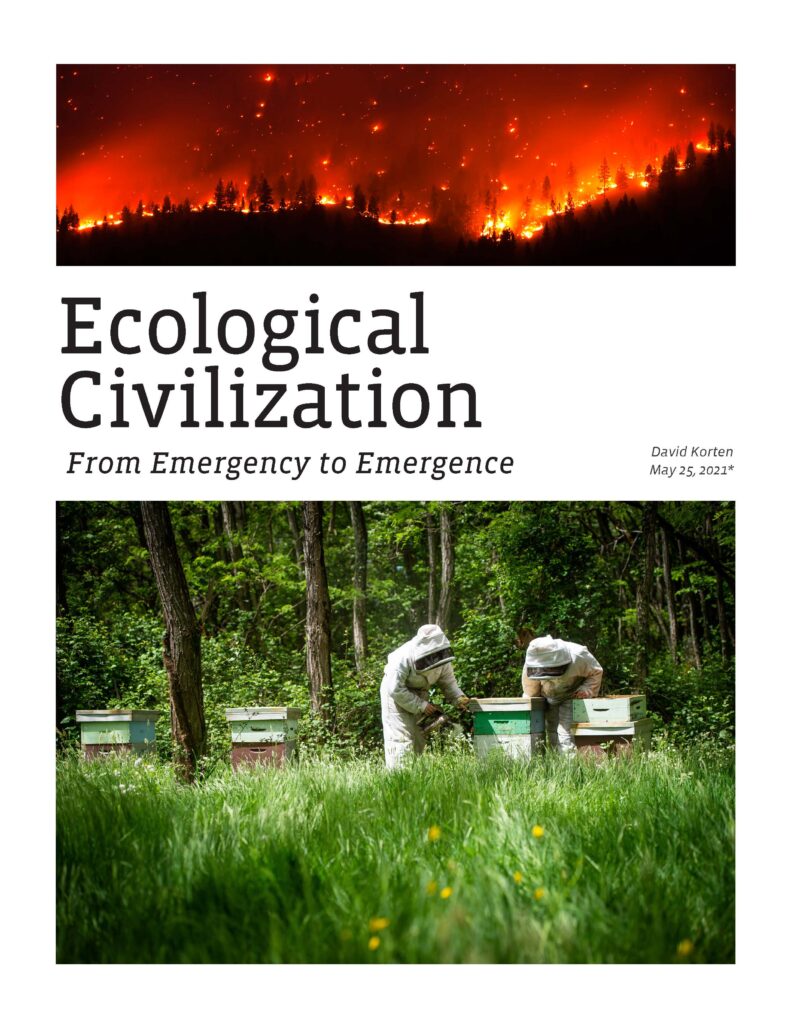
Ecological Civilization (David Korten)

Drawing on the work and insights of many colleagues and from ongoing conversations, this paper was written in an effort to connect the dots and engage a serious conversation about the causes of the existential crisis we face, while bringing a message of hope and possibility.

Click on the image below to read the paper and download the PDF. (For the best version to read via mobile devices, click HERE.) Feel free to use this paper and its content in any way you believe may be useful in your work, community, and personal life to draw attention and help move us forward on the path to an Ecological Civilization.
    – David Korten, May 25, 2021 (Updated with minor revisions on Nov 3, 2021.)
Read and download the PDF…
Read on mobile device… 
See Fritjof Capra’s Reflections on Ecological Civilization: From Emergency to Emergence (video)

 Link: https://davidkorten.org/ecological-civilization-from-emergency-to-emergence/

NEXT_SYSTEM-Living_Earth_System_Model

Humans are a choice making species with a common future faced with an epic choice. We can continue to seek marginal adjustments in the culture and institutions of the Imperial Civilization of violence, domination, and exploitation that put us on a path to self-extinction. Or we can transition to an Ecological Civilization dedicated to restoring the health of living Earth’s regenerative systems while securing material sufficiency and spiritual abundance for all people.

***Read David’s latest paper, Ecological Civilization: From Emergency to Emergencein which
he connects the dots to engage a serious conversation about the causes of the existential crisis we face,
while bringing a message of hope and possibility.***

We humans now consume at a rate 1.7 times what Earth can sustain. By January 2020, the wealth of just 26 billionaires had grown to exceed that of the poorest half of humanity–3.9 billion people. That was before the Coronavirus pandemic drove breathtaking growth of the wealth gap.

Our future turns on a simple, nearly forgotten, truth. We humans are living beings born of and nurtured by a living Earth. Our health and well-being depend on her health and well-being. As she cares for us, we must also care for her.

This is a foundational premise of the emerging vision of the possibilities of an Ecological Civilization grounded in a New Enlightenment understanding of the beauty, wonder, meaning, and purpose of creation.

A Vision of Human Possibility

Adjustments at the margins of the failed cultural and institutional system of the Imperial Era will not take us where we must now go. The system’s cultural beliefs and institutional structures must be retooled and its resources reallocated to realign the defining purpose of human society from making money to supporting every person in making a living.

Hope resides in humanity’s emerging vision of an Ecological Civilization grounded in our deepest human understanding of creation’s purpose, life’s organizing principles, and our human nature and possibility as discerned by the converging insights of indigenous wisdom keepers, the great spiritual teachers, and leading-edge scientists. Some call this emerging 21st Century intellectual frame, the New or Second Enlightenment.

Naming the future, calls us to envision it. Naming it a new civilization evokes a sense of epic transformation. Identifying it as ecological evokes a New Enlightenment understanding of life as complex, intelligent, conscious, and self-organizing.

Earth Charter

The Earth Charter—the product of a broadly participatory global process begun at the 1992 Rio Earth Summit—was finalized and launched in 2000. A 2002 paper by Elizabeth Ferrero and Joe Holland suggested the Principles of the Earth Charter, be considered principles for an Ecological Civilization.

China

In 2012, China officially adopted Ecological Civilization in its Communist Party Constitution and mandated its incorporation into “all aspects of economic, political, cultural, and social progress.” China is a country of 1.3 billion people with a Communist government and the world’s 2nd largest capitalist economy. It faces extreme environmental crises. Experiencing the benefits and burdens of both capitalism and communism, its attempts to deal with its environmental crisis uniquely position it for global leadership toward a new human framework that transcends both. The Guizhou Institute of Environmental Science Research and Design is working with the Global Footprint Network to develop the metrics for an Ecological Civilization for China.

Parliament of the World’s Religions

Ecological Civilization has also been embraced by the Parliament of the World’s Religions, which in 2015 issued a consensus Declaration on Climate Change that concluded with these words:

The future we embrace will be a new ecological civilization and a world of peace, justice and sustainability, with the flourishing of the diversity of life. We will build this future as one human family within the greater Earth community.

This statement clarifies the relationship between Earth Community and Ecological Civilization. Earth Community refers to Earth’s interdependent community of life self-organizing in concert with Earth’s geological structures and processes to create and maintain the conditions essential to the existence of all Earth life. Ecological Civilization refers to the human subsystem within the meta-system of Earth’s community of life. Coincidentally the two terms share the same acronym (EC), which can be used to refer to either or both.

A working paper, “Toward an Ecological Civilization: A Path to Justice, Peace, and Care for Earth,” was prepared as background for a series of presentations on the human step to an ecological civilizations by John Cobb, Matthew Fox, David Korten, Frances Korten, and Jeremy Lent, at the 2018 Parliament of World Religions in Toronto. Read the paper HERE.

Claremont Conference

In 2015 an international conference held at Pomona College in Claremont California on the theme Seizing an Alternative — Toward an Ecological Civilization drew 1,500 leading thinkers, authors, academics, activists, theologians, philosophers, and scientists. Shortly thereafter, sponsors of the Claremont conference launched Toward Ecological Civilization (EcoCiv – aka Institute for Ecological Civilization), a think and action tank dedicated to identifying “how social, political, and economic life needs to be organized if humanity is to achieve a sustainable, ecological society over the long-term.

Grounded in a 21st Century Enlightenment

The Enlightenment of the 18th Century raised our human recognition and understanding of the role of physical mechanism, causality, and order in the universe and became the foundation of what academic philosophers call Modernism. It strengthened the authority of science, challenged traditional religious and political hierarchies, and unleashed dramatic advances in technology, democracy, and individual liberty.

This opened new human possibilities, including technological advances that with time virtually eliminated geographical barriers to human communication and exchange. It supported the spread of democracy and human liberty and medical advances that significantly increased human life expectancy and unleashed a dramatic growth in our human numbers.

Concurrently, in its denial of conscious intelligence and agency, it stripped life of meaning and absolved us individually and collectively of responsibility for the consequences of our human choices. Our new abilities supported a fragmentation and monetization of human relationships and eroded our sense of connection to family, community and living Earth.

We grew the power of our instruments of war and our ability to dominate and exploit one another and nature to support previously unprecedented levels of material extravagance by the few at the expense of the many. During the latter half of the 20th Century, our material consumption exceeded for the first time the limits of Earth’s capacity to sustain us. The institutions of democracy became subverted by global financial markets and corporations for which people and Earth were nothing more than a means to profit.

We lived an illusion of growing prosperity for all in the midst of a reality in which fewer and fewer control and consumer more of a shrinking pie of Earth’ real wealth. The disastrous consequences now threaten to drive a massive dieback, if not the extinction, of the human species.

The rapidly deepening human crisis cannot be resolved with the same mindset and institutions that created it. Hope lies in the new understanding of the now emerging New Enlightenment. Grounded in traditional understanding, the wisdom of the world’s great spiritual traditions, and dramatic breakthroughs in the findings of quantum physics and the biological and ecological sciences, the New Enlightenment recognizes conscious intelligence as the ground of all being.

Our primary sources of knowledge and understanding are converging to affirm that there is far more to what we experience as material reality than material mechanism and chance. Consciousness, intelligence, and agency are integral and pervasive.

Living Earth: A Superorganism

The wonder of organic (carbon-based) life is that every living organism, from the individual cell to living Earth, maintains itself in an internal state of active, adaptive, resilient, creative thermodynamic disequilibrium in seeming violation of the basic principle of entropy. It takes a community of organic life to create and maintain the conditions that carbon-based life requires. Earth itself exemplifies this principle.

According to evolutionary biologists the first living organisms appeared on Earth some 3.6 billion years ago. We still have little idea how it happened. We do know, however, that as their numbers, diversity, and complexity increased, they organized themselves into a planetary-scale living system comprised of trillions of trillions of individual choice-making living organisms. Together, they worked with Earth’s geological processes to filter excess carbon and a vast variety of toxins from Earth’s air, waters, and soils and sequester them deep underground—preparing the way for the emergence of more advanced species.

In a continuing process—and with no discernible source of central direction—Earth’s community of life continues to self-organize to renew Earth’s soils, rivers, aquifers, fisheries, forests, and grasslands while maintaining global climatic balance and the composition of Earth’s atmosphere .

Likewise, the human body is best understood as a self-organizing community of tens of trillions of individual, living, choice-making cells that together create and maintain the superorganism that serves as the vehicle of our agency and houses our individual consciousness. Each cell is making constant decisions that simultaneously balance its own needs and those of the larger whole on which it depends and which in turn depends on it. It all happens below the level of individual human awareness.

Science has only the sketchiest idea of how it works beyond a recognition that organic life organizes not as hierarchies of central control, but as holarchies of nested, communities that self-organize from the bottom up. We humans must now learn to do the same.

By the understanding of the New Enlightenment, we humans are living beings born of and nurtured by a living Earth, itself born of and nurtured by a living universe unfolding toward ever greater complexity, beauty, awareness, and possibility. Creation thus reveals its purpose—a quest to know itself and its possibilities through an epic journey of self-discovery thru a process of eternal learning and becoming.

This restores a sense of the purpose and meaning of life that the 18th Century Enlightenment stripped away. And it provides an essential frame for a Great Turning to a New Economy that meets the essential physical needs of all people within the regenerative capacities of a healthy, finite living Earth community of life.

An Epic Challenge and Opportunity

We humans are now a truly global species. Our common future depends on our successful transition to an Ecological Civilization that works in balanced and harmonious relationship with Earth’s living systems to provide every person with a means of living adequate to their health and happiness. Yet we remain burdened by a 5,000 year cultural and institutional legacy of an Imperial Era that divides us by nationality, religion, class, race, and gender and pits us against one another in a violent competition for wealth and power.

The challenges of the transition are summed up in a paper by Chris Williams, “How will we get to an ecological civilization?” Williams concludes that:

It will not only be a question of constructing a new society, but deconstructing the old one. It is not enough to take over and reassemble the state,…; we will need to reassemble the whole world – every single aspect of humanity’s relationship with each other and the natural world. Just like the state, an infrastructure designed to dominate nature cannot simply be appropriated and used to good ends.

Ultimately, it is vital that fighters for social emancipation, human freedom and ecological sanity recognize that capitalism represents the annihilation of nature and a functioning and diverse biosphere and, thus, human civilization. A system based on cooperation, genuine bottom-up democracy, long-term planning and production for need, not profit,… represents the reconciliation of humanity with nature.

To achieve this future, we must navigate a successful transition from:

  1. Transnational corporations to national governments as our primary institutions of governance,
  2. Competition to cooperation as our dominant mode of relating, and
  3. Growing GDP to meeting the spiritual and material needs of all within the limits of what living Earth can sustain as the economy’s defining purpose.

Base on the deepening understanding of the New Enlightenment, the governing institutions of an Ecological Civilization will support national and bio-regional self-reliance, the free sharing of information and technology, and balanced trade in goods for which one nation has a natural surplus and another is unable reasonably to produce for itself.

An authentic economics for an Ecological Civilization will be grounded in the scientific understanding of how living communities of trillions of individual living organisms self-organize to create and maintains the conditions essential to life’s existence. It will measure economic performance by indicators of the healthy function of individuals, families, communities, local biosystems, and Earth’s global biosphere.

Consistent with these truths, the legal principles of an Ecological Civilization will recognize that:

  1. Individual persons possess both rights and corresponding responsibilities.
  2. Governments must be accountable to the people who form them.
  3. Corporations are created by government to fulfill a public purpose within that government’s jurisdiction and are accountable to that government for fulfilling that purpose.

Other Resources

Sam Geall, “Interpreting Ecological Civilisation,” Part I of a three-part series.

Zhu Guangyao, “Ecological Civilization: Our Planet,” UNDP.

Zhang Chun, “China’s New Blueprint for an Ecological Civilization,” The Diplomat

Thomas Berry, “The Determining Features of the Ecozoic Era,” conference handout 2004. What Berry called the Ecozoic Era was pretty much synonymous with the concept of an Ecological Civilization.

Three Overview Presentations

David Korten, “Birthing an Ecological Civilization: Overview.” This is a short-overview introduction to the human transition to an Ecological Civilization written for a general readership.

David Korten, “A Living Earth Economy for an Ecological Civilization,” 2017 opening keynote presentation to the 20th annual International Week, hosted by the Global Education Program at the University of Alberta in Edmonton. Explores implications for the academy and institutions of higher learning.

David Korten, “A Living Earth Economy for an Ecological Civilization,” 2016 keynote address to the Donghu Forum on Global Governance in Wuhan China addresses a high level Chinese audience and makes the case that among the world’s nations, China is positioned to take the global lead on advancing an Ecological Civilization.

Tuesday, November 30, 2021

EcoGuide – Recipes to minimise your impact on the environment while saving costs

 EcoGuide – Recipes to minimise your impact on the environment while saving costs [EN, KM, MY, TH, VI]

EcoGuide – Recipes to minimise your impact on the environment while saving costs [EN, KM, MY, TH, VI]
55 tips and good practices to reduce Tourism’s impact on the environment

An Eco-Guide for Hospitality Businesses & Schools

“Recipes to minimize your impact on the environment while saving costs.”

55 tips and good practices to reduce Tourism’s impact on the environment

Reusable water bottles in hotel rooms, LEDs instead of incandescent light bulbs, composting restaurant leftovers… These are some examples of the 55 good practices gathered in the Eco-Guide for Hospitality Businesses & Schools. This “recipe book” is published by ASSET-H&C, a network of hospitality schools in Southeast Asia, and is geared towards restaurants, hotels and all tourism stakeholders willing to improve their environmental sustainability.


In this guide:

4 key focus: energy, water, waste & pollution, mitigation & adaptation to climate change

35 practical recommendations 

20 good practices already implemented by tourism actors

The COVID-19 crisis has been considered by many as a wake-up call for the industry. Time for deep social and environmental change has come, and the downtime in global tourism activities has offered a golden opportunity for such a change to happen. 

COVID-19 has made travelers more aware of their impact on the environment and local communities. 53% of global travelers will be seeking more sustainable tourism products and services in the future, according to the Future of Travel Report by Booking.com*. Such growing demand for environmentally responsible tourism is more than just a trend; it represents a shift in customers’ awareness and a call for action on this global emergency. As a result, tourism providers are surely adapting, and soon services and products that respond to the demand and contribute to making a positive impact will become predominant. 

To accompany them on this more sustainable pathway, ASSET-H&C provides accessible and easy guidance for tourism businesses to start taking action. As the Eco-Guide supports businesses in increasing their sustainability, it also helps them save costs and equips them with a distinctive advantage regarding consumer demand. It is accessible to everyone regardless of their technical background.


 Link download: https://assethc.org/publication/

To foster an inclusive approach to sustainability and make this Eco-Guide for Hospitality Businesses and Schools accessible to a wider audience, it has now been translated to Burmese, Khmer, Thai, and Vietnamese.

Monday, January 14, 2019

Global Platform

UNLEASHING POTENTIAL

We support youth networks, movements, organisations and individuals who promote the agenda of progressive youth-led change.

Global Platforms is a worldwide network of training hubs for youth empowerment and activism. We train and inspire young people to be the creators of social and political change.

NETWORK FOR
YOUTH-LED ACTIVISM
WE BUILD CAPACITIES, CONNECT PEOPLE AND CAUSES AND INSPIRE ACTION
Global Platforms is ActionAid’s network for youth-led activism. We support movements, youth networks, organisations and individuals who promote progressive social, political and economic change around the world.

Through capacity building and support to various youth-led initiatives, we seek to promote young people as drivers of change towards a more just, sustainable and democratic world.

Link: https://www.globalplatforms.org/


Tuesday, March 13, 2018

Earthship Global Model


Earthship

1. passive solar home made of natural and recycled materials

2. thermal mass construction for temperature stabilization.

3. renewable energy & integrated water systems make the Earthship an off-grid home with little to no utility bills.

Biotecture 

1. the profession of designing buildings and environments with consideration for their sustainability. 2. A combination of biology and architecture.


Thursday, April 27, 2017

Rise Up - Climate Change Education Initiative

Rise Up is an IDB climate change education initiative that seeks to encourage children and youth to use their creativity and energy to come up with feasible, sustainable, long-term strategies to mitigate climate change.

Explore Rise Up themes 

We present instruction videos, a Green School Tool Kit and Videogames. These are all materials that teachers and students will be able to use in schools to turn children into brave superheroes with the mission of saving the planet!


Thursday, March 31, 2016

Raising Greenagers

What inspires teens to think and act green? As the mother of a current teen and two former ones, I still wrestle at times with that question.
I’ve found that most teens want to do the right thing. Although they may be great at hiding it, they really do look to their parents and other influential adults for guidance.
The teen years are about developing a separate and unique identity from parents. A challenge faced by parents and other caregivers is how best to connect with teenagers in ways that recognize their need for autonomy while guiding them towards becoming environmentally-responsible and mindful adults.
Below are some ideas for getting there.
Gen Z

 Generation Z

Today’s teens are members of Generation Z. Born after 1995, they represent about 25% of the U.S. population. Recent research has shown that they are pragmatic, digitally hyper-connected, and informed. They are also  socially-conscious and entrepreneurial, say researchers.
Be a Model. “The biggest way to demonstrate the importance to your teens of living green is to model good behavior at home,” noted my former colleague, Jeff. He added, “It’s also important is to make sure you get involved in issues and programs in your community.”
In Jeff’s case, that meant stepping up to serve as advisor for his daughter’s initiative, a high school environmental club, until suitable school staff could take over. “Through my guidance, they were able to accomplish a lot of great things at their school and received a lot of recognition, including scholarships,” he said.
Look for opportunities at home to foster your teen’s green side. For example, involve them in brainstorming ways to reduce household and personal energy and water use. Tap into their entrepreneurial side by challenging them to come up with ideas for new green businesses or for greening existing businesses they care about.
teens volunteer
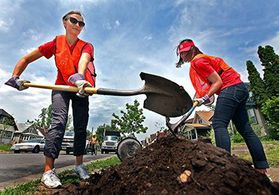
Encourage Volunteerism. “Service and volunteering is increasingly a big deal for teens. It’s something that they know is important, for example, on college applications,” said Kevin McDonald, a father of two teens.
Indeed, the research confirms Kevin’s observation. A 2014 study found 77% of high school students on a national level either extremely or very interested in volunteering. The top three things they reported wanting to get out of it were new skills, work experience, and mentorship/networking.
At VolunteerMatch.org, teens and adults can search for volunteering opportunities based on location and interest area.  A recent search turned up 60 environment-related opportunities in the Twin Cities area. Hands on Twin Cities is another good source.
The organization DoSomething.org inspires teens to volunteer and take action on causes they care about by providing a ton of fun project ideas and information.
Conservation Corps Minnesota & Iowa offers a few different environment-related service programs for teens age 15-18. Teens in one such program, Youth Outdoors, participate in environmental restoration projects within the Twin Cities. Teens 18 and over are eligible to serve as AmeriCorps members in a variety of settings.
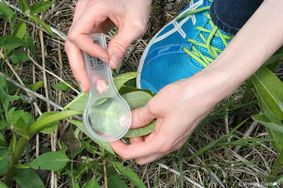
Citizen science provides teens with an opportunity to combine volunteerism and the great outdoors. See Living Green 365: Citizen Science for resources and information.
Lastly, check with schools, nature centers, park and rec departments, local nonprofits, and local government offices for leads and information on volunteering.  Earth Day, Arbor Day, and similar events often provide many volunteering opportunities. High school environmental clubs like the one that Jeff’s daughter started are another good option.
Additional Resource: WaysToHelp.org exists to engage, inspire and enable high school students to make a positive difference in the world. It does this by making it easy for them to learn about, and take action on, sixteen of today's most pressing social issues as well as providing teens & schools with toolkits to improve in-school food and volunteer drives.
WaysToHelp.org offers grants (up to $500) to teens in the U.S. to to fund their community service ideas across any one of 16 issue areas, including clean water, land preservation, global warming and recycling.
Citizen science
Expose them to Nature. Exposure to nature can result in a lifelong interest in environmental protection and conservation.
Invite your teen to go on nature walks and hikes, biking, camping, fishing, canoeing, and similar. Involve them in planning outdoor activities that the family can do together. Need to sweeten the deal to gain your teen’s participation? Encourage/allow her to invite a friend along.
For additional inspiration and ideas, check out familiesoutdoors.org.
Encourage biking/walking. For many teens, learning to drive a car is a rite of passage. Parents may find themselves under increased pressure to hand over the keys.
Chat with your teen about the environmental impacts of driving. Encourage him to bike or walk to activities and places that are within a reasonable distance. Teach her how to take the bus or other means of public transportation (for the Twin Cities area, click on "How to Ride" at  metrotransit.org).
Consider meeting your teen halfway when the opportunity arises. “I told my 15 year old son that I would buy him any bike that he wanted, an IPhone 6, and a bus pass if he would agree to wait until he’s 18 to get his driver’s license,” said Ned. Given the costs of insurance, gas, vehicle wear and tear, and the many environmental impacts of driving, this type of “negotiated settlement” can potentially be a win-win.
teens digital
Plug into their digital world. Smartphones. Gaming systems. Tablets. Laptops. Teens love their gadgets, and being “connected” is virtually a requirement anymore. Unfortunately, the same devices that they adore can be huge energy wasters.
Lots of devices use power even when they’re in standby mode. Ask your teen to unplug her digital devices—and their cords—when they’re done charging. Where possible, install advanced (aka smart) power strips in your home.  
Other ideas:
  • Limit cell phone upgrades. Cell phones require a lot of energy, water, and resources to produce. Require teens to purchase their own devices—they'll probably value and take better care of them if their own money is invested.
  • Tap into their "techie" sides and save energy by considering such things as solar backpacks and solar chargers. Involve teens in doing research to find the best products.
Get Loud Challenge
Get Loud. Has your teen heard of the "Get Loud" competition? It's a joint effort of NextGen Climate America and the Alliance for Climate Education to engage and empower young Americans to take civic action online and in their communities to combat climate change.Teens earn points and potential prizes by taking highly-visible online and offline actions, sharing content, and recruiting other teens to participate.
Listen, Acknowledge, Engage, and Empower. One of the great things about teens is that they’re not yet adults. They are still forming opinions and behaviors and absorbing information that will guide them in their adult years.
“Teens are sensitive about the increasing amount of news regarding the potential for environmental collapse”, said Kevin. " They can find it overwhelming and depressing," he added.
Yet, says Kevin, it's still important to talk with teenagers about environmental issues, even if it's in small bites.
Look for opportunities to engage them in conversations about environmental topics and issues. Ask for their opinions and ideas. Encourage them to be creative problem-solvers. Point out how personal choices (purchasing, transportation, energy use) can have an impact, and what they can do to make a difference.
Looking for guidance? The Alliance for Climate Education offers parents and educators some excellent resources for talking with adolescents about climate change.
DoingGoodTogether.org has activities, book lists, and discussion questions for families. For their earth-themed list see http://www.doinggoodtogether.org/bhf/heal-the-earth.
Additional Resource: Consume This - Buying That Matters. This 40-page booklet from the Canadian Centre for Pollution Prevention is aimed at 14- to 18-year-olds. The information and resources provided in the booklet focus on sustainable consumption and help to raise awareness among youth about the effects that their choices have on the environment.
Issues addressed in the booklet—including resource conservation, consumer behavior, and environmentally friendly production—are presented in a manner relevant to teens. Examples such as "The Life-Cycle of a T-Shirt", "What's in a Soccer Ball", and "How to Pack a Litterless Lunch" introduce young people to the concept of sustainable consumption using a practical and relevant approach. To download a free PDF of the publication, visit www.mysustainablecanada.org.

Tuesday, January 12, 2016

Livable Communities through Urban Forestry

By Suzanne H. Crowhurst Lennard, Ph.D.(Arch.), Director, IMCL

PART 1
WHY WE NEED TREES IN THE CITY
We know intuitively that we need trees in our cities. They enhance the public realm, provide shade, cool the air in summer, frame our experience of the city, and make the city more beautiful.
Most historic cities – especially in Europe – are graced by the presence of many trees. But it has been quite a fight to get modern architects and planners to accept these untidy, unruly, objects as co-inhabitants in the urban realm.
Modern cities around the world have been built as agglomerations of “objects in space”. Buildings are as large as possible to maximize real estate investment opportunities. Open space is used to showcase the architects’ daredevil, artistic, or outrageous fantasies. Trees would spoil the view, and moreover, they have an annoying habit of scattering their litter hither and thither in the fall.
Older, wealthy residential neighborhoods are usually filled with trees, and yet the poorest neighborhoods lack parks and street trees.
In our efforts to bring more trees into our cities, we have a great, new ally – Pope Francis – who in his encyclical[1] affirms: “We were not meant to be inundated by cement, asphalt, glass and metal, and deprived of physical contact with nature.“
The Pope speaks out against consumerist global development that benefits the economy at the expense not only of the poor – but of the earth: “…the earth herself, burdened and laid waste, is among the most abandoned and maltreated of our poor.”
Scientific Evidence:
Scientists in all manner of research fields – public health, pollution analysis, landscape architecture, child development, ecology, biology, etc … by now have published a plethora of research findings that show we humans need trees and other forms of nature in our lives in order to keep healthy; and that it is detrimental to the health of the earth to build cities without nature[2].
Air Pollution:
In highly air polluted areas (areas with high PM 2.5) you have about three times the rate of asthma, aggravation of heart or lung disease and premature mortality. The main causes are vehicles, industry, mining, and construction.
In Los Angeles, when the 405 freeway was closed, air quality improved 75% around the freeway, 25% across the region[3]. Now, it might be nice to solve this problem by closing all our freeways – but that would be a very long-term solution, if at all possible – involving re-planning our cities as “cities of short distances” and encouraging more people to accept alternate transportation modes. But in the short term, we need to get trees to help us.
Many studies show that trees remove air pollution[4] . This is of particular value in street canyons where vegetation can reduce particulate matter by as much as 60%.  AMEC Foster Wheeler [5] won an IMCL award at the 52nd IMCL Conference for their work for the Greater London Authority illustrating how green infrastructure could improve air quality along some of London’s most polluted roads. In canyons, upper canopy trees are avoided because they can trap pollution below them, but more slender trees, as well as bushes and green walls can be invaluable.
Pine trees are especially effective – their needles pick up more particles than broad leafed trees[6]. Since particulates are heavier than air, pollution is worst close to the ground. Low bushes are therefore very efficient for cleaning the air for bicyclists and pedestrians, especially children.

Biodiversity:
Trees are keystone supports for wildlife habitat for breeding, shelter, and food. But a tree cannot be an ISLAND. One tree cannot provide all the food needed to support diverse birds, squirrels, and insects, so trees have to be linked to other trees, bushes, plants, flowers, and the earth.
We need to increase biodiversity in our cities[7]. Urban wildlife corridors are required to support the interaction of multiple species, supply diverse food sources, and provide safe routes for wildlife. This helps avoid habitat fragmentation, and territorial problems.
Not all trees are created equal. ‘Oaks benefit everything from caterpillars to songbirds. Even fish prosper, because the aquatic invertebrates they feed on favor oak leaves on stream bottoms’ reports Richard Conniff[8]. According to Douglas Tallamy, a University of Delaware entomologist, who published a ranking of trees and shrubs according to how many caterpillar species they harbor, In contrast to oaks, which accommodate 537 species, gingkoes host just three. Willows support over 450 species, including insects that provide food for birds.
Gingkoes may host just 3 species of caterpillars, but that is not to say we should ban gingkoes and other non-native trees from our streets entirely because they certainly are magnificently beautiful in the fall.
Beauty:
Beauty is also important. Where would Washington DC be without the Japanese cherry trees? And Portland’s Japanese garden would certainly be the poorer without the beautiful Japanese maple. And of course, beauty plays an important role in sustaining our psychological well-being.
Health:
We have known for many centuries that trees contribute to health and well-being. Hundreds of spa towns throughout Europe attest to this knowledge – and many of these spas have existed since Roman times. The treatment “prescription” that an Italian patient is given includes not only drinking the water, and taking mud baths, but also walking amid beautiful architecture in the park at Montecatini Terme and breathing deeply.
And a German patient may be prescribed treatment at Baden-Baden and told to take the waters, listen to the music at the café in the park, and take long walks beneath the massive trees along the banks of the rippling stream.
Numerous studies show that the availability of parks and green spaces increases the likelihood of physical exercise, and this results in better physical health, both for young and old[9].
Even the sight of a tree from one’s hospital room increases recovery from surgery[10] ,  and Kuo[11] has shown that a view of trees from one’s apartment reduces crime & aggression.
Almost all trees have medicinal properties[12] . The bark of the willow contains salicin, similar to the active ingredient in aspirin.  Eucalyptus is renowned for its antiseptic, antibacterial, anti-inflammatory and analgesic properties

Neighborhoods with more trees:
Research shows that the more trees you have in your neighborhood, and the larger the trees are, the better you rate your own health. Moreover, you are correct – because people living in neighborhoods with more and bigger trees have significantly fewer cardio-metabolic conditions[13].
While some trees produce a lot of pollen, and thus cause asthma, it has been found that in neighborhoods with more diverse trees[14], there is reduced asthma in kids.
In neighborhoods with more trees, mothers are significantly less likely to deliver undersized babies[15] , according to studies in 2011 by Geoffrey Donovan. This may in part have to do with reduced levels of stress. Being in green places among trees also protects emotional well-being in young and old[16].
Child development:
There is a tremendous amount of research on how all aspects of child development are affected by their access to trees and green areas. For example, play in nature improves balance & coordination[17] .
Contact with nature expands children’s sensory faculties and cognitive capacity[18] . Learning about nature requires a larger vocabulary than possibly any other subject (except, perhaps, learning about humans). Contact with nature has been shown to improve children’s concentration[19]  and emotional resilience[20].

Play in nature has been shown to encourage more social play[21] , and reduce[22] and relieve[23]  incidence of Attention Deficit Hyperactivity Disorder (ADHD). Play in nature also teaches responsibility and nurturing skills[24]  according to Cobb. 
Biophilia:
Edmund Wilson coined the term biophilia, explaining that bonding with nature that is alive – birds, animals, insects, and human beings increases love for the earth, sense of awe, and desire to protect the earth[25] .  At every age, we all feel more alive and enjoy life more when we are in touch with other living things.
Since trees are the cornerstone for biodiversity, we need trees to flourish in order for all other life to flourish.
Trees mediate air temperature:
Large parks or residential neighborhoods with extensive vegetation can produce air temperature reductions as great as 10deg.F compared to nearby areas with little vegetation” according to McPherson and Simpson [26]. Trees shade buildings in summer and admit sun in winter reducing energy demands[27]. A large front yard tree can save about 9% of a typical home’s total air conditioning costs by shading the building from the afternoon sun and cooling the air around the building.
As a result of this air cooling effect, trees shape social life in public.  Outdoor cafes and restaurants benefit if they can take advantage of shade from trees in hot summer months. Benches that take advantage of shade will be more popular in the summer than those with no shade. In winter, the opposite is true.
Tree shade may also encourage spontaneous conversations in public: people are more likely to pause to talk if they are comfortable walking through a tree-shaded square on a summer day than if they are walking across the same square without trees; conversely, they are more likely to pause to converse if the square is sunny on a cold autumn or spring day. This argues for deciduous trees.
Trees hide ugly buildings:
Trees also offer us the most delightful advantage of hiding ugly buildings. I would have a lot of work for them if only they would grow taller!!!
                
This talk was presented at the Livable Communities through Urban Forestry Conference in Washington DC, August 6, 2015 by Suzanne H. Crowhurst Lennard, Ph.D. (Arch.), Director, International Making Cities Livable Conferences.


[2] Kardan, O. et al. Neighborhood greenspace and health in a large urban center. Sci. Rep. 5, 11610; doi: 10.1038/srep11610 (2015).
[3]  Arthur Winer, Yifang Zhu and Suzanne Paulson. Carmageddon or Carmaheaven? Air Quality Results of a Freeway Closure. http://www.accessmagazine.org/articles/spring-2014/carmageddon-carmaheaven-air-quality-results-freeway-closure/
[4]  Nowak, D. J., Crane, D. E. & Stevens, J. C. Air pollution removal by urban trees and shrubs in the United States. Urban forestry & urban greening 4, 115–123 (2006)
Nowak, D. J., Hirabayashi, S., Bodine, A. & Greenfield, E. Tree and forest effects on air quality and human health in the United States. Environmental Pollution 193, 119–129 (2014).
 http://www.fs.fed.us/nrs/pubs/jrnl/2014/nrs_2014_nowak_001.pdf
[6]  Pugh, T. A. M., MacKenzie, A. R., Whyatt, J. D., Hewitt, C. N.: Effectiveness of Green Infrastructure for Improvement of Air Quality in Urban Street Canyons, Environ. Sci. Tech., 46, 7692-7699, http://pubs.acs.org/doi/abs/10.1021/es300826w  , 2012.
See also http://www.bbc.co.uk/news/science-environment-18873391   and http://ehp.niehs.nih.gov/121-a14/
[9]  Richardson, E.A.; Pearce, J,; Mitchell, R.; & Kingham, S. 2013. Role of physical activity in the relationship between urban green space and health. Public Health: doi: 10.1016/j.puhe.2013.01.004.
Epstein, Leonard H., S. Raja, S. Gold, R. Paluch, Y. Pak and James Roemmich  (2006). “Reducing Sedentary Behavior: The Relationship between Park Area and the Physical Activity of Youth.” Psychological Science, Vol 17, Issue 8: 654-659.
[10]  Ulrich RS. (1984) “View through a window may influence recovery from surgery.” Science.  224: 420-421
[11]  Kuo, Frances and Sullivan, William C., (2001). Aggression and Violence in the Inner City. Effects of Environment via Mental Fatigue. Environment & Behavior, Vol 33 No. 4. 543-571
[13] Kardan, O. et al. Neighborhood greenspace and health in a large urban center. Sci. Rep. 5, 11610; doi: 10.1038/srep11610 (2015).
[14]  Cariñanos, P., & Casares-Porcel, M. (2011). Urban green zones and related pollen allergy: A review. Some guidelines for designing spaces with low allergy impact. Landscape and Urban Planning, 101(3), 205–214
[16]  Huynh, Q et al (2013). Exposure to public natural space as a protective factor for emotional well-being among young people in Canada. BMC Public Health. 2013 Apr 29;13:407. doi: 10.1186/1471-2458-13-407.
[17]  Grahn P., Martensson, F., Lindblad, B., Nilsson, P., & Ekman, A. (1997) “Ute på Dagis (Out in the Preschool)”. Stad and Land 145. Håssleholm, Sweden: Nora Skåne Offset
Fjortoft, I. (2001) “The Natural environment as a playground for children.” Early Childhood Education Journal 29 (3): 111-117.
[18]  Kellert, S. R., (2002). “Experiencing Nature: Affective, Cognitive, and Evaluative Development in Children.” In Kahn P, Kellert S eds. Children and Nature. Cambridge, MA, MIT Press
[19]  Wells, N. (2000) “At Home with Nature: Effects of ‘greenness’ on children’s cognitive functioning.” Environment and Behavior 32 (6): 775-795.
[20] Wells, N. & Evans. G. (2003) “Nearby nature: A buffer of life stress among rural children.” Environment and Behavior 35 (3): 311-330.
[21]  Kirkby, M. (1989) “Nature as Refuge in Children’s Environments.” Children’s Environments Quarterly 6 (1): 7-12.
[22]  Faber T. A  (2001) “Coping with ADD: The Surprising Connection to Green Play Settings.” Environment and Behavior. 22
[23] Kuo, F., & Faber Taylor, A. (2004). “A potential natural treatment for Attention- Deficit/Hyperactivity Disorder: Evidence from a national study.” American Journal of Public Health, 94(9), 1580-1586.
[24]  Cobb E. (1977). The Ecology of Imagination in Childhood. New York: Columbia University Press
[25]  Wilson, Edward O. (1984). Biophilia. The Human Bond with other Species. Cambridge, MA & London, UK. Harvard University Press
[26]  McPherson, G. and J.R. Simpson, 1995. Shade trees as a demand-side resource. Home Energy Magazine. 12(2) (March/April). Available online at http://www.homeenergy.org/show/article/year/1995/magazine/90/id/1115
[27]  Pandit, R. & Laband, D. (2010). Energy Savings from Tree Shade. Ecological Economics 69 1324-1329

PART 2 

STRATEGIES FOR INCREASING THE URBAN FOREST

Parks are not the only way to increase the number of trees in the city, and the access to green areas. And indeed, the concept of the park – where it is, how large, what shape, and whether wild or cultivated - needs a little rethinking. Urban waterways, green streets, green buildings, community gardens also provide strategies for increasing the urban forest and access to nature.


Parks:
More important than just more, bigger parks is how accessible a park is. It is not sufficient to draw a quarter mile radius around the periphery of a park to determine how many people that park serves. Some large parks may be fenced, with only one or two entrances, so a quarter mile walk from that entrance may only reach a handful of homes. On the other hand, a small strip park alongside a stream in a densely populated area in the center of the city may offer easy access to thousands of families living within a quarter mile walk.


More trees and parks in poor neighborhoods:
The great scandal in the US is that while white and more affluent communities often have many old-growth trees and are well supplied with parks, low-income and ethnic neighborhoods have fewer parks[1] . This inequality clearly contributes to the lower health levels in poor neighborhoods. Poor neighborhoods are in greater need of street trees, and easy access to parks and community gardens than are wealthier neighborhoods. Following Kardan’s suggestions[2], one powerful way to make a city healthier would be to plant 10 trees per block in poor neighborhoods.

Create Green Fingers:

We need to follow the examples of new neighborhoods such as Vauban, in Freiburg, Germany that connect the green places, for the sake of humans and biodiversity. A small stream running along the southern edge of the Vauban neighborhood is protected as a natural area, and from this, three green fingers reach deep into the neighborhood, providing undisturbed natural habitat, natural play areas for different ages, and simple community areas for barbecues and social events.


The city of Portland is justly proud of its Park Blocks that run almost continuously for 17 blocks north to south through the city center. This extensive linear park contains 335 mature elm, oak, and maple trees and a rich assortment of wildlife, as well as human life. Portland is attempting to create additional natural corridors by linking neighborhood parks with green streets. The ultimate aim is to enable these green streets to function as biodiversity corridors.

Restore Urban Waterways:
Many of our cities used the river as their industrial heart. Rivers and river banks became polluted, unsuitable both for nature and for humans. Many cities have made major efforts to reclaim the industrial banks and clean the rivers, but there is much still to do. Trees such as willows need to be planted to help foster biodiversity, and to reconnect the regenerative power of the land-water interface. Ljubljana just won title of 2016 Green Capital of Europe in large part for their admirable restoration of their river banks.

Streams are biodiversity corridors but most streams in our cities have been channeled underground so as not to interfere with our use of the surface for construction and car access. Wherever possible we should try to bring them back to the surface as urban streams.

This has been accomplished in numerous European cities and towns. Freiburg, Germany uncovered the tiny streams called Bächle that run off the Black Forest through the streets of the old city, and these are now used to paddle in, and cool hot feet in the summer. The university town of Tübingen, Germany uncovered a stream that ran through the historic heart of the city. It now helps to cool the air in summer.

In slightly less dense urban areas it is possible to restore the stream’s natural banks. The reconstructed town of Plessis-Robinson, just south of Paris has restored streams and lakes as a central feature of their development, creating walkways, parks, and gardens along the banks.


Green Streets:
Streets are potential green fingers and biodiversity corridors. A few trees can encourage social life on the street. More trees, diverse trees, and a mix of bushes, earth, and rainwater ditches can foster greater species diversity. Street trees also help clean the air.

In Vauban, Freiburg, the narrow residential streets are an extension of the green fingers. These are Wohnstrasse (Living Streets), intended for children’s play, bikes and pedestrians. The only reason a vehicle is allowed in is for delivery or emergency access. Only handicapped residents are allowed to park there. Permeable stone lined rainwater channels are provided by the city, and residents may choose what tree they want in the strip owned by the city.

Vauban also has a network of traffic-free bike/pedestrian lanes through the most heavily wooded sections of the development.
Green pedestrian networks are also needed into and around the city center, to provide healthy pedestrian commuter routes. Almost every small town in England has a fine web of almost secret green rights of way that weave into the town center, nipping between houses and along the banks of streams in the suburban areas, through city blocks and along the borders of parks in the city center. Poundbury has created such a wealth of these pedestrian short cuts that the streets themselves sometimes seem deserted.

In Krakow, Poland a major pedestrian commuter route leads into the city center through a park.

In quiet neighborhoods, such as Carmel, or Berkeley, California trees also perform a grand job of calming traffic. This is a model easily adopted by residential neighborhoods.

Arterial roads carrying a great deal of traffic are in major need of greening to reduce pollution and slow traffic. This is especially important when the roads have stores and residential buildings on either side that require the ability to easily and safely cross the street. In these situations, even roads carrying heavy traffic need to widen sidewalks, add buffered bike lanes, reduce the number and width of traffic lanes, add crosswalks and roundabouts, and plant trees.


Green Buildings:
Trees can also help to provide green walls and roofs. In addition to climbers and vines trained on a scaffold across a façade, fruit trees have traditionally been grown in this way. Just imagine, leaning out of your bedroom window and picking a fresh pear for breakfast!

Trees can also be grown on roofs and terraces. Green roofs improve biodiversity, slow rainwater and keep buildings cool. Even green arbors, vines, small trees and gardens in pots on roof terraces – as can be seen on every other rooftop in Rome - help to cool the atmosphere, without requiring immensely high-tech structural solutions.


The most successful and well-tested projects I have seen are those by the artist Friedensreich Hundertwasser. The Hundertwasser House in Vienna is public housing commissioned by the City. It is human scale – 5 and 6 stories – with gardens and trees on terraces and on the roofs. The building is beloved by residents and tourists.

Hundertwasser has designed dozens of buildings all over Europe, but perhaps his most ambitious project is Bad Blumenau, an extensive spa village in Eastern Austria. Each building is a little hill, covered with grass and trees, creating a rolling green landscape. Here, the spa park is atop the buildings.


-Trees in Urban Public Places
We have a huge need in North America to rebuild community, regenerate a social network and increase democratic dialogue and civic engagement. This is important for many reasons, including the social and physical health of the population. Preventative action on the level of creating a healthy environment would also save billions of dollars in health care expenses.

Researchers in public health and social science have discovered that when people are tied into a rich daily pattern of face-to-face interaction with friends, familiars and neighbors, they do not fall ill so often, if they get sick it is not so serious, and they live to a riper old age. They have what is called a strong “Social Immune System”. 

It is a central tenet of IMCL that we desperately NEED more Community Places – squares and piazzas that generate social interaction. It is absolutely essential to bring people together, to build community in neighborhoods, to facilitate civic engagement and strengthen social immune systems.


Trees are an essential tool for achieving that goal. They shape social life.

In a community place, a tree creates the ideal location for an outdoor cafe or restaurant, or for public benches where elders can sit and watch the children playing, or lovers can embrace. A broad canopied tree filtering the sunlight will enhance a café or restaurant. A smaller tree giving dark shade will provide a cool corner for a couple of benches.

Trees keep the paving cooler. So a square with many trees supports many conversations on the move, peripatetic, as people’s paths cross, while they make errands, commute to and from work.


Whenever we want to bring people together in the city, trees must play a major part. Outdoor farmers markets, like those in Aix-en-Provence, or on Portland’s South Park blocks, benefit from the trees. The plane trees in Aix, and the oak, elm and maple trees in Portland keep the produce fresh, and make the market even more inviting for humans.

Munich’s Viktualienmarkt, a combination of a vast farmers market and beer garden, at the heart of Munich, is magnificently shaded by chestnut trees.

We need more public squares that are free of traffic, where people shop, meet, walk, eat out, meet friends, and enjoy their city, and these squares need trees!


This is the second part of a talk presented at the Livable Communities through Urban Forestry Conference in Washington DC, August 6, 2015 by Suzanne H. Crowhurst Lennard, Ph.D. (Arch.), Director, International Making Cities Livable Conferences.


[1] Estabrooks PA1, Lee RE, Gyurcsik NC. (2003) Resources for physical activity participation: does availability and accessibility differ by neighborhood socioeconomic status? Ann Behav Med. 2003 Spring;25(2):100-4.
Powell LM, Slater S, Chaloupka FJ, Harper D. Availability of physical activity-related facilities and neighborhood demographic and socioeconomic characteristics: a national study. Am J Public Health. 2006;96:1676–80.
[2]  Kardan, O. et al. Neighborhood greenspace and health in a large urban center. Sci. Rep. 5, 11610; doi: 10.1038/srep11610 (2015).


Source links: