Sunday, July 8, 2018

Building a better world - 6 strategies for engaging the SDGs in the classroom

by Jennifer D. Klein, Gimnasio Los Caobos 
There is an increasingly diverse, passionate network of educators around the world who are using the Sustainable Development Goals (SDGs) as a foundational framework for global education in their classrooms. By themselves, the SDGs may seem too complex and abstract for students, particularly at the younger grades, but they provide a roadmap toward global understanding for any classroom that engages them authentically. By coupling the SDGs with pedagogies that put students at the center of investigating, educating and solving, teachers can engage the SDGs across the curriculum in meaningful ways that connect to our academic disciplines and foster 21st century competencies while involving students in local and global change making.
Explore the intersections between the subjects you teach and the Sustainable Development Goals. It’s surprisingly easy to find connections between the SDGs and every content area we teach in schools, regardless of where students live; in fact, solving global challenges like No Poverty (#1), Quality Education (#4), and the three goals connected to environmental protection and sustainability (#11, #12 and #13) requires all of our disciplines in concert. Interdisciplinary approaches to SDG projects don’t just allow us to meet the curricular requirements of our given district or country, but they allow us to put our disciplines into an authentic context. Using algebra to understand poverty or science to address our energy crisis helps students see how our disciplines matter beyond the schoolhouse walls. And when students see the relevance, they engage more deeply—students rarely ask why they need to learn our content if they can see clearly how it connects to real problems, both locally and globally.

Build deep insights into the Sustainable Development Goals through global and local partnerships that connect students to people experiencing and working on the topics they’re learning about. It can be life-changing for students to meet and ask questions of individuals experiencing the complexities behind the global goals, such as people without access to clean water, girls who are unable to complete their education, communities experiencing armed conflict, or refugees in our local communities. As Jim Shapiro notes in a blog about connecting his students with a Syrian refugee, “This was not a class. This was life and death. This was about a journey that spanned an ocean and linked worlds.” It’s also powerful to create opportunities for partnerships with people working on the issues students are exploring in class. Think about what is possible when we ground student inquiry in conversations with people in the field, working to eradicate poverty and disease; not only will students see what action might look like, but such partnerships can help young people identify purpose-driven careers they might one day pursue themselves. People who live and work from a deep sense of passion and purpose are often willing to Skype into classrooms because they want the next generation to become passionate about the very same topics. In fact, SDG #17 focuses on building the partnerships needed to accomplish the other 16 goals. If teachers engage SDG #17 by building partnerships for the classroom, the concept of multi-lateral solution building will be the natural response of a new generation who have seen that considering multiple perspectives leads to better solutions.

Use the Sustainable Development Goals for the development of global competencies and asset-based global citizenship. Working to understand and help solve any one of the SDGs can help develop global competencies in your students, particularly if students partner with other young people in the world. In The Global Education Guidebook, I write at length about projects in which two classrooms either focus on a global goal they have in common, sharing ideas and co-creating solutions, or solve unique local problems with the feedback of their global peers. If we want the development of solutions to start from the best ideas of the people experiencing the problems, it is important we do not solve problems we don’t understand for communities we don’t live in. Instead, students should learn from the world they don’t know and solve the one they do. These kinds of global experiences develop the kind of asset-based thinking about global engagement and citizenship that helps build a world of equity, reciprocity and collaborative development.

Connect the Sustainable Development Goalsto local issues and challenges as much as global ones, so that they are real and relevant for students. particularly for younger learners, “global” alignment makes the SDGs less abstract, allowing students to understand how our biggest challenges exist across borders and contexts. Poverty, for example, is an abstract concept, humanized significantly when students meet people facing economic challenges in their own backyards. Doing “glocal” investigation also keeps students from abstracting such issues as someone else’s problem, and helps eat away at the “us vs. them” mentality that sees poverty, for example, as an African or Asian challenge. Most of the SDGs are borderless challenges that face all nations across the planet, if in different ways. A project grounded in locally-present SDGs also allows for a powerful alignment between global understanding and local action and service, which helps students feel less paralyzed and become true protagonists for change in their own communities.

Use the Sustainable Development Goals as a framework for student choice and affinity grouping. In classrooms using Project-Based Learning, student choice is an essential feature, and many non-PBL teachers understand the power choice has to increase engagement and achievement. The SDGs provide a meaningful framework for such choice, as students can choose their focus from all or a limited number of content-relevant SDGs—and then teach each other about what they’re learning. For teachers interested in creating “affinity groups,” student groupings based on student interests, affinity mapping protocols allow all students to think deeply about each global issue—its importance and its potential solutions—while simultaneously giving students a chance to decide which issue they are most interested in engaging more deeply (see affinity mapping protocols from the National School Reform Facultyand the School Reform Initiative).

Partner with organizations working to connect the Sustainable Development goals into classroom curriculum worldwide. There are many excellent organizations offering curriculum, professional development and other educational resources with a specific focus on the Sustainable Development Goals, so teachers don’t have to start from scratch unless they want to. Following are a few outstanding examples:
  1. Teach the SDGs was started by a small group of educators who helped to motivate the United Nations to make a more intentional effort to involve K-12 students in solving the world’s most pressing problems. Today, almost 800 educators from across the planet have pledged to bring the SDGs into their classrooms, and to make sure that the world’s youth truly contribute to change in their communities and beyond.
  2. The World’s Largest Lesson introduces the Sustainable Development Goals to children and young people everywhere, uniting them in education and action. With resources for a variety of age groups, this organization offers comprehensible curricula and projects teachers can incorporate easily into classroom learning.
  3. TakingITGlobal is one of the oldest organizations connecting youth to help them create change in their communities and beyond. In partnership with organizations like iEARN and the Centre for Global Education, TIG offers projects and opportunities that unite students in addressing the global challenges addressed by the SDGs in meaningful and action-oriented ways
  4. Participate offers several professional development e-courses, resource collections, and other tools to support teaching the Sustainable Development Goals. They recently developed a set of SDG Playing Cards for download, for example, which can be used in a variety of classroom activities. They have also started a Professional Learning Communityaround teaching the SDGs.
  5. Building Utopia 2.0: In 2010, I wrote a piece of curriculum called Building Utopia, an activity designed to scaffold the Millenium Development Goals, for World Leadership School student and teacher programs. I revised it for the SDGs in 2015; you can download the instructions and the materials. In my experience, this activity is as powerful for teachers as it is for students, especially if followed by a chance to talk about how activities like this might serve to scaffold and/or evaluate students’ global learning.
  6. Global Oneness films provide a powerful window into the specific circumstances of local and global cultures through stories that humanize the global issues students are learning about in school. With films that focus on the stories of individuals, under the themes of Migration, Climate Change, Vanishing Cultures, Nature, Inspiring People, and Creativity, these films can humanize global issues in classrooms engaging the SDGs.
  7. SIMA Classroom is an excellent resource for SDG-aligned short documentary films. Describing their content as “A current-affairs media treasure for educators,” SIMA Classroom strives to “educate, active and inspire the next generation of global citizens and changemakers.”
  8. NewselaThe Global Times, and other age-appropriate news sources can go a long way to helping students of all ages understand the global challenges our SDGs seek to improve, as well as offering inspiring stories of people dedicating their lives to solutions they believe in. 
At Gimnasio Los Caobos, my new school in Bogotá, Colombia, students are engaging the SDGs through Project-Based Learning across the grade levels. Junior school students are exploring SDGs #11, #12 and #13 by finding ways to make our facilities more environmentally friendly and sustainable. Middle school students are engaging SDG #9 by developing innovative entrepreneurial projects designed to improve lives. High school students are engaging SDG #16 by grappling with how best to build sustainable peace in Colombia, making current events and Colombian history relevant through the opportunity to participate in constructing a new identity for their community and country. Rather than feeling like it’s an “add-on,” teachers are reporting that the SDGs weave into existing curriculum naturally, serving to increase students’ sense of relevance and involving them in meaningful action.

The need for the SDGs are challenges born largely out of our collective history of racism, colonization, and inequitable thinking. They supersede borders and nations, though some nations are certainly more at fault for creating these problems to begin with. Borderless problems require borderless solutions and intercultural collaboration on deep levels. While I love Model UN and ran it for years in my school, it is too easy for activities like MUN to remain abstract and actionless, more of an intellectual exercise than a means of authentic engagement. To turn inquiry into action, schools must find ways to connect their students to the world, to create spaces for collaborative solution building and real participation that start from an asset lens about what all voices bring to the table. From the youngest student to the most experienced teacher, from the most marginalized to the most empowered, we all have an opportunity to become protagonists in reshaping and rebuilding our communities and our collective planet. The question is no longer if you want your classroom to connect to the world; the question now is simply when.

Jennifer D. Klein taught college and high school English and Spanish for 19 years, including five years in Central America and 11 years in all-girls education. As a writer, speaker, and bilingual workshop facilitator, Jennifer strives to inspire educators and shift practices in schools around the world. Her first book, The Global Education Guidebook: Humanizing K-12 Classrooms Worldwide through Equitable Partnerships, was published by Solution Tree Press in June 2017. Jennifer is currently Head of School at Gimnasio Los Caobos, a project-based preK-12 school outside of Bogotá, Colombia.

Source: http://www.p21.org/news-events/p21blog/2282-building-a-better-world-six-strategies-for-engaging-the-sustainable-development-goals-in-the-classroom


Thursday, July 5, 2018

Wednesday, July 4, 2018

Design thinking for Kids

Source: http://knowwithoutborders.org/design-thinking-for-kids/

By Karen Collias


“Often schools are teaching kids things they might never need to know again. We’re not teaching them how to be creative, or design, … or deal with unexpected situations. A lot of people are aware that we really need to change education, but they don’t know how. This is one method that could inspire people. It’s basically design thinking, adapted for children.” — Emer Beamer, Dutch design thinker
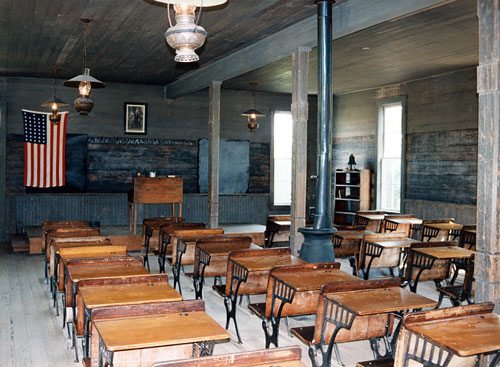
It’s nearly the middle of 2016.  As I read and watch reviews of educational issues and achievements in social media and traditional publications, I am struck by how the more things “change”, they the more they remain the same. Plus ça change, plus c’est la même chose! The same issues: ongoing inequality and student disengagement. The same “achievements”: new assessments, more assessments. What an overall lack of imagination! We certainly talk about the importance of creativity in 21st century life and work. So why do we continue to educate our kids as though we lived in the 19th century.
How different does this 19th century classroom setup look from your classroom?
Why don’t more educators adopt design thinking?
Design thinking is an educational approach that stresses creative problem solving for students with the added value of an entrepreneurial outlook. It’s an approach that could and should lead to more entrepreneurship — or at least, to a more entrepreneurial way of facing challenges in the future.
Design thinking has five “spaces.”
1. EmpathizeEmpathy is the centerpiece of human-centered design thinking. In order to create an innovative solution to a problem, it is essential to observe people–what they do, how they live, and their stories. Observing people builds an understanding of how they think and feel, what they value and how they see the world. Empathy almost always includes some sort of engagement with people. Engagement may be a conversation or a step-by-step explanation on how things are done.
To create meaningful innovations, you need to know your users and care about their lives.
2. Define: Defining a question or challenge based on empathy often changes the original problem you thought you understood how to solve. Defining a problem or challenge based on the needs of users provides focus, frames the issue, inspires and empowers, informs criteria for evaluating competing ideas and keeps the question in the realm of “actionable.”
3. IdeateCelebrate the power of possibility! Ideate is the space to imagine without judgment a variety of “wild, darling and practical” ideas.  Ideation discourages linear thinking and helps people step beyond obvious solutions.
A prototype can be a paper model, a poster, or a skit.
4. PrototypeOnce you have ideas, it is time to experiment with prototypes.  A prototype is a possible solution that allows time for feedback.  Prototypes are simple — storyboards, hand-made models, posters, or role-playing.  It is important to create something very quickly in order to see if the original question has been answered. Perhaps the question itself was wrong and it is time to go back to the drawing board. Better to fail quickly and cheaply before moving on to formal assessments.
Build to think and test to learn. — Hassno Plattner Design School at Stanford University, California, USA
5. TestTesting is the culmination of the empathize-define-ideate-prototype spaces of design thinking. Problems have been framed and reframed. Now it is time to engage in real-life, real-time testing in which the users are involved. It is only when we allow ourselves, our teams, our students to experience spaces of design thinking that we can implement authentic assessments.
Design thinking is active and inclusive. And kids are embracing design thinking with gusto. Schools around the world are embracing design thinking as a new way of learning and a way to increase student engagement.
A global “designathon” for kids took place in November 2014 in Berlin, Amsterdam, Rio Di Janeiro, Dublin and Nairobi.  Students came up with a myriad of ideas. One submission from students in Amsterdam was a robotic trash can that sorts out recyclable materials and alerts a garbage truck to pick up the recycles when the can is full. Perhaps this and other prototypes aren’t ready for primetime but design thinking gives kids the freedom to reframe questions, come up with new ideas, prototype and test.
Our brains need and search for context. Who likes to memorize large quantities of information with only a fuzzy context? Learning without context can be difficult for kids. Design thinking allows them to find all kinds of associations and possible connections among different pieces of information instead of memorizing them as separate segments. Flunking is okay when it is perceived as feedback that informs new ways of asking questions, coming up with ideas, and testing them.
Design thinking should be on the educational agenda. Sure it’s messier than pre-packaged standardized assessments. But design thinking offers kids golden opportunities for engagement and creativity — both prerequisites for real learning.

Karen Collias


Flipside Science

Source: https://www.calacademy.org/educators/flipside-science

A unique approach

This series is meant to create a transformational learning experience for students and their teachers by incorporating best practices for teaching environmental science and applying design thinking in the classroom. Flipside Science...

Inspires action with a positive, solution-oriented message. Flipside Science empowers students to make choices that positively impact their communities while teaching them about important environmental science concepts with engaging videos and design thinking challenges.

​Teaches critical thinking. Students learn how to define problems, evaluate evidence, and decide what they think about environmental issues. They are empowered and inspired to engineer their own solutions to complex problems.

Fosters collaboration. Flipside Science gives students the opportunity to learn from their peers and work with others to solve problems collaboratively.

Acknowledges the complexity of environmental issues. This series connects humans to their environment and helps students understand that there are no easy nor singular solutions—environmental problems are complex.

Highlights youth voice. Flipside Science is hosted by high school students from the Academy’s own Youth Programs. Middle schoolers can relate to teen narrators as near peers, versus adult narrators.

Is easy to implement in the classroom. Free and available online, the series currently features three fully-developed teaching units. Student worksheets that accompany each lesson in the food and water units are available in English, Spanish, and both Simplified and Traditional Chinese. The short modular videos also allow flexibility in the use of distinct Flipside Science materials. 


Flipside Science is a youth-powered series that tackles complex environmental topics and empowers viewers to make a difference.

Perfect for Teaching Human Impacts on Earth's Systems

Time: 30 minutes to several weeks
Grade: Designed for middle school, but applicable to high school
Focus: Food, water, and energy systems; ocean health; human impacts on Earth's systems (ESS3.C); engineering solutions (ETS1.A-C)
Flipside Science features media-rich units perfect for educators looking to engage their students in design thinking activities around environmental issues. This engaging and upbeat collection of videos, hosted by Academy youth, and associated lessons explores how local communities are addressing environmental problems with solutions ranging from vertical farming to greywater recycling. Check out the units on energy, food, water, and ocean health below:

Healthy Oceans

Ocean icon
The ocean affects everyone. It provides important resources and recreational enjoyment to people around the world and is home to some of the most diverse ecosystems on Earth: coral reefs. But the ocean's resources and biodiversity are under threat from human impacts. What are some local actions we can take to protect our global ocean?

Exploring Energy: Designing a Brighter Future

Energy icon
Energy is an important part of our everyday lives. We use energy to cook, get around, and send emails. In this unit, we'll explore the issues associated with fossil fuels and how people are coming up with innovative sustainable energy alternatives for a brighter future.

Our Hungry Planet: Food For a Growing Population

Food icon
To feed our growing world, we need innovative solutions. In this unit, we'll explore environmental issues related to the food we grow and eat. We'll review key issues like food waste, urban farming, and diet, and learn how simple choices we make can impact our planet.

Fresh Solutions: Water Use and Conservation

Water icon
Humans depend on water, and our need for this precious resource is growing alongside our population. How will we meet the needs of the future without harming the environment? In this unit, we'll explore key water issues, the water cycle, and some of the technology and techniques used to conserve water.

Build 21st Century Skills with Design Thinking

Source: http://creativeeducator.tech4learning.com/2012/articles/Interview-Dr_Maureen_Carroll

An interview with Dr. Maureen Carroll

Interview: Dr. Maureen Carroll
Dr. Maureen Carroll is the founder of Lime Design and Director of Stanford University’s Research in Education & Design Laboratory (REDlab) and adjunct faculty in the School of Education. She has been helping educators implement design thinking into their classrooms for the past five years. She recently co-authored with Melissa Pelochino, Lois Logan, and Richard Cox, designED: Integrating Design Thinking In Your K-12 Classroom.

What is design thinking?

Design thinking is both a process and a mindset. This human-centered innovation process finds solutions and solves problems in a user-centered context. Design thinking does not solve the mysteries of the universe; instead, a single problem is solved for a single user, with the hope that the resultant knowledge and empathetic understanding of that user’s needs will ultimately work for lots of other people. A familiar example is OXO kitchen tools. An engineer worked to make opening cans easier for his arthritic wife, and the resulting products work for many other people.

What does the design thinking process look like?

To begin, you Frame the problem so you can better empathize with your user. You conduct interviews and record observations. You use qualitative research techniques, working as an ethnographer to collect the story of the user to better identify exactly what they need. The mindset you attain during this part of the process is empathy.
The second part of the process is Imagine. This phase requires creative, generative brainstorms. Your goal is to develop a mindset that defers judgment, is open to different ideas, listens actively, and builds on the ideas of others. You are looking to push the boundaries and find a truly transformative innovation.
The third phase, Make, is about making the ideas tangible. This process involves iterative prototyping: developing a prototype, testing it, listening to feedback, making changes, and prototyping and testing again. Rather than creating an entirely new product, you quickly develop a “low resolution” version that you refine. The mindset is to learn from failure.
Ever tried. Ever failed. No matter. Try Again. Fail again. Fail better.
— Samuel Beckett
Teachers are natural prototypers. A lesson that may not be as polished as they’d like during first period is finely honed by fifth period.

Why is it important to be, or become, a design thinker?

In our quest to build thinkers for the 21st century, we have focused almost solely on analytical thinking. While analytical thinking is critically important, design thinking blends in equally powerful creative thinking.
It’s not that creative thinking is more important ... a blend of both types of thinking are more productive for finding truly unique and transformative innovation.
Design thinking requires students to be strategic and metacognitive about when to apply creative thinking and when to apply analytical thinking. Students must recognize where they are in the process and apply different ways of thinking to produce the best results. For example, when you are in the creating prototypes in the Make phase, it is essential to analyze whether you correctly understand your user’s needs.
“My contribution is to teach as many people as I can to use both sides of their brain, so that for every problem, every decision in their lives, they consider creative as well as analytical solutions.”
— David Kelley, founder Stanford’s Hasso Plattner Institute of Design

Why is important to teach design thinking in a K12 education context?

Design thinking builds two important mindsets: risk taking and resiliency. Design thinking requires you to take risks as a learner and push yourself. It is assumed that you will not succeed with your first prototype, so it is easier to put yourself out there.
A resilient 21st century learner works to find out what works and bounces back from failure. You must have a willingness to accept that a problem has multiple solutions and develop your ability to try again.Design thinkers learn from their mistakes so they can develop a better solution next time.

This sounds a bit like project- or problem-based learning. Is it?

Design thinking is different from project-based learning because the problem is not initially identified for the students. Design thinking requires that students identify the problem for themselves. Figuring out which questions to ask and what problems are worth solving gives students a different sense of agency.

Why did you write “designED: Integrating Design Thinking In Your K-12 Classroom?”

We were inspired by all the students and teachers we worked with and wanted to create a collection of design thinking activities. Our hope is that other educators will try these easy-to-implement ideas so they and their students can quickly and easily practice the mindsets necessary for successful design thinking.
Editor’s Note: I also spoke with Michelle Flores, a teacher at Aspire Capitol Heights Academy in Sacramento, California about her recent experience using some of the projects in designED with her 3rd graders.

Many people believe design thinking belongs the secondary classroom. Why did you try it with your 3rd graders?

For the past couple of weeks, I have been using activities from designED during my morning meeting. In fact, we worked on the “My Story is Your Story” activity for an entire week. During that time, students worked in pairs to share a personal story. The person listening to the story had to retell it in the first person, trying to express how the other person felt and convey the perspective of the original storyteller.
My students loved it, but it wasn't easy. They had to struggle to listen and put themselves in each other’s shoes. While this may not be easy for younger learners, the empathy skills they learned are crucial for future success. Seeing things from their classmates’ perspectives also helped build a strong sense of community in my classroom.
I am definitely looking forward to doing all of the activities with my students!

More resources to help you learn more about design thinking

Things We’ve Learned about Design Thinking, K-12 Education & 21st Century Learning
http://limedesignassociates.com/wordpress/archives/5
The Marshmallow Challenge TED Talk - the importance of learning from failure
http://marshmallowchallenge.com/TED_Talk.html
Melinda Kolk
 
by Melinda Kolk
Melinda Kolk (@melindak) is the Editor of Creative Educator and the author of Teaching with Clay Animation. She has been helping educators implement project-based learning and creative technologies like clay animation into classroom teaching and learning for the past 15 years.

Create a 21st Century Classroom

Source: http://creativeeducator.tech4learning.com

Combining the 3 R’s and the 4 C’s


Illustration of transportation stop with fast-moving city behind it
The pace of change in our world is accelerating and designing classroom instruction with a 20th-century mindset no longer prepares students for future success. While not everyone agrees on a single solution, sitting in rows and listening to content delivered through a lecture is slowly being replaced with active learning environments where students are prompted to ask questions, seek out relevant information, and apply information, not just remember it.
“The illiterate of the 21st century will not be those who cannot read and write, but those who cannot learn, unlearn, and relearn.” --Alvin Toffler
In 2002, the Partnership for 21st Century Skills (P21) began looking at the skills students need to be successful citizens beyond school. After interviewing leaders in a range of fields and working with schools to implement the P21 framework, they identified a set of four essential skills they call the 4 C’s: critical thinking, creativity, collaboration and communication.
The rest of this article describes steps you can take to reinforce the 4 C’s in your classroom and provides ideas you can use to change instruction to make the 4 C’s an integral part of the learning process.

Critical Thinking

The often-cited, but nevertheless accurate, reality is that today’s wealth of information makes it essential that every student must be able to compare and evaluate facts and opinions and make decisions based on that analysis. We need citizens who know more than “about” something, we need citizens who can take information and apply it to solve problems and create solutions.
Developing student’s thinking skills is not a revolutionary concept. Benjamin Bloom and colleagues first published his eponymous Bloom’s Taxonomy, the ubiquitous methodology for classifying educational learning objectives, in 1956! You’re likely also familiar with Webb’s Depth of Knowledge, which was released back almost 30 years ago and the revised Bloom’s Taxonomy from 2001. No matter which system you use, educational models like these can help you plan instruction that promotes higher levels of thinking.
Today’s presentation tools make it easy for students to generate flashy presentations. Student’s can simply mine data during a brief web search and copy and paste it into a presentation with lots of animation and movement. We can be so enamored by design and production value that we overlook the fact that the content was simply a dump of facts and information and shows no evidence of thought and understanding.
It is easy — and essential — to move beyond “about” projects; simply ask students to demonstrate knowledge AND thinking with end products that require both. Educator Elizabeth Allen has a list of fun products students can create that push them beyond copying and pasting, requiring them to think, internalize, and contextualize.
image of if, but report
We need to create classroom cultures that value questions more than answers. If we want students to analyze, evaluate, and work with challenging ideas and problems, we need to equip them with skills for categorizing, deconstructing big ideas into component parts, identifying relationships, and asking more questions. Great thinking starts with effective inquiry.

Creativity

The US Patent office evaluates new ideas using the criteria of 1) originality, 2) usefulness, and 3) novelty. This sort of innovation is a result of creativity in practice. If we are going to be able to address the needs and issues in our highly complex and rapidly changing world, we need to stop thinking about creativity as just art, or as a unique character trait.
To promote creativity in our students, we need to create a learning culture that values and promotes creative behaviors. One of the biggest predictors of person’s creative capacity is their openness to experience. Ensuring that the classroom culture values risk-taking and difference can help students overcome their reluctance to try new things, especially those things at which they might not initially excel. Make it clear that creativity is a positive, valued attribute of EVERY student. “Expect that your students can do it.
To promote student creativity, require students to create work that is uniquely theirs. This sounds easy, but making it happen requires you to change as well. Let go of giving students exact instructions that, when followed, are guaranteed to meet your expectation of success. Let students take control of project design; let them define what, where, when, and how during ongoing discussions about why.
Student work, whether done individually or in teams, should not look like work done by other students on the same topic. Sameness is a symptom…when the processes and the resulting product(s) all look the same, there is too little control in students’ hands and too many instructions being followed. Create an environment where student creativity can flourish by transferring responsibility for learning and demonstrations of that learning to students.

Collaboraton

Students often dislike working in groups because they do not know how to collaborate productively. Take the time to develop norms for group work and discuss behaviors and actions that result in successful team projects.
Learning to build on one another's knowledge and expertise involves respect, listening, and contributing. You might scaffold the learning process by assigning roles, allowing students to see the different tasks needed to complete a project and understand how their strengths can contribute to the overall success of their group. Make sure students have time and opportunities to reflect on their own strengths and weakness, as well as how to utilize the strengths of their team members for maximum effect.
While building skills for successful teamwork is important, it is just the beginning of collaboration in a 21st century classroom. If we want to prepare students for high-level thinking and work, we need to give them access to real work with experts and colleagues in a field of study. They need to work alongside professionals on tasks for a real audience who values that work.

Communication

Including communication as one of the 4 C’s underscores the changing nature of literacy. Powerful literacy skills have always included the ability to read and to share thoughts, questions, ideas, and solutions in ways others can understand. Literacy includes traditional speaking and writing as well as well as new modes of communication made possible by widespread, affordable availability of video and multimedia tools.
Regardless of the medium, students must still be capable of clear, concise writing and the correct use of topic-specific vocabulary. Today’s students must also build skills with multimedia forms of communication, requiring the ability to “show rather than tell” using pictures, music, intonation, and more.
Technology has changed how we communicate. PEW Research Center findingssuggest that students prefer writing on the computer to writing on paper and that they will write and edit more when writing on a device rather than writing by hand.
If we want students to work hard, we need to give them audiences for their work that value the content and delivery for more than academic purposes. Technology makes it easy to connect students to the world around them, providing an authentic audience for their communication. The Web makes it easy to connect to a specific audience, allowing students to share an idea or solution that make a real difference in the lives of real people.

21st Century Skills and the Classroom

A 21st century classroom provides students with the dispositions and skills to meet both the 3 R’s and the 4 C’s. Don’t worry…this isn’t yet another requirement you’ll need another teacher to cover.. To help students gain these essential 21st century skills, you can adapt the process of learning, not the content they learn. By adding in both maker movement ideals and elements of project-based learning, you can provide learning opportunities that require students to learn and apply these skills.

Creativity

Critical Thinking

Communication

Collaboration
create
inquire
present
listen
design
predict
justify
share
enhance
analyze
articulate
clarify
imagine
find relationships
discuss
participate
change
evaluate
convince
motivate
invent
investigate
summarize
organize
improve
experiment
propose
empathize
adapt
categorize
persuade
compromise

Get Making!

Students want to be producers, not consumers. If you have the budget and the space, you could create a Maker Space in your classroom where students can use paper and other recycled materials to build prototypes of their ideas as well as products that solve real problems.
If you don’t, you can take advantage of technology tools that start with a blank page and let students develop their own curriculum products that show their knowledge and passion. Open-ended tools like Frames and Wixie require students to think creatively as they develop, implement, and effectively communicate new ideas to others.
Having students create with video, audio, text, and images provides an opportunity to exercise higher-order thinking skills. Students must critically evaluate both content and media as they frame, analyze, and synthesize information to solve problems and answer questions.

Implement Project-Based Learning

Project-based learning (PBL) connects students to real world issues and problems with an authentic audience. A project-based approach to teaching and learning requires students to question, think, and work together to apply learning. As they apply knowledge, explore relationships between ideas, and develop solutions, they engage deeply with and make personal connections to the curriculum.
“Creating authentic learning tasks... prompts this important process of meaning-making, because they establish relevance; the question, ‘why is this important to me?’ does not go unanswered.” — Virginia Padilla Vigil
This type of project work requires students to employ flexibility and adaptability as they reevaluate their work throughout the project process, becoming self-directed learners as they produce quality results. Working in diverse teams to complete a project on time and meeting assessment requirements helps to build leadership, responsibility, social skills, collaboration skills, and cultural awareness.

Get started

Whether you start with small steps for each of the 4 C’s or tackle a large instructional shift to move toward a 21st century classroom, the important thing is to embrace the goal of provide students with the content and skills they need to succeed in our complex and changing world.

Further Reading

Jonassen, D. H., & Reeves, T. C. (1996). Learning with technology: Using computers as cognitive tools. In D. H. Jonassen (Ed.), Handbook of research for educational communications and technology (pp. 693-719). New York: Macmillan.
Lehrer, R. (1993). Authors of knowledge: Patterns of hypermedia design. In S. P. Lajoie & S. J. Derry (Eds.), Computers as Cognitive Tools (pp. 197-227). Hillsdale, NJ: Lawrence Erlbaum.
Virginia Padilla Vigil, Ph.D. Encouraging Rigor and Excellence in the Classroom.
Melinda Kolk

by Melinda Kolk
Melinda Kolk (@melindak) is the Editor of Creative Educator and the author of Teaching with Clay Animation. She has been helping educators implement project-based learning and creative technologies like clay animation into classroom teaching and learning for the past 15 years.