Friday, October 9, 2015

Mindfulness-based Approach in the Classroom


By Phe Bach, Ed.D.


Good morning ladies and gentlemen,

         It is my honor to be here to share with you, dedicated and compassionate educators, some of the working strategies from my own classroom, personal and professional life. These strategies are also based upon my doctoral research; and together can be called a mindfulness-based approach.

Mindfulness is the energy of self-observation and awareness of what is going on around you and within you. Mindfulness brings you back to the present moment. The present moment is the only thing we truly have because, yesterday is history and tomorrow is mystery. Today is the gift--the here and now. Mindfulness enables us to focus, clear our mind, and enhance our loving-kindness. We all, including our students, know on some level that the future is dictated by what we are thinking, speaking, and acting at this moment. Everything we do has a consequence; and consequences can be positive or negative. Thus, if the students would like to have an A in the future, they must work hard at this very moment. At the beginning of the semester remind them that everyone is getting an A, but how to retain that A is another story. It is like love or being in a marriage: falling in love or getting married is an easy stage, but how you remain in love or stay married is an art and science in itself.

         A Mindfulness-based approach enables us to do just that--remain in love, stay married or keep the A. This is a life-skill that today’s students need. I often ask my students these questions, and I reflect often upon them as well. The questions are: "Are we part of the problem or part of the solution? and “What direction are we heading?” In terms of anything in our life: academics, finances, spiritual growth, our relationship to others-- including our siblings, friends, romantic partner, parents, and everyone else. If that “A” or that door, the gateway, to a better future is our aim, our goal, then are we heading in the right direction? Are we really moving toward that, with everything we do, say or think?

         Let's say, as an example to our students: Imagine you have 5 dollars for your allowance each day. In the morning you spend $3 on your Starbucks coffee and in the afternoon you spend another $3 for your Jamba Juice. You have $5 and spend $6--what direction are you going financially? You are going in a negative direction. You’re going to get a negative balance. In fact, you are going backwards just like Michael Jackson's moonwalk.  Thus, you need to be mindful, recognize your own actions, stop going backwards and move in a positive direction toward your set goals.  A philosopher once pointed out that it doesn't matter how slow or how fast we are going, as long as we are going forward in the right direction.

Through my own practice of mindfulness, I am able to recognize and be aware of how humans behave. As human beings, especially young ones, we are reactive. Whatever stimulus occurs, we tend to be reactive. For instance, students may talk back, using salty language or even displace physical behavior such as slamming the door. When using a mindfulness approach, whatever occurs, we are mindful--we pay attention to the moment, to what is happening inside oneself and outside in the situation.  Then you can respond to the situation. Not reactive, but rather responsive.  Know that we have many options, and choose the best one.


             In all situations, we can realize that we have a choice to settle on a win-win situation. Usually we react immediately when something happens; with the practice of mindfulness, whatever happens, we stay calm and practice mindfulness in that moment, and then respond to that stimulus.

The technique that I used often and asked students to use with me is called the P.E.A.C.E. practice, as put forth by Dr. Amy Saltzman in Still Quiet Place - Mindfulness for Teens (2010)

P - P is for Pause. When you realize that things are difficult, pause. Stop. Do not act. Do not do anything yet.

E - E is for Exhale. Take a deep breath (in via your nose and out via your mouth). I often do 3 times, but at first, students don't have that ability, so just once is all right.

A - A is for Acknowledge, Accept, and Allow. You must acknowledge your own emotions and the other’s emotion. If you are upset, mad or angry, it is ok to say that you are upset or mad. By recognizing your anger, you are already start to defusing it right then. I often say to my students, “I am not happy right now; what you did is a distraction to me and to the classroom. It also seems like you are not happy either. Thus, why don't you go outside the classroom and take a walk.”

C - is for Choose to respond with

Compassion: for yourself and others. In order for you to have compassion for others, you must have self-compassion first. Compassion is a concept central to Buddhism, and it can be defined as the ability to bring joy and happiness to others while reducing their frustration and suffering. We also need to turn this compassion inward towards our own selves. All transformation and happiness start from the within; we all transform and lead from the inside out. Compassion inward; compassion outward. (Like the egg if time permitted).

         C is also for Clarity: being clear about what you want, what your limits are, what you are responsible for. And finally, 

         C also stands for Courage: the courage to speak your truth, and to hear the truth of others.

         E - is for Engage Now we are ready to engage with the situation positively. We can create a win-win-win situation and "Begin with an open-end"--which means, to enter without attachment to a specific outcome.

          In the classroom, I use many mindfulness-based strategies to bring awareness to the present moment, such as inviting the bell --you call it “ringing the bell”, we call it “inviting the bell”-- to get students’ attention. We may do a quick breathing exercise, have quiet time or some other technique. I also share "Quotes of the Week" with my students to illustrate life lessons, with moral and ethical values. These quotes not only are to motivate my students, but also they help us build a strong interpersonal relationship. As you already know, once we have established a good relationship, teaching is much easier. I have even asked the students to do a “walking meditation” without letting them know they are doing that. If students ever use “salty language” or do some other misbehavior in my classroom, I ask them to go outside and not distract the classroom activities. However, instead of having them sit down and wait, which may result in anger building up, or at minimum, it’s boring and a wasted learning opportunity, I ask them to walk slowly and mindfully toward the next building. I tell them that they must touch this wall, to walk mindfully to that wall, touch it and go back and then go back and forth 5 times. By that time, they often have defused their frustration, sadness or anger and realized what they themselves did that needs correcting. When I asked "Do you know why I removed you from the class?", most of them say, ”Yes,” and “Sorry,” but if they don't, I ask them to walk 5 more times and this time, I guide them to focus their attention on a mark on the wall or a tree, and notice how their perception changes as they move closer or farther away from it. After the tenth time, they are more calm and ready to go back to the classroom and learn.

           Overall, research shows that mindfulness-based approach is working in the classroom both for teens and even for adults, at least for me. I am still using it. Here is an example to illustrate that: [play the audio].

         As you can see, it is hard for me as an educator, in this case a designated substitute Vice principal at Mira Loma High, to see a student get handcuffed and taken to jail. Somehow, I felt we failed as a whole system. This reminded me of something my Vietnamese Buddhist teacher once told me, “If the doctors or dentists makes a mistake, they can kill only one person, but educators like us, if we make mistakes we kill the whole generation." And I see it as not only one generation, but many generations.

          As educators of high school and middle school children, we deal with about 165 students in one single day, and our energy can run low each day. It is very important that we take a good care of ourselves. We can't give something we don't have. Please take care of yourselves physically, mentally, emotionally, spiritually and all the 'lys' that you can think of, so that we can give it forward. Have some quiet time for yourself each day to recharge your energy. Teachers matters. Keep Calm. Be Mindful. Teach On.

Breathe and Smile. Thank you for listening.
THANK YOU.


Phe Bach, Ed.D.
Mira Loma High School
San Juan Unified School District.


Sunday, September 27, 2015

Harvard psychologists have been studying what it takes to raise 'good' kids.

A lot of parents are tired of being told how technology is screwing up their kids.

Moms and dads of the digital age are well aware of the growing competition for their children's attention, and they're bombarded at each turn of the page or click of the mouse with both cutting-edge ideas and newfound worries for raising great kids.


But beneath the madness of modernity, the basics of raising a moral child haven't really changed.

Parents want their kids to achieve their goals and find happiness, but Harvard researchers believe that doesn't have to come at the expense of kindness and empathy. They say a few tried-and-true strategies remain the best ways to mold your kids into the morally upstanding and goals-oriented humans you want them to be. Here are six practical tips:

1) Hang out with your kids.


This is, like, the foundation of it all. Spend regular time with your kids, ask them open-ended questions about themselves, about the world and how they see it, and actively listen to their responses. Not only will you learn all sorts of things that make your child unique, you'll also be demonstrating to them how to show care and concern for another person.

2) If it matters, say it out loud.


According to the researchers, "Even though most parents and caretakers say that their children being caring is a top priority, often children aren't hearing that message." So be sure to say it with them. And so they know it's something they need to keep up with, check in with teachers, coaches, and others who work with your kids on how they're doing with teamwork, collaboration, and being a generally nice person.

3) Show your child how to "work it out."


Image by susieq3c/Flickr.
Walk them through decision-making processes that take into consideration people who could be affected. For example, if your child wants to quit a sport or other activity, encourage them to identify the source of the problem and consider their commitment to the team. Then help them figure out if quitting does, in fact, fix the problem.

4) Make helpfulness and gratitude routine.


Image by David D/Flickr.
The researchers write, "Studies show that people who engage in the habit of expressing gratitude are more likely to be helpful, generous, compassionate, and forgiving — and they're also more likely to be happy and healthy." So it's good for parents to hold the line on chores, asking kids to help their siblings, and giving thanks throughout the day. And when it comes to rewarding "good" behavior, the researchers recommend that parents "only praise uncommon acts of kindness."

5) Check your child's destructive emotions.


"The ability to care for others is overwhelmed by anger, shame, envy, or other negative feelings," say the researchers. Helping kids name and process those emotions, then guiding them toward safe conflict resolution, will go a long way toward keeping them focused on being a caring individual. It's also important to set clear and reasonable boundaries that they'll understand are out of love and concern for their safety.

6) Show your kids the bigger picture.


"Almost all children empathize with and care about a small circle of families and friends," say the researchers. The trick is getting them to care about people who are socially, culturally, and even geographically outside their circles. You can do this by coaching them to be good listeners, by encouraging them to put themselves in other people's shoes, and by practicing empathy using teachable moments in news and entertainment.

"Raising a caring, respectful, ethical child is and always has been hard work. But it's something all of us can do. And no work is more important or ultimately more rewarding."

Source: https://www.upworthy.com/harvard-psychologists-have-been-studying-what-it-takes-to-raise-good-kids-here-are-6-tips

Tuesday, September 22, 2015

10 ways the circular economy is changing the way businesses think

by Stephen Kennett

To mark the world’s premier circular awards program, The Circulars, opening up entries for 2016, we take a look at the impact that a circular economy approach is already having on businesses.
Two studies in recent weeks have put some hard figures to the economic benefits that a shift to the circular economy could bring.

First up was an independent report commissioned by resource management business Veolia and produced by Imperial College London. It found that a combination of closing the loop on resource use and moving to a service rather than product based economy has the potential to add £29 billion to UK Gross Domestic Product over the next decade.

Hot on the heels of this was the Growth Within report by the Ellen MacArthur Foundation. It claims a pan-European shift to a circular economy could create a net benefit of €1.8 trillion for European economies by 2030.

These are compelling and timely figures, as the European Commission considers its circular economy strategy with the promise of presenting a new, more ambitious plan by the end of the year. But there is already a huge up-swell in ground-level innovation in this field being driven by large corporations, and small and medium enterprises alike. Here’s a round-up of 10 ways the approach is impacting on what they are doing.

1. Encouraging collaboration to drive innovation

Closed-loop thinking and sustainable packaging are two targets that computer manufacturer Dell has committed to and it is using collaboration to drive innovation in both these areas. Dell has joined forces with bio-tech start-up, Newlight Technologies to pilot the use of carbon-negative product packaging and worked with original equipment manufacturer partner Wistron GreenTech to reuse plastic from its consumer and business-to-business recycling program and feed it back into its new IT products.

2. Thinking counter-intuitively

Clothing company Patagonia has made long-running efforts to counter over consumption and its Worn Wear California-to-Boston road show that took place earlier this year perfectly sums up this approach by building consumer knowledge about the value of fixing broken goods. GreenBiz author Lauren Hepler gives a first-hand account of Patagonia's vision for elevating the approach beyond the apparel sector.

3. Reverse logistics

Logistics giant Deutsche Post DHL is actively exploring new ways it can capitalise on reverse logistics, one of the most important enablers in the transition to a circular economy. With its global network reach, DHL is undoubtedly sensing an opportunity to develop new models that can push forward more circular flows of goods and materials.

4. Think users not consumers

Are we moving back to people behaving more like users rather than consumers? This is one of the trends emerging in the automobile and IT sectors. In this interview with Kirstie McIntyre, director of social and environmental responsibility at HP, explains how the company is seeing service models for users becoming more frequent and how that translates to product design.

5. Handing the creative process back to the consumer

Sustainable footwear is a hotbed of innovation for many apparel and lifestyle brands. But one enterprising start-up is looking to take this to the next level. Lyf Shoes is looking to capture a slice of the market by handing the creative process back to the consumer and is working up a customized 3D-printing service for shoemaking.

6. An incentive for transforming workplaces

The launch of the world’s first guide to creating an office using circular principles promises to minimize waste and maximize the life of all materials. The guide, which has been produced by a cross-industry collaboration of nine organizations, launched in July and the authors are now looking for a New Zealand office in need of refurbishment to become the world’s first Circular Economy Model Office. They claim it is the first step in revolutionising the office refurbishment industry.

7. Using it for brand building

Elvis and Kresse is an emerging brand in the luxury fashion market, selling belts, wallets, handbags and rugs. It uses 15 different wastes, including leather and old tea sacks to make its products and it’s an approach that underscores its entire brand ethos - what's more it’s got plans to build on this creativity.

8. Delivering social good

From a Mother to Another aims to extend the lifespan of baby and children clothing by redistributing high quality clothing that has been outgrown to vulnerable families in the UK. Research by Hubbub UK discovered that over £3,500 worth of children’s clothing goes to landfill per child growing up. From a Mother to Another aimed to create a new circular economy initiative based on such findings. The campaign is delivered by a partnership of the retailer JoJo Maman Bebe, the charity Barnardo’s and Hubbub UK.

9. A catalyst for disruptive innovation

In 2012 B&Q offered nine young people the opportunity to win a year’s placement on a Youth Board. Following a nationwide competition, the nine who secured a place were each appointed a B&Q Retail Board mentor and set a specific challenge — to apply circular economy and closed loop thinking to re-imagine B&Q’s future business model.

10. And finally… there’s more than one approach

Research by Accenture has identified five different business models companies are adopting – alone or in combination — when embracing the circular economy: circular suppliesresource recoveryproduct life extensionsharing platforms, and product as a service.
Source: 2degrees

Monday, September 21, 2015

Ananda Marga Gurukula - Global Education Network for People and Planet

Link: http://gurukul.edu/

Ánanda Márga Gurukula is an international educational network of schools and institutes engaged in teaching, research and service. It spans over fifty countries with over 1,000 kindergartens, primary schools, secondary schools, colleges and children’s homes that have been established over the past 50 years. It is based on the holistic philosophy of Neohumanism which stands for ”the practice of love for all creation including plants, animals and the inanimate world” as propounded by philosopher-seer Prabhat Ranjan Sarkar. The education imparted in Ánanda Márga Gurukula affiliated schools and institutions is known as Neohumanist Education.

The Sanskrit word “Gurukula”  has the following etymology: Gu: darkness; ru: dispeller; kula: an institution. Gurukula is an institution which helps students dispel the darkness of the mind and leads to total emancipation of the individual and society at large.

The Gurukula system of education is the oldest on our planet, tracing its roots back 10,000 years to the time of ancient civilisation and dedicated to the highest ideals of all-round human development: physical, mental and spiritual.

Today, Ánanda Márga Gurukula is a revival of that ancient tradition, offering a blending of occidental analytical approach and oriental synthetic knowledge. Gurukula is dedicated to innovative research and human resource development for the betterment of people and the planet.

At Gurukula affiliated schools and institutes, all aspects of one’s personality are developed utilising an integrated curriculum that empowers the student to know oneself and develop the confidence and empathy to utilise knowledge for serving the society. Intellectual cognitive abilities are extended to include the development of intuition, aesthetics and a futuristic and ecological perspective based on universal outlook.


For further reading:
Gurukula Education

Thursday, September 10, 2015

Steiner Education

A Serious Need for Free Play
A Creative Approach to Foreign Language for Waldorf Teachers
Alphabet letters, Waldorf style
Basic Elements of Daily Living with Children
Can We Play
Concepts and Practices of the Pikler Approach
Consciousness, child development and the misuse of words
Crying
Deeper relationship between Pikler and Steiner
Discover Waldorf education – Beyond Cognition
Drawing with hand, head and heart
Earth who gives to us…
Fever
Five reasons to stop sayings Good Job
From Beauty to Truth in Mathematics
From Playing to Thinking
Importance of Play
Laws of childhood
Learning through Imitation
Learning Through Play
Listening
On the seeing the child as cute
Parenting a young child
Self-directed play is disappering in kindergartens
The meaning of illness
The value of Grimm’s fairy tales
The Vital Role of Play in Childhood
Too much too early
Truth about sight reading
What is Child-led Play

Books

A Morden Art of Education
Adventures in Parenting
A Warm and Gentle Welcome – Nurturing Children from Birth to Three
Childhood under threat
Human values in education
Meeting the Needs of the Child today
Morality and Ethics in Education
No Fear – Growing up in a risk averse society
Overview of Waldorf Kindergarten
Painting in Waldorf Education
The Child’s changing Consciousness
The Education of the Child
The genius of language
The Roots of Education
The spiritual ground of education
Understanding young children
Working with anxious, nervous and depressed children

http://thotrangsteiner.edu.vn/tai-lieu-steiner/

Monday, August 17, 2015

The Future of Education


mtemrymyrm1111


If you had a chance to vote on what subjects of study our children would have in schools on the New Earth, what would they be? A balance of true galactic history, social interaction, math, and various artistic creative outlets seems to be a good mix. Whether you are a teacher, parent, or student, now is the time to decide how we will change the education of the indigos and crystals that have more strands of DNA activated than any other humans on the planet.


The current corrupt schooling agenda


Today’s public school system is built around programming our children to obey and to think outside of themselves. Schools have become businesses that are run by education boards that answer to the top domination and control group on the planet. Creativity and flexibility has been removed from the curriculum and teachers are frustrated and tired of holding children back from their amazing potential.


The history taught in schools is mostly a lie, created to cover up the real truth of The Vatican and Queen of England’s stronghold on the world. Although these forces seem like they are behind most of the illusion on this planet, the puppet strings are actually being pulled by the interbred Draconian families of the Rothchilds, Rockefellers, and other banking pioneers that control most of the wealth on the planet. The history taught in schools is mostly a lie, created to cover up the real truth of The Vatican and Queen of England’s stronghold on the world. Although these forces seem like they are behind most of the illusion on this planet, the puppet strings are actually being pulled by the interbred Draconian families of the Rothchilds, Rockefellers, and other banking pioneers that control most of the wealth on the planet.


Almost every book in our educational system in the subjects of history, math, English, social studies, and science can be thrown away because the basis of each is to teach cover up stories in every single way possible. The plan has intertwined politics, finance, and religion with education in order to keep people in the dark about the truth of who they are in order to keep them enslaved in a system of control. It has been part of a brilliant plan of control on this planet to brainwash humanity in the most formative years of their lives, but the game is over and the truth has been revealed.


Private Montessori schools are the closest thing we have in the United States to sensible education, however it is still a far cry from where we need to be. Many people have chosen home schooling over public schools which is a better choice but if a GED is desired, one must still follow a curriculum. 

Private Montessori schools are the closest thing we have in the United States to sensible education, however it is still a far cry from where we need to be. Many people have chosen home schooling over public schools which is a better choice but if a GED is desired, one must still follow a curriculum.


The system has been set up to where a high school diploma simply shows that you were programmed enough to follow orders, and therefore you would make a good employee. Paying for college in order to get a higher paying job has become a cruel trap for our young people. The price of a college education may take several years to pay off and many young adults took out student loans with high interest that can never be paid back.


The system will collapse, including education


The whole economic system supports institutionalism and when the system collapses, so will the educational system. Humanity has to be ready to create a whole new way of thinking around what kind of curriculum would benefit our children most, how long they should stay in school each day, and what kind of food they will be eating in order to stay healthy.


When Pluto entered Capricorn in 2008, we saw a collapse of the banking system, with the exception of the “Too big to Fail (Jail)” banks.


Pluto is known as the “Destroyer” and will tear down everything that is not in humanity’s best interests, which will allow us to rebuild them in a way that benefits humanity. Pluto stays in Capricorn until 2023. The last time Pluto was in Capricorn was in the 1700’s, during both the French and American Revolutions. Right now, revolutions are happening all around the world. This clearly shows us how astrology reflects the cycles of time and gives us an opportunity to learn from these lessons.


Right on schedule, we are seeing a collapse of money, government and religion as all three are used as forms of control in order to keep us subservient economic slaves to a failed system.


We are also entering the Age of Aquarius, which brings in a new energy that works in conjunction with Pluto in Capricorn. In other words, all systems of control will implode in order for the New Age to begin.


The first forms of education will involve many of our readers as you will be needed to help awaken those who have been asleep during this transition.


Ancient studies


To get an idea of what school was like before domination and control, we can turn to The book Urantia Chapter 7 “Adam and Eve”:


The children of Adam, except for four years’ attendance at the western schools, lived and worked in the “east of Eden.” They were trained intellectually until they were sixteen in accordance with the methods of the Jerusalem schools. From sixteen to twenty they were taught in the Urantia schools at the other end of the Garden, serving there also as teachers in the lower grades.


The entire purpose of the western school system of the Garden was socialization. The forenoon periods of recess were devoted to practical horticulture and agriculture, the afternoon periods to competitive play. The evenings were employed in social intercourse and the cultivation of personal friendships. Religious and sexual training were regarded as the province of the home, the duty of parents.


The teaching in these schools included instruction regarding:
  1. Health and the care of the body.
  2. The golden rule, the standard of social intercourse.
  3. The relation of individual rights to group rights and community obligations.
  4. History and culture of the various earth races.
  5. Methods of advancing and improving world trade.
  6. Co-ordination of conflicting duties and emotions.
  7. The cultivation of play, humor, and competitive substitutes for physical fight

Example of future studies


Although the subjects discussed in the Urantia book build a good basic foundation for education, higher learning classes would expand into subjects that will allow children will be excited about attending school. Examples of these kinds of subjects are:


Math– Geometry is the basic building block of all life. Math will take on a whole new meaning and new ways of arithmetic along with fun ways to calculate will be taught.


Cosmic Science– Identity and placement of Universes in our cosmos and the difference between free willed Universes and non free-willed Universes.


Universal Science– How planets, moons, and stars are sentient beings and how they all work together to form solar systems and galaxies.


Universal History– The history of the Universe including civilizations and placement in the Cosmos.


Creation and Unity Science– All We are One. Learn to be united worldwide and with one Creator, 

Celestial Hierarchy  and high realms. Study how we contribute to that creation.


Human History– DNA studies, human genetics, and the history of humanity from Lyra to today, including the social statistics, behaviors, and characteristics of all humans in our Universe.


Human Rights- Constitutional Law on freedom and the Golden Rule.


Sexual Relations– The responsibility behind merging energies with another human and teaching the ability to decide whether another human body is created.


Universal Language– Learning the language of light which is understood throughout the Universe.


Universal Law– Learning the importance of Universal Law and how it relates to all sentient beings.


Astrology – Learning how to read and fully understand your birthchart.


Astronomy – Understanding the importance of stars, planets and constellations. Learning how the stars can show us the cycles of time along with how they can be used for navigation.

Sixth Sense Studies– Developing all of your innate gifts.


Meditation– Guided classes on how to safely travel the Universe with your consciousness, learning new meditation techniques, developing new ones.


Exercise– Yoga, Tai Chi, etc.


Galactic Ambassador Training– How to become a galactic ambassador, spaceship flight training.


Healing– Methods for keeping the body clear of negativity (reiki, quantum touch, etc…), responsible thinking, service to others.


Gardening– How to grow organic food and hemp for cultivation, different forms of gardening such as hydroponics, permaculture, etc…


Technological and Industrial Sciences– How to make almost anything from hemp, 3d printing, free energy technology, encourage free thinking and non competitive invention


Environment– The true importance of being stewards of the earth by living on her without making footprints and healing the environment.


Recycling– Maximizing what has been created in the past into something sustainable.


Council of Elder training– With the elimination of government, a Council of Elders training program will be facilitated to ensure that future elders will always be working in humanity’s best interests.
Music– All forms of music including history, composition, symphonic band and concert, and voice.

UFO Research – Classes on the documentation of UFOs through night vision goggles, how to interact with them, sky mapping, UFOs in Art History, etc…


Creative arts– All forms of creativity including art, dance, drama, and writing.


Community– How to contribute economically to your community through barter, volunteering, and communal caregiving for all children. Creative culinary classes and decorating houses for energy flow could be subjects.


Life Path Development – Helping people find their life path, based on their astrological charts, personal interests and past life experiences.


Spiritual Psychology– Learning how the body, mind, soul and spirit interact. Dream analysis, dream journals, counseling methods, past life regression techniques are included in this genre.


Changing the way school is structured


Besides subject study, ample social time should be given between classes and play time (or nap opportunities) should be allowed in the morning and afternoon. A “free” class could be created where a child can expand on any topic they wish with other children, ie. let the children teach the children. The length of time for classes should be less than one hour for each class, schedules should be individualized, homework should be a rarity, and the children should not be overworked or stressed. Class credits should be given for the interaction in community of gardening, building infrastructure, and caregiving.


School should be fun and the children will want to add as many classes as they can. Curriculum should be an interactive choice between the student, parent, and a counselor based on the capability of the child, and graduation of primary and secondary schools could be done at any age.

Careers in education

Education will need to be continuously re-created as more strands of our DNA are activated and more information is available to humans through our higher selves and our Akashic records. One of Education will need to be continuously re-created as more strands of our DNA are activated and more information is available to humans through our higher selves and our Akashic records. One of the most sought after jobs will be teaching these brilliant children and it will be one of the most rewarding careers to have. Education administrators will be free thinkers, organizers, and mediators, and will enjoy their jobs just as much as teachers.the most sought after jobs will be teaching these brilliant children and it will be one of the most rewarding careers to have. Education administrators will be free thinkers, organizers, and mediators, and will enjoy their jobs just as much as teachers.

Does this article give you any ideas about the future of education and the co-creation of the New Earth? If so, now is the time to begin brainstorming and to form groups on Facebook and other social media sites dedicated to revamping our education system. Change will have to happen on the community level by example and then spread throughout the world due to the success of one particular curriculum over another. Information and awareness about the corruption of our current system and what we are going to do about it is the key to moving forward as free-willed humans.


What ideas do YOU have? 

Source: http://www.smartpla.net/uncategorized/the-future-of-education-new-schools-you-would-want-to-attend


Wednesday, July 15, 2015

13th Global Conference on Sustainable Manufacturing

13th Global Conference on Sustainable Manufacturing

to be held in Ho Chi Minh City / Binh Duong, Vietnam on 16th - 18th September, 2015.
Presented by


Technische Universität Berlin and Vietnamese-German University will jointly organize the 13th Global Conference on Sustainable Manufacturing (GCSM, www.gcsm.eu) near Ho Chi Minh City in Binh Duong New City. This conference is sponsored by the International Academy for Production Engineering (CIRP, www.cirp.net). The GCSM serves as a forum for academics, researchers, and practitioners from international universities, research institutes and industrial companies working on topics related to sustainable manufacturing. It offers keynote speeches, panel discussions and parallel session presentations.

You are cordially invited to submit a paper to the conference which is expected to attract representatives from academia and industry from all over the world. We are looking forward to welcoming you to Binh Duong New City for the 13th GCSM.

Best regards,
Holger Kohl, Jürgen Mallon and Günther Seliger


Global Conference Series on Sustainable Manufacturing


The rationally required sustainability in our global village shall be supported by innovative value creation in accordance with social, environmental and economic criteria exploiting the dynamics of market competition and cooperation. Sustainable manufacturing has emerged as the leading paradigm to address the dilemma of maintaining a progressive economic growth based on production of goods and services without continuing to damage our environment or future economic and social structures.
For almost 20 years the chairman of the Global Conference on Sustainable Manufacturing (GCSM) Prof. Dr.-Ing. Günther Seliger and other members of the International Academy for Production Science (CIRP, www.cirp.net) have been scientifically dealing with sustainable manufacturing. The GCSM is geared towards representatives of science and industry from all over the world. The conference serves as a forum for international research institutes and industrial companies related to the area of sustainable manufacturing. It aims at strengthening relations on sustainable manufacturing in the international network by both scientific/educational and industrial cooperation projects. In 2014, more than 140 participants from 30 countries contributed with 136 submissions.


For 2015 the conference organizations decided to host the conference in Vietnam. Chairman Professor Seliger emphasized the role of emerging countries for a sustainable development. Vietnam as one of the upcoming "factories of the world" has a special responsibility and should be enabled to a future industrial growth without having irresponsible resource consumption, environmental pollution and inadequate working conditions. High-tech solutions in innovative local product and process applications are essential drivers for local but also global sustainable development. The key for this development is qualification. Thus, local and foreign companies and universities should act as agents of change to boost sustainable manufacturing.



The GCSM is sponsored by the International Academy for Production Engineering (CIRP, www.cirp.net). 


Sunday, July 12, 2015

Climate Strike - One million students for the Climate on November 30th, 2015!


On November 30th, 2015, the first day of COP21 in Paris, our generation will write history. By organizing a first, global coordinated action with more than a million students participating and acting on climate. Learn more and join us here: http://climatestrike.net/

Climate Strike is on!

Monday, June 29, 2015

The Lie We Live

Sunday, June 28, 2015

The Top 100 Documentaries We Can Use To Change The World

A more beautiful, just and sustainable world is possible. Take this library and use it to inspire global change!
By Films For Action / filmsforaction.org
 
Documentaries have an incredible power to raise awareness and create transformative changes in consciousness both at the personal and global levels.

Over the last 8 years, we've watched hundreds of social change documentaries and cataloged the best of them on the site. There's now so many that we realized we needed to filter this down even further. So what follows is our list of the very best 100 - hand-picked for their quality, insight and potential to inspire positive change.

All of the films have been selected because they are either free to watch online, or can be rented online. There are several films we would have loved to add to this list, but they currently don't have an accessible way to view them. As that changes, we'll be updating this list over time. Enjoy!


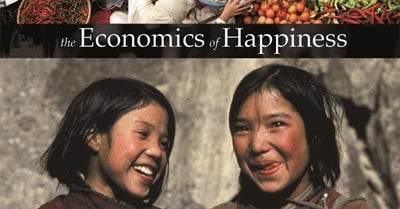
The Economics of Happiness (2011)
65 min · Economic globalization has led to a massive expansion in the scale and power of big business and banking. It has also worsened nearly every problem we face: fundamentalism and...
Money & Life (2013)
86 min · Money & Life is a passionate and inspirational essay-style documentary that asks a provocative question: can we see the economic crisis not as a disaster, but as a tremendous...
Dirt! The Movie (2009)
80 min · DIRT! The Movie takes you inside the wonders of the soil. It tells the story of Earth's most valuable and underappreciated source of fertility--from its miraculous beginning to...
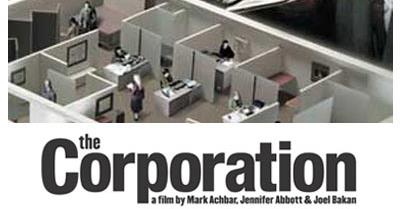
The Corporation (2003)
145 min · The Corporation is today's dominant institution, creating great wealth but also great harm. This 26 award-winning documentary examines the nature, evolution, impacts and future...
In Transition 2.0: A Story of Resilience & Hope in Extraordinary Times (2012)
66 min · This film is an inspirational immersion in the Transition movement, gathering stories from around the world of ordinary people doing extraordinary things. There are stories of...
Within Reach (2013)
87 min · Within Reach explores one couple's pedal-powered search for a place to call home. Mandy and Ryan gave up their jobs, cars, and traditional houses to 'bike-pack' 6500 miles...
Schooling the World (2010)
66 min · A note from Films For Action For the next month, the film-makers who created Schooling The World have generously made their film available to us in the spirit of the...
What A Way To Go: Life at the End of Empire (2007)
123 min · A middle class white guy comes to grips with Peak Oil, Climate Change, Mass Extinction, Population Overshoot and the demise of the American Lifestyle. Featuring interviews...
War Made Easy (2007)
70 min · War Made Easy reaches into the Orwellian memory hole to expose a 50-year pattern of government deception and media spin that has dragged the United States into one war after...
Food Inc. (2008)
93 min · For most Americans, the ideal meal is fast, cheap, and tasty. Food, Inc. examines the costs of putting value and convenience over nutrition and environmental impact. Director...

Beyond Elections: Redefining Democracy in the Americas (2008)
95 min · From Venezuela's Communal Councils, to Brazil's Participatory Budgeting; from Constitutional Assemblies to grassroots movements, recuperated factories to cooperatives across...
PROPAGANDA (2012)
95 min · Since it mysteriously appeared on YouTube on July 18, 2012, ‘Propaganda’ has been described as ‘1984 meets The Blair Witch Project’, ‘A mouthful of scary porridge’, and ‘Even...
Mark Corske's Engines of Domination (2014)
60 min · Political power -- armed central authority, with states and war -- is it part of human nature? Is it necessary for human communities? Or is it a tool that ruling elites use to...
Disruption (2014)
56 min · This is the story of our unique moment in history. We are living through an age of tipping points and rapid social and planetary change. We’re the first generation to feel the...
Crossroads: Labor Pains of a New Worldview (2013)
65 min · Crossroads: Labor Pains of a New Worldview is a documentary exploring the depths of the current human condition and the emergence of a worldview that is recreating our world...
Occupy Love (2013)
85 min · Join acclaimed director Velcrow Ripper on a journey deep inside the global revolution of the heart that is erupting around the planet. Humanity is waking up to the fact that...

Earthlings (2005)
95 min · EARTHLINGS is a feature length documentary about humanity's absolute dependence on animals (for pets, food, clothing, entertainment, and scientific research) but also...
The Choice Is Ours (2015)
59 min · This film series explores many aspects of our society.  To rethink what is possible in our world, we need to consider what kind of world we want to live in.  Although we refer...
Lifting the Veil:  Obama and the Failure of Capitalist Democracy (2011)
114 min · This film explores the historical role of the Democratic Party as the "graveyard of social movements", the massive influence of corporate finance in elections, the absurd...
Edible City: Grow the Revolution (2012)
60 min · Edible City tells the stories of the pioneers who are digging their hands into the dirt, working to transform their communities and do something truly revolutionary: grow...
Fall and Winter (2013)
102 min · This stunning film takes you on a hypnotic journey, reaching to the past to understand the origins of the catastrophic environmental transitions we now face. Over two years...
Real Estate 4 Ransom: Why Does Land Cost the Earth? (2012)
39 min · REAL ESTATE 4 RAN$OM outlines a genuine alternative to the global property speculation that forced so many into debt. Doubling the pressure, the tax game has become just that...
2012: Time For Change (2010)
85 min · "2012: Time for Change" presents an optimistic alternative to apocalyptic doom and gloom. Directed by Emmy Award nominee João Amorim, the film follows journalist Daniel...
The War You Don't See (2010)
98 min · A powerful and timely investigation into the media’s role in war, tracing the history of embedded and independent reporting from the carnage of World War One to the destruction...
Peace, Propaganda And The Promised Land (2004)
79 min · Provides a striking comparison of U.S. and international media coverage of the crisis in the Middle East, zeroing in on how structural distortions in U.S. coverage have...
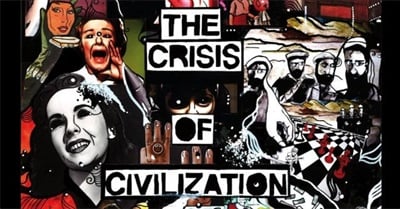
The Crisis of Civilization (2011)
87 min · A dark comedy remix mash-up bonanza about the end of industrial civilization. featuring clowns, car crashes, explosions, super heroes, and xylophones and much, much more ...
The Evolution of Ecological Consciousness (2013)
109 min · Permaculture designer Andrew Faust gives us an inspiring and heady narrative about the evolution of all life and human consciousness on Mother Earth.  For more info about...
Zeitgeist: Moving Forward (2011)
162 min · A feature length documentary by Peter Joseph that presents the case for a needed transition out of the current socioeconomic monetary paradigm which governs the entire world...
The Power of Community: How Cuba Survived Peak Oil (2006)
52 min · When the Soviet Union collapsed in 1990, Cuba's economy went into a tailspin. With imports of oil cut by more than half – and food by 80 percent – people were desperate. This...
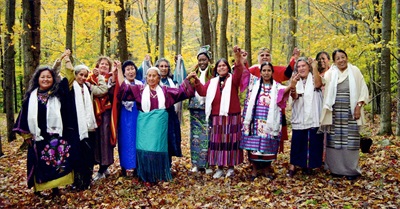
For The Next 7 Generations (2009)
84 min · In 2004, thirteen Indigenous Grandmothers from all four corners, moved by their concern for our planet, came together at a historic gathering, where they decided to form an...
Capitalism: A Love Story (2009)
127 min · Michael Moore’s Capitalism: A Love Story comes home to the issue he’s been examining throughout his career: the disastrous impact of corporate dominance on the everyday lives...
Inequality For All (2013)
90 min · A passionate argument on behalf of the middle class, INEQUALITY FOR ALL features Robert Reich—professor, best-selling author, and Clinton cabinet member—as he demonstrates how...
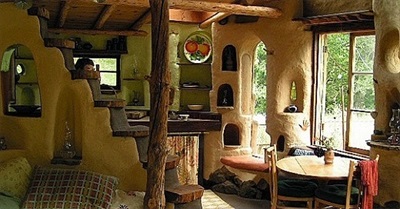
First Earth: Uncompromising Ecological Architecture (2010)
90 min · FIRST EARTH is a documentary about the movement towards a massive paradigm shift for shelter -- building healthy houses in the old ways, out of the very earth itself, and...
END: CIV (2011)
75 min · Directed by Franklin Lopez, END:CIV examines our culture’s addiction to systematic violence and environmental exploitation, and probes the resulting epidemic of poisoned...
Fresh: New Thinking about What We're Eating (2009)
70 min · FRESH celebrates the farmers, thinkers and business people across America who are re-inventing our food system. Each has witnessed the rapid transformation of our agriculture...
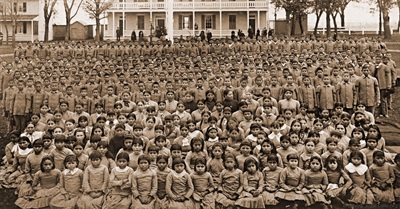
The Canary Effect: Kill the Indian, Save the Man (2006)
63 min · From multi-award winning directors Robin Davey and  Yellow Thunder Woman, comes this 'Illuminating Documentary' (Time Out). Delving deeply into the often misunderstood and...
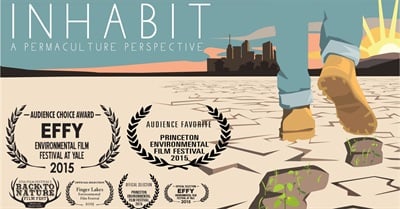
Inhabit: A Permaculture Perspective (2015)
92 min · Humanity is more than ever threatened by its own actions; we hear a lot about the need to minimize footprints and to reduce our impact. But what if our footprints were...
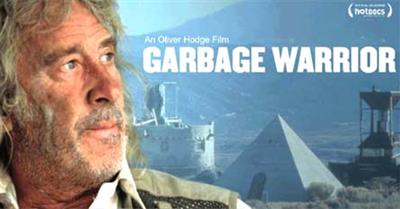
Garbage Warrior (2007)
87 min · What do beer cans, car tires and water bottles have in common? Not much unless you're renegade architect Michael Reynolds, in which case they are tools of choice for producing...
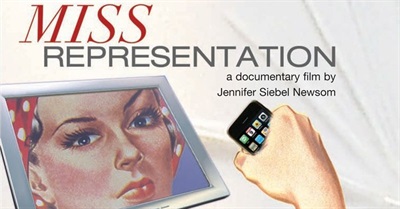
Miss Representation (2011)
90 min · Miss Representation explores how the media’s misrepresentations of women have led to the underrepresentation of women in positions of power and...
The Secret of Oz (2009)
110 min · Thirteen years ago, in a documentary called "The Money Masters", we asked the question why is America going broke. It wasn't clear then that we were, but it is today. Now the...
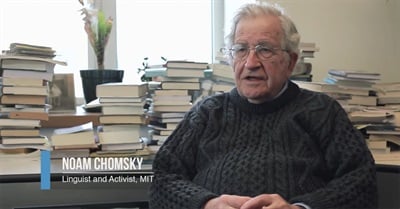
The Myth of the Liberal Media: The Propaganda Model of News (1997)
59 min · Edward Herman and Noam Chomsky demolish one of the central tenets of our political culture, the idea of the "liberal media." Instead, utilizing a systematic model based on...
Breaking The Taboo (2011)
58 min · Narrated by Oscar winning actor Morgan Freeman, the film follows The Global Commission on Drug Policy on a mission to break the political taboo over the United States led War...
Class Dismissed: How TV Frames the Working Class (2005)
64 min · Based on the book by Pepi Leistyna, Class Dismissed navigates the steady stream of narrow working class representations from American television's beginnings to today's...
Can We Do It Ourselves? (2015)
59 min · Within modern life exists a paradox: we celebrate democracy as a political system, but not as an economic system, even though our workplaces have a far greater impact on our...
Affluenza (1997)
56 min · AFFLUENZA is a groundbreaking film that diagnoses a serious social disease - caused by consumerism, commercialism and rampant materialism - that is having a devastating impact...
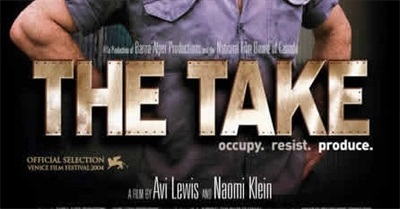
The Take: Occupy, Resist, Produce (2004)
87 min · In the wake of Argentina's dramatic economic collapse in 2001, Latin America's most prosperous middle class finds itself in a ghost town of abandoned factories and mass...
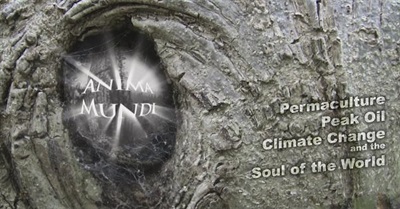
Anima Mundi: Permaculture, Peak Oil, Climate Change and the Soul of the World (2011)
77 min · Many people do not realize that permaculture is much more than about growing fruit and vegetables, it is a whole view incorporating the environment, energy, resources...
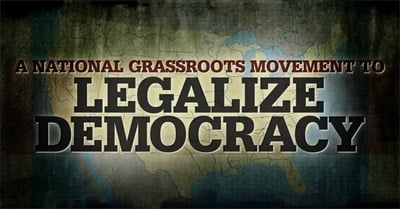
Legalize Democracy (2014)
30 min · Legalize Democracy is a documentary film by Dennis Trainor, Jr. about a movement to amend the U.S. Constitution so that Corporations are not considered people, and money is not...
The Yes Men Fix The World (2009)
95 min · The Yes Men Fix the World is a screwball true story about two gonzo political activists who, posing as top executives of giant corporations, lie their way into big business...
Gasland (2010)
102 min · The Halliburton-developed drilling technology of “fracking” or hydraulic fracturing has unlocked a “Saudia Arabia of natural gas” just beneath us. But is fracking safe? When...
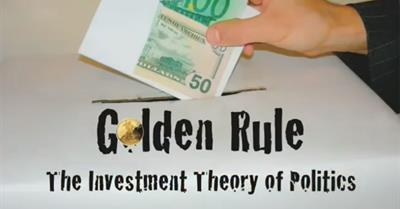
Golden Rule: The Investment Theory of Politics (2009)
87 min · The definitive documentary explaining the influence of money on politics by Jonathan Shockley. If you like it, consider buying the high quality DVD or donating a few $ at...
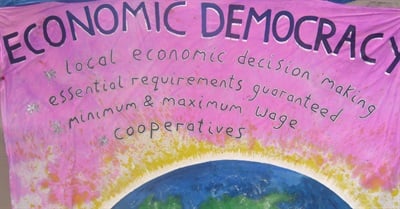
Prout: Economic Democracy in Practice (2004)
30 min · Economics of Prout covers the basic economic principles of Prout, which offers a viable alternative to the materialistic, anti human philosophies of Capitalism and Communism.
DIVE! Living Off America's Waste (2009)
53 min · Inspired by a curiosity about our country's careless habit of sending food straight to landfills, the multi award-winning documentary DIVE! follows filmmaker Jeremy Seifert and...
The Nature of Cities (2010)
39 min · "The Nature Of Cities" follows the journey of Professor Timothy Beatley as he explores urban projects around the world, representing the new green movement that hopes to move...
Not Business As Usual (2014)
61 min · Not Business As Usual is a provocative look at capitalism and its unintended price of success. The film tracks the changing landscape of business with the rising tide of...
Unwasted: The Future Of Business On Earth (2011)
54 min · Unwasted presents the alluring ideal of zero waste as a key element of the sustainable business model. While some may shake their heads thinking this an impossible task, it’s...
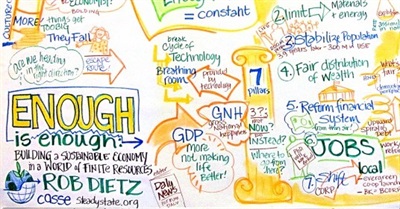
Enough Is Enough (2014)
18 min · Enough Is Enough lays out a visionary but realistic alternative to the perpetual pursuit of economic growth-an economy where the goal is enough, not more. “Based on the...
Class Dismissed (2004)
27 min · Class Dismissed provides a critical look at how U.S. history is taught in high school, at the myths that reduce the complexity of history into simple soundbites, and the...
Prosocial Progress: A Blueprint For Social Sustainability (2013)
55 min · Prosocial Progress aims to demonstrate how behavioural science can be utilised on a large scale in areas of child development, education and the culture itself in order to...
The Evilness of Power (2008)
92 min · THE EVILNESS OF POWER examines the ways in which power and hierarchy affect individuals, society, and the world at large. It's possibly the best film on the subject ever...
Waste = Food (2007)
49 min · Man is the only creature that produces landfills. Natural resources are being depleted on a rapid scale while production and consumption are rising in na­tions like China and...
Wal-Mart: the High Cost of Low Price (2005)
98 min · The film dives into the deeply personal stories and everyday lives of families and communities struggling to fight a goliath. A working mother is forced to turn to public...
Toxic Sludge Is Good For You: The Public Relations Industry Unspun (2002)
45 min · While advertising is the visible component of the corporate system, perhaps even more important and pervasive is its invisible partner, the public relations industry. This...
Words From The Edge (2013)
50 min · Words From The Edge is a film about the unprecedented transition that we are undergoing from a culture of industrial growth and inequality to what must inevitably be more...
Law Enforcement Opposed to the War on Drugs (2006)
54 min · Cops and former cops who have put in decades fighting the war on drugs speak out against prohibition.
Growing Change: A Journey Inside Venezuela's Food Revolution (2011)
60 min · Growing Change follows the filmmaker's journey to understand why current food systems leave hundreds of millions of people in hunger.  It's a journey to understand how the...
Breaking The Silence - Truth And Lies In The War On Terror (2003)
51 min · "BREAKING THE SILENCE is a film with enormous emotional power, bringing us the human consequences of our military attacks on Middle East countries. It also provides us with...
Capitalism Is The Crisis (2011)
100 min · This documentary explains the nature of capitalist crisis, visits the protests against austerity measures, and recommends revolutionary paths for the future.
The Age of Stupid (2009)
88 min · Oscar-nominated Pete Postlethwaite plays an old man living in the devastated world of 2055 in this documentary-drama-animation hybrid from Director Franny Armstrong and...
Sir! No Sir! - The GI Movement to End the Vietnam War (2005)
49 min · This feature-length documentary focuses on the efforts by troops in the U.S. military during the Vietnam War to oppose the war effort by peaceful demonstration and subversion...
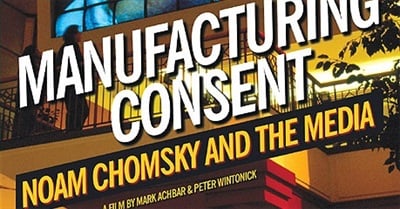
Manufacturing Consent: Noam Chomsky and the Media (1992)
167 min · Funny, provocative and surprisingly accessible, the film explores the political life and ideas of Noam Chomsky, world-renowned linguist, intellectual and political activist. A...
The Soil Solution To Climate Change (2013)
30 min · What If A Solution To Climate Change Was Beneath Your Feet?  Soil is a living universe beneath our feet. As important to our lives as clean air and water, soil also holds a...
Singapore: Biophilic City (2012)
44 min · A whirlwind week in Singapore exploring the amazing story of how Singapore came to be one of the most 'biophilic' cities of the world, on the cutting edge of ecocity design and...
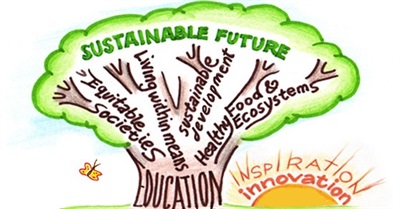
Education For a Sustainable Future (2012)
53 min · Education For a Sustainable Future presents information on how today's practices in schools are socially unsustainable. The documentary film critically analyses what is...
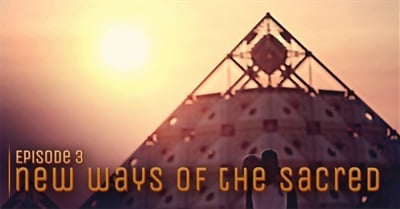
The Bloom Episode 3: New Ways of the Sacred
70 min · Part III of The Bloom “New Ways of The Sacred” looks at how Transformational Festivals are venues for an active engagement with ancient, universal themes of MYTHOS, RITUAL and...
The Superior Human? (2012)
73 min · A documentary that systematically challenges the common human belief that humans are superior to other life forms. The documentary reveals the absurdity of this belief while...
Cultural Creatives 1.0: The (R)evolution
81 min · Featuring many key figures from Europe and the U.S., this is the first documentary film to look with scientific thoroughness at the world of Cultural Creatives. It shows that a...
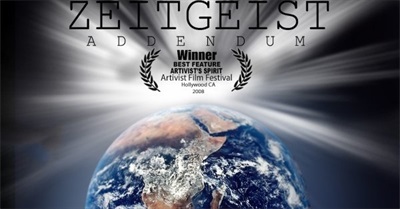
Zeitgeist: Addendum (2008)
123 min · Zeitgeist: Addendum, a 2008 documentary film produced by Peter Joseph, is a continuation of the film Zeitgeist, the Movie. The film includes facts regarding the Federal Reserve...
The Global Brain: Peter Russell (1983)
35 min · Peter Russell’s award-winning video, based on a live audio-visual presentation in 1983. He explores the idea that the Earth is an integrated, self-regulating living organism...
Human Resources: Social Engineering in the 20th Century (2010)
119 min · Human Resources explores the rise of mechanistic philosophy and the exploitation of human beings under modern hierarchical systems. Topics covered include behaviorism...
Park Avenue: Money, Power And The American Dream (2012)
59 min · Academy Award-winning filmmaker Alex Gibney (Taxi to the Dark Side, Enron: The Smartest Guys in the Room) presents his take on the gap between rich and poor Americans in Park...
Origins (2014)
101 min · This is a movie about how we have left the natural connection to the planet. The movie investigates how this has happened, the incredible amounts of pollutants that we are...
Cointelpro 101 (2010)
56 min · COINTELPRO may not be a well-understood acronym but its meaning and continuing impact are absolutely central to understanding the government’s wars and repression against...
Starsuckers (2009)
72 min · Starsuckers is a documentary about our celebrity obsessed media. It uncovers the real reasons behind our addiction to fame and blows the lid off the corporations and...
The Power Principle: Corporate Empire and the Rise of the National Security State (2012)
95 min · "A gripping, deeply informative account of the plunder, hypocrisy, and mass violence of plutocracy and empire; insightful, historically grounded and highly relevant to the...
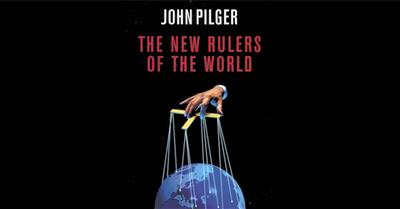
The New Rulers of the World (2001)
52 min · 'The New Rulers Of The World analyzes the new global economy and reveals that the divisions between the rich and poor have never been greater - two thirds of the world's...
War By Other Means (1992)
52 min · John Pilger travels to many third world countries to investigate the devastating results of loans from the World Bank and International Monetary Fund (IMF). This film shows...
Occupied Cascadia (2012)
116 min · Occupied Cascadia is a documentary film both journalistic and expressionistic. Exploring the emerging understanding of bioregionalism within the lands and waters of the...
Orwell Rolls In His Grave (2003)
105 min · "Orwell Rolls Over In His Grave" expresses ideas that will never be heard in mainstream media. It is the consummate critical examination of the Fourth Estate, once the bastion...
PsyWar: The Real Battlefield is the Mind (2010)
99 min · This film explores the evolution of propaganda and public relations in the United States, with an emphasis on the "elitist theory of democracy" and the relationship between...
Transitions For Society: Job Guarantee and Basic Income (2014)
20 min · This film presents a huge social problem called technological unemployment. Whilst doing so, the film also presents two potential solutions to this major social issue. The...
Own The Change: Building Economic Democracy One Worker Co-op at a Time (2015)
20 min · Own the Change: Building Economic Democracy One Worker Co-op at a Time is a short documentary meant to give an overview of what a worker co-op is, how it can transform lives...
The Lottery of Birth (2013)
76 min · Do you shape the world or does it shape you? Drawing on leading thinkers from around the world, and with a torrent of mind-expanding ideas and information, THE LOTTERY OF BIRTH...
Permaculture: A Quiet Revolution (2008)
26 min · As corporate media fails to provide accurate news of the world's dire environmental predicament, the Earth sends a clear message in the form of record-breaking natural...
What I've Learned About U.S. Foreign Policy (2000)
118 min · This is a powerful 10-part compilation that (in important ways) pulls aside the veil of Official myths and Lies about "freedom", "democracy", Human Rights, etc., being the...
Connected: A Film for Change (2013)
42 min · 'Connected' is a film made by Paul and Kate Maple, a UK based couple who have made it their lives for the last 4 years. Worried about the future and the seemingly...
Sprawling from Grace: Driven to Madness (2008)
81 min · For as long as most Americans can remember the car has been the embodiment of the American dream. But with more than 250 million cars and trucks on the road, Americans have...
A Crude Awakening (2007)
82 min · Produced and directed by award-winning European journalists and filmmakers Basil Gelpke and Ray McCormack, A Crude Awakening tells the story of how our civilization’s addiction...
No Logo: Brands. Globalization. Resistance. (2003)
40 min · In the age of the brand, logos are everywhere. But why do some of the world’s best-known brands find themselves on the wrong end of the spray paint can — the targets of...