Showing posts with label Art. Show all posts

Tuesday, September 3, 2019

Unity-Oneness

Source: Soul Art Medicine

Unity-Oneness

healing circle
The Circle has healing power. 
In the Circle, we are all equal. When in the Circle, no one is in front of you. No one is behind you. No one is above you. No one is below you.
The Sacred Circle is designed to create unity. The Hoop of Life is also a circle. On this hoop there is a place for every species, every race, every tree and every plant. It is this completeness of life that must be respected in order to bring about health on this planet.
Dave Chief, Oglala Lakota

Saturday, December 31, 2016

Lessons from Leonardo

Leonardo's union of art, science, and design demonstrates the thinking needed to create sustainable societies.

What We Can Learn From Leonardo

When it comes to connecting art, science, and design, there can be no better inspiration than Leonardo da Vinci.

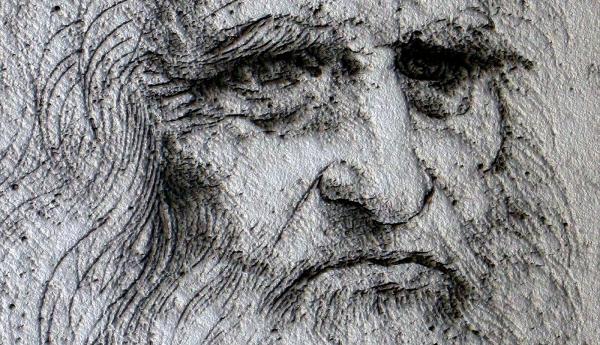
He was the great genius of the Renaissance, who not only connected these three disciplines but fused them into a seamless whole in a unique synthesis that has not been equaled before, nor afterwards. I have studied Leonardo's synthesis for many years. I published a book, The Science of Leonardo, in 2007; and I have now written about three quarters of a second book, in which I go deeper into the various branches of his science.

Most authors who have discussed Leonardo's scientific work have looked at it through Newtonian lenses. This has often prevented them from understanding its essential nature, which is that of a science of organic forms, of qualities, that is radically different from the mechanistic science of Galileo, Descartes, and Newton. And this is precisely why Leonardo's science is so relevant today, especially for education, as we are trying to see the world as an integrated whole, making a perceptual shift from the parts to the whole, objects to relationships, quantities to qualities.

The Empirical Method

In Western intellectual history, the Renaissance marks the period of transition from the Middle Ages to the modern world. In the 1460s, when the young Leonardo received his training as painter, sculptor, and engineer in Florence, the worldview of his contemporaries was still entangled in medieval thinking.

Science in the modern sense, as a systematic empirical method for gaining knowledge about the natural world, did not exist. Knowledge about natural phenomena had been handed down by Aristotle and other philosophers of antiquity, and was fused with Christian doctrine by the Scholastic theologians who presented it as the officially authorized creed and condemned scientific experiments as subversive. Leonardo da Vinci broke with this tradition: 

"First I shall do some experiments before I proceed farther, because my intention is to cite experience first and then with reasoning show why such experience is bound to operate in such a way. And this is the true rule by which those who speculate about the effects of nature must proceed."

One hundred years before Galileo and Bacon, Leonardo single-handedly developed a new empirical approach, involving the systematic observation of nature, reasoning, and mathematics — in other words, the main characteristics of what is known today as the scientific method.

Leonardo's approach to scientific knowledge was visual; it was the approach of a painter. "Painting," he declares, "embraces within itself all the forms of nature." I believe that this statement is the key to understanding Leonardo's science. He asserts repeatedly that painting involves the study of natural forms, and he emphasizes the intimate connection between the artistic representation of those forms and the intellectual understanding of their intrinsic nature and underlying principles. For example, we read in a collection of his notes on painting, known as the "Treatise on Painting":

"[Painting] with philosophic and subtle speculation considers all the qualities of forms…. Truly this is science, the legitimate daughter of nature, because painting is born of nature."

Nature as a whole was alive for Leonardo, and he saw the patterns and processes in the microcosm as being similar to those in the macrocosm. In particular, he frequently drew analogies between human anatomy and the structure of the Earth, as in the following beautiful passage: 

"We may say that the Earth has a vital force of growth, and that its flesh is the soil; its bones are the successive strata of the rocks which form the mountains; its cartilage is the porous rock, its blood the veins of the waters. The lake of blood that lies around the heart is the ocean. Its breathing is the increase and decrease of the blood in the pulses, just as in the Earth it is the ebb and flow of the sea."

Systemic Thinker

Leonardo was what we would call, in today's scientific parlance, a systemic thinker. Understanding a phenomenon, for him, meant connecting it with other phenomena through a similarity of patterns. When he studied the proportions of the human body, he compared them to the proportions of buildings in Renaissance architecture; his investigations of muscles and bones led him to study and draw gears and levers, thus interlinking animal physiology and engineering; patterns of turbulence in water led him to observe similar patterns in the flow of air; and from there he went on to explore the nature of sound, the theory of music, and the design of musical instruments.

This exceptional ability to interconnect observations and ideas from different disciplines lies at the very heart of Leonardo's approach to learning and research, and this is something that is very much needed today, as the problems of our world become ever more interconnected and can only be understood and solved if we learn how to think systemically — in terms of relationships, patterns, and context.

While Leonardo's manuscripts gathered dust in ancient European libraries, Galileo was celebrated as the "father of modern science." One cannot help but wonder how Western scientific thought might have developed had Leonardo's notebooks been known and widely studied soon after his death.

Leonardo's Legacy
Leonardo did not pursue science and engineering to dominate nature, as Francis Bacon would advocate a century later. He abhorred violence and had a special compassion for animals. He was a vegetarian because he did not want to cause animals pain by killing them for food. He would buy caged birds in the marketplace and set them free, and would observe their flight not only with a sharp observational eye but also with great empathy.

Instead of trying to dominate nature, Leonardo's intent was to learn from her as much as possible. He was in awe of the beauty he saw in the complexity of natural forms, patterns, and processes, and aware that nature's ingenuity was far superior to human design. "Though human ingenuity in various inventions uses different instruments for the same end," he declared, "it will never discover an invention more beautiful, easier, or more economical than nature's, because in her inventions nothing is wanting and nothing is superfluous."

This attitude of seeing nature as a model and mentor is now being rediscovered in the practices of ecological design and biomimicry. Like Leonardo, ecodesigners today study the patterns and flows in the natural world and try to incorporate the underlying principles into their design processes. This attitude of appreciation and respect of nature is based on a philosophical stance that does not view humans as standing apart from the rest of the living world but rather as being fundamentally embedded in, and dependent upon, the entire community of life in the biosphere.

Today, this philosophical stance is promoted by the school of thought known as "deep ecology." Shallow ecology views humans as above or outside the natural world, as the source of all value, and ascribes only instrumental, or "use," value to nature. Deep ecology, by contrast, does not separate humans — or anything else — from the natural environment. It sees the living world as being fundamentally interconnected and interdependent and recognizes the intrinsic value of all living beings. Amazingly, Leonardo's notebooks contain an explicit articulation of that view: 

"The virtues of grasses, stones, and trees do not exist because humans know them.… Grasses are noble in themselves without the aid of human languages or letters."

In view of this deep ecological awareness and of Leonardo's systemic way of thinking, it is not surprising that he spoke with great disdain of the so-called "abbreviators," the reductionists of his time:


"The abbreviators do harm to knowledge and to love.... Of what use is he who, in order to abridge the part of the things of which he professes to give complete knowledge, leaves out the greater part of the things of which the whole is composed?… Oh human stupidity!... Don't you see that you fall into the same error as he who strips a tree of its adornment of branches laden with leaves, intermingled with fragrant flowers or fruit, in order to demonstrate the suitability of the tree for making planks?"

This statement is not only revealing testimony of Leonardo's way of thinking, but is also ominously prophetic. Reducing the beauty of life to mechanical parts and valuing trees only for making planks is an eerily accurate characterization of the mindset that dominates our world today. This, in my view, is the main reason why Leonardo's legacy is immensely relevant to our time.

As we recognize that our sciences and technologies have become increasingly narrow in their focus, unable to understand our multi-faceted problems from an interdisciplinary perspective, and dominated by corporations more interested in financial rewards than in the well-being of humanity, we urgently need a science that honors and respects the unity of all life, recognizes the fundamental interdependence of all natural phenomena, and reconnects us with the living Earth. What we need today is exactly the kind of science Leonardo da Vinci anticipated and outlined 500 years ago.

This essay is adapted from lectures delivered by Fritjof Capra at the Center for Ecoliteracy's seminar "Sustainability Education: Connecting Art, Science, and Design," August 16–18, 2010.

New Lessons from Leonardo

In order to reconnect to the natural world today, Fritjof Capra suggests we need to embrace the same elements Leonardo outlined 500 years ago.

New Lessons from Leonardo
This essay is adapted from a talk in which Fritjof Capra discusses some of the findings described in his latest book, Learning from Leonardo: Decoding the Notebooks of a Genius (2013: Berrett-Koehler Publishers).

Leonardo da Vinci, the great genius of the Renaissance, developed and practiced a unique synthesis of art, science, and technology, which is not only extremely interesting in its conception but also very relevant to our time.

As we recognize that our sciences and technologies have become increasingly narrow in their focus, unable to understand our multi-faceted problems from an interdisciplinary perspective, we urgently need a science and technology that honor and respect the unity of all life, recognize the fundamental interdependence of all natural phenomena, and reconnect us with the living Earth. What we need today is exactly the kind of synthesis Leonardo outlined 500 years ago.

A science of living forms
At the core of Leonardo's synthesis lies his life-long quest for understanding the nature of the living forms of nature. He asserts repeatedly that painting involves the study of natural forms, of qualities, and he emphasizes the intimate connection between the artistic representation of those forms and the intellectual understanding of their intrinsic nature and underlying principles. In order to paint nature's living forms, Leonardo felt that he needed a scientific understanding of their intrinsic nature and underlying principles, and in order to analyze the forms of nature, he needed the artistic ability to draw them. His science cannot be understood without his art, nor his art without the science.

The quest for the secret of life
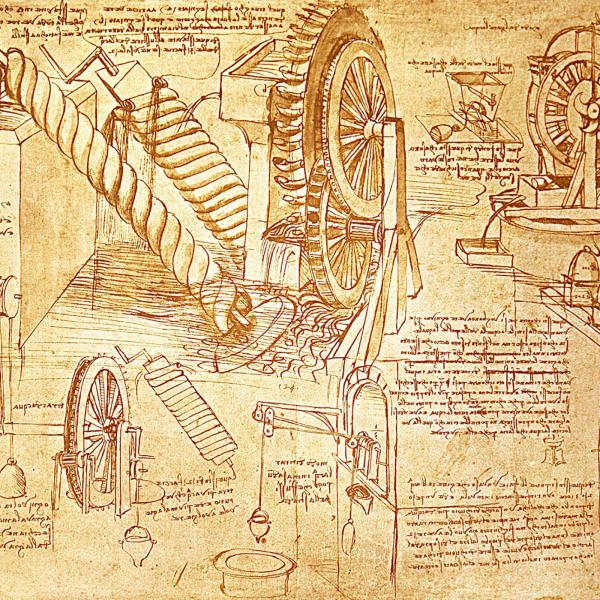
I have been fascinated by the genius of Leonardo Lea Vinci and have spent the last ten years studying his scientific writings in facsimile editions of his famous notebooks. In my new book, I present an in-depth discussion of the main branches of Leonardo's scientific work — his fluid dynamics, geology, botany, mechanics, science of flight, and anatomy. Most of his astonishing discoveries and achievements in these fields are virtually unknown to the general public.

What emerged from my explorations of all the branches of Leonardo's science was the realization that, at the most fundamental level, Leonardo always sought to understand the nature of life. My main thesis is that the science of Leonardo da Vinci is a science of living forms, radically different from the mechanistic science of Galileo, Descartes, and Newton that emerged 200 years later.    

This has often escaped earlier commentators, because until recently the nature of life was defined by biologists only in terms of cells and molecules, to which Leonardo, living two centuries before the invention of the microscope, had no access. But today, a new systemic understanding of life is emerging at the forefront of science — an understanding in terms of metabolic processes and their patterns of organization; and those are precisely the phenomena which Leonardo explored throughout his life, both in the macrocosm of the Earth and in the microcosm of the human body.

In the macrocosm, the main themes of Leonardo's science were the movements of water, the geological forms and transformations of the Earth, and the botanical diversity and growth patterns of plants. In the microcosm, his main focus was on the human body — its beauty and proportions, the mechanics of its movements, and the understanding of the nature and origin of life. Let me give you a very brief summary of his achievements in these diverse scientific fields.

The movements of water
Leonardo was fascinated by water in all its manifestations. He recognized its fundamental role as life's medium and vital fluid, as the matrix of all organic forms: "It is the expansion and humor of all living bodies," he wrote. "Without it nothing retains its original form." This view of the essential role of water in biological life is fully borne out by modern science. Today we know not only that all living organisms need water for transporting nutrients to their tissues, but also that life on Earth began in water, and that for billions of years, all the cells that compose living organisms have continued to flourish and evolve in watery environments. So, Leonardo was completely correct in viewing water as the carrier and matrix of life.

Throughout his life, Leonardo studied its movements and flows, drew and analyzed its waves and vortices. He experimented not only with water but also investigated the flows of blood, wine, oil, and even those of sand and grains. He was the first to formulate the basic principles of flow, and he recognized that they are the same for all fluids. These observations establish Leonardo da Vinci as a pioneer in the discipline known today as fluid dynamics.

Leonardo's manuscripts are full of exquisite drawings of spiraling vortices and other patterns of turbulence in water and air, which until now have never been analyzed in detail, because the physics of turbulent flows is notoriously difficult. In this book, I present an in-depth analysis of Leonardo's drawings of turbulent flows, based on extensive discussions with Ugo Piomelli, professor of fluid dynamics at Queen's University in Canada, who very generously helped me to analyze all of Leonardo's drawings and descriptions of turbulent flows.

The living Earth
Leonardo saw water as the chief agent in the formation of the Earth's surface. This awareness of the continual interaction of water and rocks impelled him to undertake extensive studies in geology, which informed the fantastic rock formations that appear so often in the shadowy backgrounds of his paintings. His geological observations are stunning not only by their great accuracy, but also because they led him to formulate general principles that were rediscovered only centuries later and are still used by geologists today.

Leonardo was the first to postulate that the forms of the Earth are the result of slow processes taking place over long epochs of what we now call geological time.

With this view, Leonardo was centuries ahead of his time. Geologists became aware of the great duration of geological time only in the early 19th century with the work of Charles Lyell, who is often considered the father of modern geology.

Leonardo was also the first to identify folds of rock strata. His descriptions of how rocks are formed over enormously long periods of time in layers of sedimentation and are subsequently shaped and folded by powerful geological forces come close to an evolutionary perspective. He arrived at this perspective 300 years before Charles Darwin, who also found inspiration for evolutionary thought in geology.
  
The growth of plants
Leonardo's notebooks contain numerous drawings of trees and flowering plants, many of them masterpieces of detailed botanical imagery. These drawings were at first made as studies for paintings, but soon turned into genuine scientific inquiries about the patterns of metabolism and growth that underlie all botanical forms. Leonardo paid special attention to the nourishment of plants by sunlight and water, and to the transport of the sap through the plants' tissues.

He correctly distinguished between the dead outer layer of a tree's bark and the living inner bark, known to botanists as the phloem, which he called very aptly "the shirt that lies between the bark and the wood." He was also the first to recognize that the age of a tree corresponds to the number of rings in the cross-section of its trunk, and — even more remarkably — that the width of a growth ring is an indication of the climate during the corresponding year. As in so many other fields, Leonardo carried his botanical thinking far beyond that of his peers, establishing himself as the first great theorist in botany.

The human body in motion
Whenever Leonardo explored the forms of nature in the macrocosm, he also looked for similarities of patterns and processes in the human body. In order to study the body's organic forms, he dissected numerous corpses of humans and animals, and examined their bones, joints, muscles, and nerves, drawing them with an accuracy and clarity never seen before. Leonardo demonstrated in countless elaborate and stunning drawings how nerves, muscles, tendons and bones work together to move the body.

Unlike Descartes, Leonardo never thought of the body as a machine, even though he was a brilliant engineer who designed countless machines and mechanical devices. He clearly recognized that the anatomies of animals and humans involve mechanical functions. "Nature cannot give movement to animals without mechanical instruments," he explained, but that did not imply for him that living organisms were machines. It only implied that, in order to understand the movements of the animal body, he needed to explore the principles of mechanics. Indeed, he saw this as the most "noble" role of this branch of science.

Elements of mechanics
To understand in detail how nature's "mechanical instruments" work together to move the body, Leonardo immersed himself in prolonged studies of problems involving weights, forces, and movements — the branches of mechanics known today as statics, dynamics, and kinematics. While he studied the elementary principles of mechanics in relation to the movements of the human body, he also applied them to the design of numerous new machines, and as his fascination with the science of mechanics grew, he explored ever more complex topics, anticipating abstract principles that were centuries ahead of his time.

These include his understanding of the relativity of motion, his discovery of the principle now known as Newton's third law of motion, his intuitive grasp of the conservation of energy, and — perhaps most remarkably — his anticipation of the law of energy dissipation, the second law of thermodynamics. Although there are many books on Leonardo's mechanical engineering, there is as yet none on his theoretical mechanics. In the longest chapter of this book, I provide an in-depth analysis of this important branch of Leonardo's science.

The science of flight
From the texts that accompany Leonardo's anatomical drawings we know that he considered the human body as an animal body, as biologists do today; and thus it is not surprising that he compared human movements with the movements of various animals. What fascinated him more than any other animal movement was the flight of birds. It was the inspiration for one of the great passions in his life — the dream of flying.

The dream of flying like a bird is as old as humanity itself. But nobody pursued it with more intensity, perseverance, and commitment to meticulous research than Leonardo da Vinci. His science of flight involved numerous disciplines — from aerodynamics to human anatomy, the anatomy of birds, and mechanical engineering.

In my chapter on Leonardo's science of flight, I analyze his drawings and writings on this subject in some detail, and I come to the conclusion that he had a clear understanding of the origin of aerodynamic lift, that he fully understood the essential features of both soaring and flapping flight, and that he was the first to recognize the principle of the wind tunnel — that a body moving through stationary air is equivalent to air flowing over a stationary body. This establishes Leonardo da Vinci as one of the great pioneers of aerodynamics.

In his numerous designs of flying machines, Leonardo attempted to imitate the complex flapping and gliding movements of birds. Many of these designs were based on sound aerodynamic principles, and it was only the weight of the materials available in the Renaissance that prevented him from building viable models.

The mystery of life
As I have mentioned, the grand unifying theme of Leonardo's explorations of the macro- and microcosm was his persistent quest to understand the nature of life. This quest reached its climax in the anatomical studies he carried out in Milan and Rome when he was over sixty, especially in his investigations of the heart — the bodily organ that has served as the foremost symbol of human existence and emotional life throughout the ages. He not only understood and pictured the heart in ways no one had before him; he also observed subtleties in its actions that would elude medical researchers for centuries.

During the last decade of his life, Leonardo became intensely interested in another aspect of the mystery of life — its origin in the processes of reproduction and embryonic development. In his embryological studies, he described the life processes of the fetus in the womb, including its nourishment through the umbilical cord, in astonishing detail. Leonardo's embryological drawings are graceful and touching revelations of the mysteries surrounding the origins of life. 

Leonardo knew very well that, ultimately, the nature and origin of life would remain a mystery, no matter how brilliant his scientific mind. "Nature is full of infinite causes that have never occurred in experience," he declared in his late forties, and as he got older, his sense of mystery deepened. Nearly all the figures in his last paintings have that smile that expresses the ineffable, often combined with a pointing finger. "Mystery to Leonardo," wrote the famous art historian Kenneth Clark, "was a shadow, a smile, and a finger pointing into darkness."

Links: https://www.ecoliteracy.org/article/what-we-can-learn-leonardo
https://www.ecoliteracy.org/article/new-lessons-leonardo


Monday, June 16, 2014

For truth, science. For goodness, spirituality. For beauty, arts.

Truth, Goodness and Beauty

by Satish Kumar

The purpose of Resurgence & Ecologist is to practise, pursue and promote Truth, Goodness and Beauty (TGB). This ancient trinity is our foundation. When we select our articles, reviews, poems and pictures we ask ourselves: do they meet the test of TGB? Are they true and authentic? Will they do any good to our readers? Do they embody a sense of balance and harmony, in other words, are they beautiful in themselves? We try to meet the TGB criteria as far as we can.

In doing so, we ourselves, and I know our readers and contributors also, try to bring the influence of TGB into our personal, political, social and economic lives.

Science, spirituality and the arts flow from TGB. It is the purpose of science to search for truth. In order to know truth we need science. Genuine science is more than mathematics, more than measurement and more than precision; science is all that and much more. There are more ways to know the truth than a particular methodology. Intuition, experience, insight and meaning are as important as empirical knowledge, evidence and experiment.

If we take truth to mean science, as it is practised in the modern world, then science alone is not enough. Science can be used to serve the military and money, it can be used to produce nuclear weapons, subjugate the natural environment and exploit our fellow human beings. Therefore truth, and the knowledge of truth, must be integrated with goodness: the good of oneself and of all beings. And goodness is a quality of the spirit. There must be complete unity between truth and goodness; between science and spirituality. One without the other is incomplete. The sword of truth must be safeguarded within the sheath of goodness. Compassion is a wonderful companion to truth. When they are separated, both lose out.

In the modern world there is far too much emphasis on truth, on science, on physical facts, on measurement, and not enough on goodness, on compassion, on meaning and on wisdom. The balance needs to be restored. Spirituality is not the same as the organised religious orders or a particular kind of theology, or even a particular belief system. Spirituality is about relationships, about empathy, compassion and wisdom.

Even the eminent scientist Einstein said that science without religion is blind and religion without science is lame. So why split the two?

The manifestation of truth and goodness, or science and spirituality has to be beautiful. That is why the arts need to be an integral part of human fulfillment. Science correlates to truth, spirituality to goodness and the arts to beauty.

There is a corresponding trinity: head, heart and hands. With our head, with our thinking and intellect, we comprehend truth; with our heart we experience goodness and with our hands we create beauty. Unfortunately our educational and economic systems place undue importance on the head, above heart and hands. Brainworkers and intellectuals are paid better. A job behind a desk and in front of a computer in a bank or in an office is considered to be of greater value than building a house, plumbing, furniture making, pottery, or farming. According to the prevailing ethos of our society manual work must be done by machines as far as is possible, or by cheap labour, either at home, or by immigrant workers from poorer countries. Most ‘manually manufactured’ goods are expected to be made in countries like Bangladesh by poorly paid artisan craftsmen and women; the economy of a country like England aspires to be transformed into a ‘knowledge economy’. This is a very unbalanced state of affairs.

Our society needs a bigger picture – a holistic vision. The hallmark of a balanced society is to honour and respect mental work and manual work equally. We need both. Only then we can develop our head, heart and hands in total harmony; science, spirituality and the arts need to be in complete coherence leading to the trinity of TGB – truth, goodness and beauty – as an integrated whole.

Through Resurgence & Ecologist magazine our writers, poets, artists, readers and supporters are on this challenging journey. This is our holistic vision. And this issue is no exception. Particularly I recommend the article by Charles Eisenstein who urges us not to get distracted by any single-issue obsession, such as global warming or climate change. When we address a pressing issue that may be fashionable for a time we must hold the big picture in our minds. And that big picture is the picture of Truth, Goodness and Beauty.


Tuesday, November 26, 2013

Painting the Town: Part 1 - The Public Realm


Streets and squares have always been the most important places in our cities. We have always wanted, nay, needed to come together, meet and socialize, buy and sell, gossip, celebrate and work together, and this all began in the public realm. Meeting and spending time with other people in a beautiful place is pleasure, it makes us more alive, and creates a sense of gaiety. And we have an innate desire to beautify places where we gather, particularly for special occasions, to increase the geniality of the event.

Give some children chalks and a pavement and they will immediately collaborate to color the street with patterns and drawings. Children learn to make their own inexpensive chalks by mixing chalk powder and pigment with a little water, rolling handfuls into sticks, and letting them dry. Then they are off. In English “play streets”, in Italian piazze, and in European “Wohnstrasse” (Living Streets), children - and their chalk - have free reign for creative expression.

This urge to beautify the street has been taken to high aesthetic levels by the ancient tradition of street painters. Known for centuries in England as “pavement artists”, and in Italy as “Madonnari”, these artists work with high quality chalk to create works of extraordinary beauty. Pavement art can now be seen in cities around the world, and sometimes, through use of trompe l’oeil, appear to create vast chasms in the street revealing waterfalls and nether worlds. While these are created by individual artists working alone, rather than by the community, they always cause strangers to pause and talk to each other, thus enhancing the street’s sociability.

Since 1972, an international festival of street artists has been held in the main piazza of Grazie di Curtatone, Italy, and other festivals (Savannah, Denver, etc) have since appeared across America.

The public realm was always the primary location for community celebration, and usually included elaborate decoration of the streets themselves in the form of flower carpets, sand art, etc. More than just decoration, these festivals originally involved the entire community and have been absorbed into religious celebrations. In India, for example, Rangoli (hand painted patterns on the floor) are part of the Hindu Festival of Light.

Across Italy, in towns and villages like Genzano near Rome, Noto in Sicily, Spello and Cannara in Umbria, communities take great pride in their elaborate “infiorata” (flower carpet festival) temporarily created for the Corpus Domini festival. This day-long event involves months of deciding on a design, preparing the flowers, and an entire night of preparation wherein the community carefully lays a carpet of flowers, each street presenting a unique and beautiful image. Everyone takes part, young and old, and a much needed meal is shared at midnight before the work continues until dawn. The next morning, the streets are awash in celebration and admiration of the artwork before the formal procession where the priest ceremoniously walks along the flower-carpeted streets.

Cannara’s “infiorata” is still a genuine community event, created by the people, and for their own celebration. But in some towns, such as Spello, inundated by bus loads of tourists, it has become more secular and commercial. Organizations are formed to compete for the high stakes prizes awarded for various best carpet categories, and souvenir stalls rake in the profits.

Perhaps the single largest flower carpet in the world is created every two years in Brussels’ Grand Place. Composed almost entirely of begonias, this carpet celebrates great events in Belgium’s history, evoking great national pride.

In some European cities, the floor of the pedestrian zone is decoratively paved with colorful pebbles and mosaics. Freiburg, Germany treats the floor of the whole historic district as a permanent “carpet”. Geometric patterns, flowers, historic, cultural and business symbols emphasize the unique character of each street and square. Outside shops and businesses are emblems signifying the building’s use, and the coats of arms of each of Freiburg’s sister cities are laid in mosaic in front of the Rathaus.In most modern cities today, any street painting typically exists to dictate traffic flow and communicate information to commuters. Some streets are multi-purpose, but there is no doubt that the automobile now dominates. But in some residential areas in Portland, community groups gather once a year to paint an intersection to “take back the street” for the pedestrian.

City Repair, a Portland based non-profit organization, “educates and inspires communities and individuals to creatively transform the places where they live.” They provide a very unique service – helping neighbors to paint (or repaint) an intersection with a brightly colored abstract image. Each neighborhood creates a different design. On the day of the painting, old and young, and even small children are handed a brush and allowed to fill in the lines. These images also serve another purpose - that of traffic calming. When motorists approach one of these brightly painted intersections, they tend to slow down.

Painting the streets can also add life and vibrancy, adding interest but also pride in the communities. In Istanbul, a retired forestry engineer painted a giant staircase up the hill all shades of the rainbow “to make people smile”. This technically illegal act was so prized by the community, that officials, after painting it back to grey, were forced to paint it back to a rainbow. People in adjacent neighborhoods were inspired to paint their stairways too.

Further, in some places painting the streets can be a form of protest or expression, to draw attention to an issue and communicate it to the community. In another rainbow-colored event, activists painted over the typically white crosswalk near the Russian embassy in Sweden to protest Russia’s recent controversial anti-gay legislation. Others use stencils to paint messages on the street and advocate for change. This one in particular again draws attention to our modern usage of streets criticizing cars and lauding the fat-burning bicycle as a preferred mode of alternative transportation.

The floor of our city is our “common wealth” – it belongs to all of us. Whether we paint it, or make it beautiful for special community events, or pave it permanently with patterns and emblems, we are celebrating our shared places and claiming the public realm for pedestrians – for all of us – to socialize, to celebrate, and to enjoy together.

Video: http://www.youtube.com/watch?v=N1AHBZybjW4

Source: http://www.livablecities.org/articles/painting-town-part-1-public-realm

Wednesday, January 30, 2013

Systems Thinking through Art in Nature


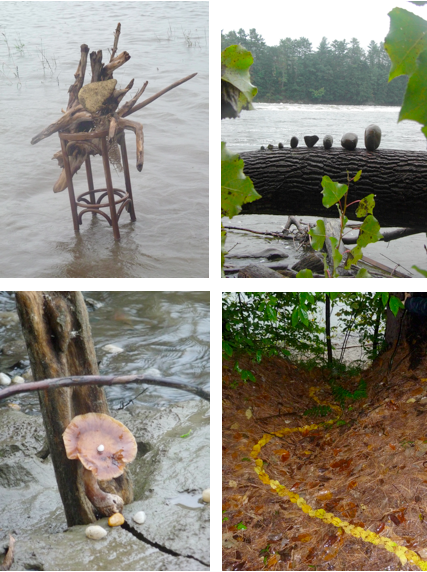
Four pieces
Art pieces by Jay Mead, Michaelyn Bachhuber, Nirmala Nair, and Dominic Stucker
By Dominic Stucker, Program Manager at Sustainability Leaders Network.
Systems thinking and creativity are essential for bringing about the transition to sustainability. Systems thinking helps us assemble diverse stakeholders to better understand the integrated economic, social, and environmental systems we seek to change. Creativity and art help us gain clarity in vision and tap into the breakthrough thinking necessary for innovating a new reality, a new relationship between people and planet. Fortunately, these leadership skills are mutually reinforcing, especially through making art in nature.
Immersing ourselves in nature, sitting quietly, eyes opened, eyes closed, we can hone our skills of observation, noticing patterns and processes that have evolved over millennia. Using all our senses, we can experience and learn from nature. Perhaps we see the streams, brooks, and river in a basin, noticing nature’s nested hierarchies. Or we reflect on the larger water cycle, a process that, instead of linear and polluting, is cyclical and cleansing. Gazing skyward from a soft bed of pine needles, we can observe the forest’s resilience in flexibility, trees swaying in the wind. Or we smell the pungent soil, part of annual cycle that returns sustenance to the trees’ roots. Perhaps we see the genius in a flower, tracking the sun and folding its petals at dusk; or in the capacity of a cactus to store water; or in the design of a feather. We can learn from and co-create with these natural systems.
I have had the privilege and joy of participating in several Art of Sustainability sessions with Vermont artist and educator, Jay Mead. Two that stand out were along the Housatonic River in rural Connecticut and along a wild part of the Connecticut River in Vermont. Jay invites participants to see nature anew through quiet observation, sensing, and play. The invitation includes being fully present, setting aside transient to do lists and deep-seated preconceptions about how the world works. Participants are asked to start from a place of unknowing – playful for some, meditative for others – being open for deeper wisdom to emerge.
Encouraged to accentuate patterns in nature, we created a wide variety of art from found materials. For me, I was drawn to the flow of water in each basin and created pieces that traced these lines (mine is the piece in the lower right, in the image above). Personally, I think I wanted greater flow in my own life, a balance of the dynamism and confidence of water as it makes its way through the world. Professionally, I am now conducting research on how climate change impacts water resources, and how we might cooperate in basins to adapt.
Needless to say, Jay is expert in helping people tap into their own creativity as a way to explore, express, and clarify visions for the future. In addition to personal discoveries, people often gain a greater sense of connection to the group and the place. One participant noted:
The Art of Sustainability session helped me to profoundly reconnect with (a) the natural system in which we live and (b) my own potential as a creative being. The result for me has been a deepening experience of a very powerful way of being in the world – a way of being that creates the space for me to show up for life differently, to connect with people differently, to ask different questions, and to generate different responses to the challenges I encounter. I hesitate to describe this as a NEW way of being – rather, in my heart, it feels like an entirely OLD way of being… but a way of being to which I had lost my connection. – Michael Dupee, Green Mountain Coffee Roasters, Senior Vice President for Corporate Social Responsibility, Vermont
The creative process is one of humility and co-creation with nature, with the vision for the piece often emerging through the process of creating it. Trista Patterson, for example, collected small red berries and wanted to create a heart shape alongside a stream flowing into the Housatonic River. The water, however, pulled some of the berries into the current, carrying them into eddies downstream and highlighting flows not visible to the casual observer. The lesson was one of letting go, of collaboration, of fully participating in the process and being open to an array of outcomes. In reflecting on the piece, Trista pointed out the importance in her own life of eddying out of the current, of taking time for herself in order to keep working at her highest capacity. She described the co-creative process in this way:
If I followed my heart and I put things where I thought they should be, nature would show me the patterns of places where things would eddy out all by themselves. And they would create their own patterns somewhere downstream, maybe not exactly to my intention, but maybe somehow more beautiful or more wild or more consistent with natural principles. – Trista Patterson, United States Forest Service, Ecological Economist, Alaska
Ultimately, the creative process helps us learn about ourselves, learn about our place in the world, and clarify our visions for the future. Another participant described what she got out of the session: “My vision is really powerful around healing work, which is an aspect of sustainability that I think is really important.” – Elaine Kohrman, United States Forest Service, Social Scientist, Oregon.
View this video, by Colleen Bozuwa, documenting our Art of Sustainability session along the Housatonic River.
From a systems perspective, Donella (Dana) Meadows, in her article Dancing with Systems (2002), describes the importance of letting go:
The future can’t be predicted, but it can be envisioned and brought lovingly into being. Systems can’t be controlled, but they can be designed and redesigned… We can listen to what the system tells us, and discover how its properties and our values can work together to bring forth something much better than could ever be produced by our will alone. We can’t control systems or figure them out. But we can dance with them!
Dana goes on to highlight some of the same qualities we practiced in Jay’s Art of Sustainability sessions as guidance for navigating the complex systems we seek to change. At least four are about observation and learning:
  • get the beat
  • listen to the wisdom of the system
  • expose your mental models to the open air
  • stay humble, stay a learner
These encourage us to notice the diversity of stakeholders in a system, flows of information, and behavior of the system over time. Dana encourages us to notice what works well before making changes and, when we intervene, to do so in the spirit of experiment, learning from our mistakes.
She goes on to describe these three nuggets of systems wisdom:
  • expand time horizons
  • expand thought horizons
  • expand the boundary of caring
When creating art with nature, we come to learn that all things are interconnected, that there are, for example, a great many people and natural processes to thank for the food on our plates. By expanding the geographic and temporal scope of care, we inform decisions that we make, decisions that impact people in distant places and futures, thus increasing our collective chances to survive and thrive. As another participant, Maria Carvajal, Founder of SuMar, Choices for Nature in Mexico noted, the larger purpose of social change work is “trying to integrate humans with the patterns of nature.”
These pieces of wisdom, present both in systems thinking and creativity, are essential for addressing the many challenges we face in bringing about a sustainable future for people and planet. They seek meaning, expansive possibilities, and the big picture, offering a profound sense of new possibilities. Sustainability is an art. And art helps us break through old ways of thinking to get to sustainable solutions.

Sunday, November 18, 2012

Strengthening community through interactive street art

by Kaid Benfield 


 Before I Die house before (via Google Earth)   Before I Die house before 2 (courtesy of Candy Chang)
  Before I Die house transformed into community art (courtesy of Candy Chang)
Okay, this is merely one of the most creative community projects ever.  In post-Katrina New Orleans, a badly degraded house about a mile or so east of the Tremé district looked like the photos you see at the top, above.  The image on the right was taken later than the one on the left.  As you can see, it has changed.
  Before I Die house writing on the wall (courtesy of Candy Chang)
Artist Candy Chang had an idea to turn the property into a sort of collective performance-art piece in which all are invited to participate, simply by declaring what is important to them.  Chang has provided chalk, a large-scale blackboard, and the necessary permits.
  Before I Die I Want To (courtesy of Candy Chang)
The house has been purchased and will be renovated but, until then, it serves as a living testament to community, inclusion, creativity and purpose.
  location of Before I Die house (via Google Earth)
Chang, who describes herself on her web site as “a public installation artist, designer, urban planner, and co-founder of Civic Center who likes to make cities more comfortable for people,” lives in the neighborhood.  She explains:
“With support from old and new friends, I turned the side of an abandoned house in my neighborhood into a giant chalkboard to invite my neighbors to share what is important to them. Before I Die transforms neglected spaces into constructive ones where we can learn the hopes and aspirations of the people around us. This process (including obtaining official approval from many entities) has been a great lesson – more on that later. If you’re in New Orleans, stop by the corner of Marigny and Burgundy (900 Marigny Street) to add your thoughts to the wall and discover what matters most to your neighbors. I believe the design of our public spaces can better reflect what’s important to us as residents and as human beings. The responses and stories from passersby while we were installing it have already hit me hard in the heart.”  
  Before I Die I Want To (courtesy of Candy Chang)
The project commenced in February of this year, and has received a tremendous response, the spaces for writing sometimes filling up in as little as one day.  When the board fills, it is washed so people can start over.
  Before I Die house chalk (courtesy of Candy Chang)
Chang is working on a kit that will enable the project to be replicated in other communities, starting with another neighborhood in New Orleans.
  Before I Die house wall filled (courtesy of Candy Chang)
There are many more excellent and fascinating photos on Chang’s web site, which I urge you to visit.  The site describes the project as “self-initiated with permission from the property owner, residents of the block, the neighborhood association’s blight committee, the Historic District Landmarks Commission, the Arts Council, and the City Planning Commission.”  Wow.
I’m planning on stopping by and perhaps chalking up a few words of my own.  Big-time props to the artist for a great concept, very well executed.
New Orleans resilience series
Part 1:  What does post-Katrina New Orleans say about cities? About America?
Part 2:  Strengthening community through interactive street art
Part 3:  New Orleanians, rebuilding with sustainability
Many thanks to Joel Mills for pointing me to Candy Chang's fascinating work.  All images are courtesy of Candy Chang, except for the one at top left and the satellite image, both from Google Earth.
Kaid Benfield writes (almost) daily about community, development, and the environment.  For more posts, see his blog's home page.

Friday, December 23, 2011

5th World Summit on Arts and Culture


Presentations

Reports on each of the World Summit sessions are provided below by clicking on the session title below.  Where we have been provided with a copy of a speaker’s presentation, this is linked to the speakers name in the programme below and is also linked to the speakers profiles on the speakers page.  Please note that the presentations are large files and may take some time to download.

TUESDAY 4 October
PLACE
A sense of country and connection to the land is central to Indigenous peoples. As the landscape, environment and societies evolve, the broader community is also increasingly aware of the inextricable link between culture and place.
KEYNOTE SESSIONModerated by Robyn Archer AOJacques Martial talked about the links between culture and place. He is President of the Parc de la Villette in Paris, one of the best funded cultural institutions in France. While in the past local residents, many of whom are from North Africa, used the park for family leisure and play, very few entered the major cultural facilities which are integral to the park. Jacques Martial came into the Parc with an express policy for inclusion, both for those local residents and the arts and artists from France d’Outres-Mers: he will tell us how this is playing out and about his plans for the next five years. He has also been actively engaged in the region which includes Guadeloupe and Martinique and can offer a perspective on the arts there.
Eduard Miralles responded from a crucial point of intersection. How can local governments ensure that their cultural policies allow for the kind of radical cultural inclusion of long-resident minorities and recent arrivals as described by Jacques Martial? How can policy balance the sometimes conflicting emotions of artists and residents in the increasingly diverse mix of populations in our big cities and neighbourhoods? And what are the other cultural priorities for local government in the twenty-first century?
PANEL SESSION - My PlaceRocco Landesman, Pooja Sood and Lachlan McDonald talked about the creative intersections in three very different places in the world, and how the creative projects they are involved in are very much determined by the particular nature of their place.  The economic revival of struggling American towns, an urban village in New Delhi, and small communities in the vast spaces of remote Western Australia all point to the specifics of ‘place’ and their intersection with the arts. The session was moderated by Professor Paul James.
ROUNDTABLES1: Indigenous wisdom of place (Supported by Creative New Zealand)
Dr Treahna Hamm (artist, Australia, of Yorta Yorta and Wadi Wadi peoples), Vernon Ah Kee (artist, Australia, born in North Queensland of the Kuku Yalandji, Waanji, Yidindji and Gugu Yimithirr peoples) Tainui Stephens (independent film and television producer, New Zealand, Te Rarawa). Moderator: Louise Profeit-Leblanc (Aboriginal Arts Coordinator, Canada Council, from the Nacho Nyak Dun First Nation of the Yukon Territory in Northern Canada).
The Earth’s Indigenous peoples have a richly layered connection to ‘country’. This intimate knowledge can inform 21st century environmental behaviour, especially through the arts, but also has the ability to influence multiple perspectives on contemporary art and life. The particular relationship of Indigenous artists to their sense of place is not only important for their own art, but offers vital pathways for all the arts. There is much to learn, and this is the table for fashioning a policy initiative which would enable that knowledge and art to be better understood and more widely disseminated.
2: A climate for change (Supported by the Asia-Europe Foundation as part of its Connect2Culture programme)
Vincensius ‘venzha’ Christianwan (Artist, House of Natural Fiber, Indonesia), Theo Anagnostopoulos (Founder, SciCo, Greece), Alison Tickell (Director, Julie’s Bicycle, England), Pooja Sood (Director, KHOJ International Artists’ Association, India). Moderator: Angharad Wynne-Jones (Producer, Tipping Point Australia).
There are multiple initiatives throughout the world for addressing the effects of climate change. Many artists, especially in the visual arts media, have addressed the issues through their work, but how can policy ensure best practice? There are excellent individual examples such as Julie’s Bicycle in London, the Sydney Theatre Company’s award-winning Greening the Wharf, and numerous individual festivals insisting on recycling and carbon offsets. Can policy pick up on these individual initiatives and ensure more widespread adoption of environmentally sustainable practices in the arts?
3: Rebuilding communitiesMaría Victoria Alcaraz (Director General, San Martín Cultural Centre, Argentina), Komi M’Kegbe Foga Tublu (Manager Cultural Heritage, Ecole du patrimoine africain, Benin), Pilar Kasat (Managing Director, Community Arts Network, Western Australia). Moderator: Elise Huffer (Culture Adviser, Secretariat of the Pacific Community, Fiji).
When remote areas or fragile systems are hit by unexpected disturbances such as drought, flood, earthquakes, fire, but also shifting economies, job-loss, diminishing population and resources, how can the arts help rehabilitate such communities? Many artists, both local and visiting, want to work with affected communities and the communities are often keen to welcome artists into their midst. What are the policies that can facilitate such collaborations? In this session, our starting point examples are a ‘cultural first aid kit’ developed in response to the Chilean earthquake, the place of culinary art specific to the Batammariba people in building cultural tourism for Togo and Benin, and the inspirational story of resilience and hope in Narrogin, a wheatbelt town in Western Australia.
4: Invigorating cities  Moira Sinclair (Executive Director, Arts Council England, London), Say Kosal (President, National League of Communes/Sangkats, Cambodia), Marcus Westbury (Founder, Renew Newcastle and Renew Australia), Eduard Miralles (Cultural Relations Advisor, Barcelona Provincial Council, Spain). Moderator: Sue Beal (Chair, Cultural Development Network, Australia).
Cities have become a hot topic. Recently the global balance gently tipped to a place where, for the first time in its recorded history, there were more people living in cities than not. And cities are growing. There are infinite ways in which the arts play a role in these places where rich and poor increasingly live side by side, and diverse cultures of age and race jostle. Are arts policies responding to these realities or are new frameworks required?
5: Changing places - evolving cultural policies in Asia (Supported by ASEF/culture360.org, an online portal of the Asia-Europe Foundation)
Dr Chaitanya Sambrani (Lecturer, art historian and curator, Australian National University School of Art and Social Sciences, Australia), Shen Qilan (Editor, Art World Magazine, China), Dr Kiwon Hong (Assistant professor of cultural policy, Sookmyung Women’s University, Korea), MaLou Jacob (Executive Director, National Commission for Culture and the Arts, Philippines). Moderator: Lesley Alway (Arts Director, Asialink, Australia).
This roundtable took as its starting point the intersection of arts and cultural policies with international relations and more specifically the context provided by the shifts in geopolitics and world economies in Asia. It has been acknowledged that we are now living in the ‘Asian Century’ as the focus of economic development shifts from West to East, particularly through the emergence of the two new super economies - China and India.
This transference of economic power and influence has been accompanied by increasing interest in cultural engagement from within, without and across Asia. At the government level, this intersection is often referred to as ‘soft-power’ and whilst it risks collision with ‘nation-state’ marketing, it also provides new avenues for the arts to develop new bilateral and multilateral platforms for engagement. Additionally, some of the most stimulating projects have been generated from non-government and private initiatives.
6: Screening the landscapeVilsoni Hereniko (Director, Oceania Centre for Arts, Culture, and Pacific Studies,  Fiji), Steven Loft (Trudeau National Visiting Fellow, Ryerson University, Canada). Moderator: John Oster (Chief Executive Officer, Indigenous Art Code, Australia)
With the background of Vilsoni Hereniko’s film The Land has Eyes, and others such as Warwick Thornton’s uncompromising portrayal of central Australia, Samson and Delilah, we discuss how screen-based arts paint powerful pictures of place. Baz Luhrmann’s film Australia was used by government tourism departments to leverage’ promotion for clear reasons. Does arts policy abandon screen to commercial forces, and if not, can it do more? What sparkling new policy initiative would allow screenbased arts to fulfil their 21st century potential?
7: Global connectivityDr Mario Merialdi (World Health Organisation, Switzerland), Jo Dorras (Wan Smolbag, Vanuatu), Katelijn Verstraete (Asia-Europe Foundation, Singapore). Moderator: Rose Hiscock (Executive Director, Arts Development, Australia Council)
The economic responsibility of developed nations towards developing nations is globally acknowledged, but have we taken the same level of responsibility in the arts? Artists have taken the lead in global collaborations of all kinds. Cultural ‘fusion’ is age-old and continuing, but are we doing the same in policy and arts-support?
At this Summit we had many participants from wealthy countries with healthy arts budgets and formal frameworks. But we also had participants from countries which have art and artists, but little or no formal policy frameworks or support for the arts. What are our responsibilities and how can we put them into action?
8: The outer limitsErica Seccombe (artist, Australia), Professor Tim Senden (Professor, ANU College of Physical and Mathematical Sciences, Australia), Gavin Artz (CEO, Australian Network for Art and Technology). Moderator: Pia Waugh (IT Policy Advisor to Senator Kate Lundy and Digital Culture Sphere Coordinator, Australia).
Throughout history there have been artists who have leapt to use new technologies (electric light, recorded sound, photography, film etc). As advances in science and technology increase exponentially in the 21st century, artists’ experimentation abounds and in many cases reveals new potentials to their inventors. How does arts policy enable and support these collaborations and what would be the one big new policy shift or idea that would help arts keep in step with science in coming years?
9: Moving fast and flexible – the changing landscape of digital technologies   Becky Schutt (Fellow, Judge Business School, Cambridge University, England), Shane Simpson (Special Counsel, Simpsons, Australia), Pius Knüsel (Director, Pro Helvetia, the Swiss Arts Council). Moderator: Katherine Watson (Director, European Cultural Foundation, Netherlands).
The digital revolution has the power to strike fear into the hearts of anyone working in traditional real time/real space artforms. The fear is that download culture will eat away at traditional arts audiences and its popularity with digital natives will eventually see arts support shift to these newer forms of creativity and away from books, theatre, live music etc. But many see the huge opportunities that digital technology and communications can bring to artists and artforms, if they can open up and embrace them.

WEDNESDAY 5 October 2011
PEOPLE
The impact of the arts on the human landscape and how artists engage with community concerns such as crime prevention, poverty reduction, social cohesion, health and education will underscore the day’s discussions.
KEYNOTE SESSIONModerated by Robyn Archer AODr Tim Greacen made the claim that without health there is no creativity and vice versa. From his perspective as both psychologist and singer, he has explored the way health and the arts are intertwined. He has written extensively on doctor/patient relationships and advocated successful arts/health programmes such as Video et Sante which offers a pathway to mental health through new skills and creativity. He has also worked throughout the world in programmes for people with AIDS.
Jo Dorras and Danny Marcel, members of Wan Smolbag will respond from the perspective of a theatre company based in Port Vila for more than 20 years. They are not funded through a culture programme or policy, but largely through foreign aid which supports their social welfare and health programmes over a wide, inclusive base throughout Vanuatu and its remote islands. They have a particular focus on sexually transmitted diseases through the arts of drama (theatre and TV) and music, and create skills development opportunities in all branches of these media.
PANEL SESSION – OUTSIDE THE COMFORT ZONE
Paul Komesaroff, Lucina Jiménez and Mike van Graan (traducción español) talked about those places where the arts intersect with real danger. In many places the arts are still viewed as a luxury and many of us are proud to describe the arts as a safe place to discuss dangerous issues, but there are places where just being an artist is dangerous, and others where art is obliged to intersect with armed conflict, serious unrest, and their consequences. The session was moderated by Amanda Smith (Presenter, Artworks, ABC Radio National, Australia).
ROUNDTABLES10: Across the divide   .Martin Drury (Arts Director, the Arts Council Ireland), Bilel Aboudi (Deputy Director of International Cooperation and External Relations/Public Services Advisor, Ministry of Culture, Tunisia). Moderator: Anne Dunn (Consultant, Australia).
What is the nature of the relationship between policy makers and arts practitioners and how might we bridge that gap? Could there be a new system of structures that enable holistic intersections with the myriad sectors that exist in society? As Martin Drury has written ‘The profile of the decision-makers and the vested interests of the “arts sector ” are among many barriers to full public participation in the arts. The creative intersections which were the focus of this Summit are part of a Cartesian geometry that never quite succeeds in squaring the circle. What might the alternative geometry look like?!’
11: Getting traction with arts and education policiesMichael Wimmer (Founder and General Manager, Educult, Austria), Linda Lorenza (Senior Project Officer, Arts, Australian Curriculum, Assessment and Reporting Authority).  Moderator: Lucina Jiménez (Anthropologist, Mexico)
The field of arts education and arts in education is awash with enthusiasm, passion, good thinking, even better intentions and new policy initiatives. But how much actually changes? Why have some countries succeeded in establishing well funded and effective arts education programmes, while others are losing ground due to changing political situations, and still others have yet to win the case for arts in the curriculum? How can arts education policies be more robust and what are the connections, actual and potential, between arts, artists and policymaking?  Learn more about what the tensions are and help tease out the one big thing that might actually work for everyone.
12: Sante! Arts and wellbeing      Dr Tim Greacen (Director, Maison Blanche Research Laboratory, France), Pamela Udoka (President/Artistic Director, Children’s Arts Development Initiative, Nigeria), Raelene Baker (Principal Indigenous Advisor, Arts Queensland, Australia). Moderator: Professor Ruth Rentschler (Board member, VicHealth, Australia).
Research increasingly yields more evidence about the positive effects of the arts on human health. And it is coming at us from all angles and in all media: from ambient colour, design and music to skills development and practice by patients themselves - the arts work at many levels. The field in focus here is mental health, but the session will also consider the physical health perspective and all speakers have an intimate association with the arts in this context. From a dense field we need one beautiful flower to rise up as the most effective new policy initiative.
13: Who put the ‘dis’ in disability?Gaelle Mellis (Resident Designer, Restless Dance Theatre, Australia), Emma Bennison (Executive Officer, Arts Access Australia). Moderator: Becky Llewellyn (Director, Disability Consultancy Services, Australia).
The world abounds with goodwill towards the inclusion of everyone into the arts, whether as artist, arts-worker or audience. But there is often a cost associated with accessibility and inclusion, and when funding feels the squeeze, the temptation is to cut back on practical applications. The wellmade plans are dis-continued, dis-missed and the extent of the problem sometimes dis-guised. So what’s possible? And what’s most needed at this time? The answer to those questions is what this session should take to the final plenary.
14: The art of misdemeanourAndrew Dixon (Chief Executive, Creative Scotland), PANG Khee Teik (Arts Programme Director, Annexe Gallery, Malaysia) and Scott Rankin (Big hART, Australia) Moderator: Lydia Miller (Executive Director, Aboriginal and Torres Strait Island Arts, Australia Council).
The intersection of arts with what Scott Rankin has called ‘outsider culture’ has produced surprising results, as has the work of artists in prisons and in other contexts outside the law. While rehabilitation may be the key concern on the inside, and political action on the outside, the fact is that art often reaches beyond the immediate objectives. Good writing, good music, good visual art and video, theatre and screen-based work can emerge from the ‘inside’ and at the outermost edge. Where and how could policy have an effect on the potential of these transactions?
15: Interculturality: Creating dynamic intersections      Professor Michael Mel (Pro Vice Chancellor, University of Goroka, Papua New Guinea), Paula Abood (Arab Australian writer), Nike Jonah (Project Manager, decibel Performing Arts Showcase, Arts Council England), Dr Tim Curtis Programme Specialist for Culture, UNESCO office Bangkok, Thailand). Moderator: Magdalena Moreno (CEO, Kultour, Australia).
When people of diverse cultures meet and engage, a dynamic space is created. This session explores the creative environment that emerges when cultural diversity is at the heart of the artistic synapse. The 2005 UNESCO Convention on the Protection and Promotion of the Diversity of Cultural Expressions states that cultural diversity is a driving force of development, not only in respect of economic growth, but also as a means of leading a more fulfilling intellectual, emotional, moral and spiritual life. What role can cultural policy play in stimulating the potential for living encounters where the unscripted more often than not has the most significant and systemic impact?
16: It’s not just a case of ‘show me the money’Anmol Vellani (Executive Director, India Foundation for the Arts), Rupert Myer (Philanthropist and Chair, National Gallery of Australia), Ariunaa Tserenpil (Director, Arts Council of Mongolia). Moderator: Louise Walsh (Director, Artsupport Australia, Australia Council).
The place of philanthropy in the arts differs spectacularly from country to country, even city to city. Where governments do support the arts, from time to time they are inspired by the level of philanthropy in the USA and crave that situation for their own countries. Yet the global financial crisis has proven how fragile such a system is. What is the relationship between the philanthropic spirit and public policy in the arts? Should it be more than just a matter of input credits? What is at the heart of the creative intersection of artists and private generosity? Is something else needed in policy terms?
17: Not such strange bedfellows      Edna dos Santos-Duisenberg (Chief, Creative Economy Programme, UNCTAD, Switzerland), Farai Mpfunya (Executive Director, Culture Fund of Zimbabwe Trust), Elizabeth Ann Macgregor (Director, Museum of Contemporary Art, Australia).   Moderator: Professor Justin O’Connor (Professor, Creative Industries Faculty, Queensland University of Technology, Australia).
There was a time when some artists scorned corporate investment in the arts and commercialisation of culture was seen as cynical and shallow; but now it is understood that on the one hand artists can work in genuine collaboration with corporate partners, and on the other hand they can become businesses in their own right. The worldwide interest in public policy that supports ‘creative industries’ is partly a response to a new breed of artist that sees no conflict between art and business. Is there however a conflict between support for those arts which have commercial potential with those that will always need subsidy? How does policy deal with it?
18: Finally – the numbers      Professor David Throsby (Professor of Economics, Macquarie University, Australia), Dr Audrey Yue (Lecturer, University of Melbourne, Australia). Moderator: Annamari Laaksonen (Research Manager, IFACCA Australia).
Statistics on the arts, how they are collected and how the arts are evaluated in formal ways may seem dry stuff to artists, but they are invaluable when it comes to mounting arguments for policy which drives support for the arts, arts education, regional priorities etc. How can the numbers be most effectively gathered and applied, and how do we ensure that the arts retain their freedom of expression and operation aside from the need for formal evaluation?
OPEN SESSIONS – CREATING CONNECTIONSAfter the hard work in the roundtables, and as the rapporteurs work to present in the final plenary on Thursday, this was the delegates' chance to pursue their own interests and pick two sessions from an eclectic array of options that, in one way or another, relate to the idea of creative intersections. Presentations ranged from projects to publications, case-studies to artworks.
FIRST SESSION
Presentations by delegates, including the performance below by Jacques Martial.
Mauricio Delfin, Culturaperu.org
Maryam Rasihidi, PhD Candidate, Research School of Humanities & the Arts, Australian National University, Australia
SECOND SESSION
Further presentations by delegates.
Hossam Nassar, Deputy Minister, Ministry of Culture, Egypt
Hilary Ogbechie, Acting Director - Extension Services, National Council for Arts & Culture, Nigeria
Mahiriki Tangaroa and Michael Gunn, National Museum of the Cook Islands and National Gallery of Australia
In the first session, in Plenary 1, Jacques Martial gave a special delegates-only performance (in English) of L’echange, Notebook of a Return to My Native Land, Aimé Césaire’s seminal prose/poem which coined the word ‘negritude’ and was ubsequently taken up by America’s Black Rights movement. This work was co-commissioned by 10 Days on the Island (Tasmania) and has been performed all over the world including before the French President on the occasion of the anniversary of the Abolition of Slavery in France.
THURSDAY 6 October 2011 
POLICIES
Having explored Place and People, we concluded the Summit by considering the policies and programmes that might help underpin resilient partnerships between artists and other areas of society.
WRAP UPModerated by Robyn Archer
Professor Brad Haseman (Queensland University of Technology, Australia) summarised the discussion from the first two days and in particular the roundtables on PLACE and PEOPLE. He outlined some of the key ideas for arts policy initiatives (POLICIES) to support artists to intersect with broad social issues while maintaining the integrity of their development and practice.
FINAL KEYNOTE SESSIONA session to promote some food for thought and action.
Alison Tickell (Julie’s Bicycle, UK). For many global citizens environmental sustainability is the most important issue of our time. While many in the arts express their concern, just as many still struggle with how they can affect the kinds of changes which will make a difference. Julie’s Bicycle is a shining example of achievement in this area and should inspire us to move towards equivalent goals in our own spheres.  The session was moderated by Robyn Archer AO.