Wednesday, June 11, 2008

A Just Foreign Policy Resource Guide

Teaching with the News
Lessons Plans on Foreign Policy from the Choices Program

Logo of the Choices Program at Brown University
The Choices Program’s Teaching with the News initiative provides online curriculum materials and ideas to connect the content of the classroom to the headlines in the news. Its lesson plans cover a range of foreign policy and international issues, from analyzing U.S. efforts to combat terrorism to exploring policy alternatives for relations with Iran.

We have selected four Teaching with the News lesson plans. You can find the full set here. Pair the lesson plans with related YES! articles to show your students a different approach to media coverage: positive journalism. Explore how different stories about the same issue can change our perception of the world.

GO TO TEACHING MATERIALS AND EXPLORE RELATED YES! STORIES FOR EACH ACTIVITY:
:: U.S. Role in the World
:: The U.S. and Iran: Confronting Policy Alternatives
:: Conflict in Iraq: Confronting Policy Alternatives
:: Nuclear Weapons: What Should Our Policy Be?


Cover of Lesson Plans from the Choices Program
U.S. Role in the World

Choices Button:: SEE Lesson Plan

We are in a period of heightened public debate in the United States concerning America’s role in the world. What do we think? What issues are of most concern to us? What kind of world do we want in the 21st century?

This lesson plan explores four distinct alternatives—or futures—that frame the current debate on the U.S. role in the world.


YES Story buttonThe Way to a Just Foreign Policy

It’s time to leave behind old ideas of superpowers. A changing world brings new opportunities for peace and the chance to join a community of nations.
YES! Magazine #46, A Just Foreign Policy

YES Archive buttonU.S. Role Turned Upside Down

5 indicators that show how U.S. economic, military, and covert influence is waning—and why that’s a good thing.
YES! Magazine #42, Latin America Rising

YES Archive buttonBook Review: After the Empire

What do Europeans know about the United States that we don’t know about ourselves? French demographer Emmanuel Todd’s After the Empire, a critically acclaimed best seller in Europe, presents a sobering view of the U.S. role in a changing world.
YES! Magazine #31, Can We Live Without Oil

spacer
Superpower? Get Over It :: YES! Magazine Cover image, Summer 2008, Issue 46
spacer
The Summer 2008 issue of YES! focuses on A Just Foreign Policy.


Cover of Lesson Plans from the Choices Program
Nuclear Weapons: What Should Our Policy Be?

Choices Button:: SEE Lesson Plan

Today, the world faces many complex challenges. We can see the results of terrorism, environmental issues, and disease, yet for most of us nuclear weapons remain out of sight and out of mind. For many, the abstract theories and jargon that surround nuclear weapons combined with the nearly unimaginable consequences make thinking about the challenges of nuclear weapons difficult.

In this interactive lesson plan, three policy options have been framed to help students think about divergent policy alternatives, each driven by different underlying values, each with merits and trade-offs. This one-week curriculum unit gives students the tools they need to wrestle with the questions that surround the future of nuclear weapons.


YES Story buttonGeorge Shultz: No Nukes

George Shultz, who helped build our nuclear arsenal, says it’s time to ban the bomb. Sarah van Gelder conducts this fascinating interview with the former Secretary of State.
YES! Magazine #46, A Just Foreign Policy

YES Story button7 Steps Towards Abolition

If the nuclear powers wish to be safe from nuclear weapons, they must surrender their own. The United States, as the owner of the biggest nuclear arsenal, must take the initiative and lead the world.
YES! Magazine #46, A Just Foreign Policy

YES Archive buttonThe ABCs of Nuclear Disarmament

An urgent call for nuclear abolition by no less a peace activist than Henry Kissinger, joined by old cold warriors Sam Nunn, George Schultz, and William Perry.
YES! Online, Guest Columnists

spacer
Nuclear Free Zone graphic
spacer
The YES! Resource Guide on A Just Foreign Policy lists organizations working to abolish nuclear weapons.

A Just Foreign Policy Resource Guide
by Noah Grant and Christiane Ranc
Print this articleEmail this article to a friend
AddThis Social Bookmark Button

With the U.S. military overstretched by the war in Iraq, the dollar weakened, the federal budget deep in the red, and countries like China and India on the economic rise, it looks like the United States’ brief run as the world’s sole superpower is coming to a close. But that doesn’t have to mean a change for the worse.

What if the United States cut back on military spending, abolished nuclear weapons, and used the billions saved to support peace and welfare at home and overseas? What if we started a national dialogue in our communities about America’s role in the world? As the A Just Foreign Policy issue of YES! illustrates, you can make it happen.

Vote for peace in your city or town. Talk to the media and your elected officials. Support returning veterans. Start conversations with your neighbors about how to create a just world. Here are some resources to help you get started:

cover of YES! A Just Foreign Policy issue

:: TAKE ACTION AND CONNECT WITH ALLIES

:: Support Veterans
:: Promote Economic Justice
:: Abolish Nuclear Weapons
:: End the War
:: Be a Citizen Diplomat
:: Protect Human Rights

:: GET INFORMED

:: FOREIGN POLICY LIBRARY


:: TAKE ACTION AND GET CONNECTED


IVAW veteran with flowers. Photo by Joseph O. Holmes
Support Returning Veterans

An important first step to healing our country may be helping our communities and returned soldiers cope with the devastating effects of war. The following organizations provide guidance and information.

Iraq War Veterans Organization provides information and links on education, employment, and counseling resources for returning veterans. www.iraqwarveterans.org

Military Veterans PTSD Manual. An online manual for anyone suffering from post-traumatic stress disorder following military service, or for the friends and family of veterans with PTSD. www.ptsdmanual.com

Soldier’s Heart: Veteran’s Safe Return Initiatives provides resources for returning veterans and their families and communities (such as retreats and counseling) to deal with the trauma of war. Edward Tick, author of Heal the Warrior, Heal the Country in the Summer 2008 issue of YES!, is director of this organization. www.soldiersheart.net

Vets4Vets provide opportunities for veterans of Afghanistan and Iraq to use peer support to help each other through speaking and listening. It offers support groups, workshops, and trainings around the country. www.Vets4Vets.US

Veterans and Families offers information on how communities and families can prepare for the return of soldiers. www.veteransandfamilies.org


Cafe Museo Cafe, Photo by Barbara Soldi
Promote Fair Trade and Economic Justice

A just foreign policy supports trade that brings profits back to communities. Join the efforts of organizations in the U.S. and around the world working to ensure that everyone has a fair shot at a healthy living standard and a bright future.

50 Years Is Enough: U.S. Network for Global Economic Justice is a coalition of grassroots, women's, faith, policy, social and economic justice, youth, labor, and development organizations dedicated to the profound transformation of the World Bank and the International Monetary Fund. www.50years.org

The Alliance for Responsible Trade offers resources for activists, teachers, and researchers interested in promoting fair trade and halting inequitable trade agreements. www.art-us.org

The Blue Planet Project, started by the Council of Canadians, works to protect water supplies around the world and keep them available to the public and out of corporate control. The group provides information about issues related to water and ideas for taking action. Maude Barlow, author of Life, Liberty, Water, in the Summer 2008 issue of YES! is chair of the Council of Canadians. www.blueplanetproject.net

Common Frontiers Canada provides a “Free Trade Kit” online for unions, churches, international NGOs, anti-poverty groups, women’s groups, environmental groups, human rights organizations, and others interested in how international trade impacts them. The group advocates for trade agreements and policies that would protect the environment, protect the rights and dignity of workers, and create good jobs and decent living standards. www.commonfrontiers.ca

Co-op America supports economic campaigns to promote a just and sustainable planet, and provides resources for action on issues ranging from shareholder rights to fair trade agriculture, the role of business in climate change, and health care for Wal-Mart employees. www.coopamerica.org

Food and Water Watch wants the public to have access to safe water and food. Its website offers opportunities to get involved, find information, write letters to representatives, watch films, choose a water filter, read food labels, make safe consumer choices, and work together for healthy food and water. www.foodandwaterwatch.org

Global Exchange promotes human rights and sustainability through innovative trade, travel, and activism projects; runs an online fair trade store that sells coffee, foods, books, crafts, and clothing; and offers resources on campaigns, events, and online tools for taking action. A brief story on their Reality Tours appears in the Do-It-Yourself Foreign Policy Heroes section of the Summer 2008 issue of YES! www.globalexchange.org

The Jubilee USA Network organizes actions like letter writing campaigns to help relieve developing countries of unfair debt burdens. www.jubileeusa.org

OXFAM, an international development organization, has resources for writing a letter to the World Bank, calling your representative, signing a petition, or joining a campaign for fair trade, health care for all, peace, debt relief for developing nations, or climate change solutions. www.oxfam.org

Unitarian Universalists for a Just Economic Community works to unite faith communities in pursuing economic justice. The group pursues a wide range of issues and has campaigned to draw attention to Wal-Mart’s unjust labor practices, and launched a discussion program on The Great Turning, based on David Korten’s writings. www.uujec.org

United Students against Sweatshops is a student-run network fighting against sweatshops and mistreatment of workers on college campuses. Tactics include a yearly national conference, awareness-raising activities, and direct actions targeting university officials. www.studentsagainstsweatshops.org. For more on USAS, you can also read the Do-It-Yourself Foreign Policy Heroes section of the Summer 2008 issue of YES!
Also, check out United Students for Fair Trade, a similar group working on fair trade. www.usft.org


Graphic by Jose Chicas at Avenging Angels and Abolition 2000. www.abolition2000.org
Abolish Nuclear Weapons

The world’s 25,000 nuclear weapons (most in U.S. and Russian arsenals) still pose one of the greatest threats to human security. Leaders the world over, on all ends of the political spectrum, are working to abolish nuclear warheads. Through the following organizations, you can help work toward a nuclear ban.

Abolition 2000 is a network of over 2000 organizations in more than 90 countries worldwide working for a global treaty to eliminate nuclear weapons. www.abolition2000.org

Alliance for Nuclear Accountability works to stop nuclear testing and to hold the U.S. government accountable for clean up, waste management, and warhead dismantlement programs. www.ananuclear.org

Campaign for a Nuclear Weapons Free World works with the world’s nuclear nations to promote full disarmament and prevent the development of new nuclear weapons, with a focus on the U.S. nuclear arsenal. www.nuclearweaponsfree.org

The Nuclear Age Peace Foundation does education and advocacy work around abolishing nuclear weapons. The group provides resources for action and links to public events to support peace. You can also purchase books and films on peace and nuclear dangers. www.wagingpeace.org

SIGN THEIR APPEAL: An Appeal to the Next President of the United States calling for US Leadership for a Nuclear Weapons-Free World.

Physicians for Social Responsibility is working to create a world free of nuclear weapons, global environmental pollution, and gun violence. www.psr.org

Ploughshares Fund raises funds to support initiatives aimed at preventing the spread and use of nuclear, biological, and chemical weapons and other weapons of war, and preventing conflicts that could lead to the use of weapons of mass destruction. www.ploughshares.org

Shundahai Network is dedicated to abolishing nuclear weapons worldwide, stopping the ongoing dumping of nuclear waste at the Nevada Test Site, stopping plans to transport deadly high-level nuclear waste to Yucca Mountain or any Native American land, and ensuring that Native American voices and concerns are heard in the movement to influence U.S. nuclear policies. The late Corbin Harney, founder of the Shundahai Network, is featured in People We Love in the Spring 2007 issue of YES! www.shundahai.org

The Union of Concerned Scientists organizes a global security campaign that advocates for the elimination of nuclear weapons. The website provides information, action alerts, and an email newsletter. www.ucsusa.org/global_security


Photo by Sue McDonald / IS
End War and Promote Diplomacy

The 3D Security Initiative (development, diplomacy, defense) encourages policymakers to pursue peacebuilding efforts based on diplomacy and development. The website provides ideas for getting involved, participating in an online community, spreading the word, organizing a community event, making fair-trade and sustainable consumer choices, and contacting leaders in Congress. www.3dsecurity.org

The A.J. Muste Memorial Institute offers small grants for grassroots nonviolence social justice projects. www.ajmuste.org

American Friends Service Committee carries out service, development, social justice, and peace programs throughout the world. It is currently running campaigns on the Iraq war, the Palestinian-Israeli conflict, immigrant rights, LGBT rights, debt forgiveness for African countries, military base closures and fair trade.For more on base closures, refer to the Do-It-Yourself Foreign Policy Heroes section of the Summer 2008 issue of YES! www.afsc.org

Beyond War is a community of people from around the world committed to ending the use of warfare. The group provides a study series on nonviolence and runs a campaign to establish public spaces and gardens for peace (much like veterans’ memorials, but honoring peace). www.beyondwar.org

Cities for Peace/Cities for Progress, a program of the Institute for Policy Studies, offers a toolkit for anyone seeking to campaign for a citywide or local resolution for peace. More than 200 cities have passed resolutions urging the federal government to bring troops home from Iraq. The group also provides toolkits for resolutions urging peaceful diplomacy with Iran. Karen Dolan, co-author of Cities Declare Peace in the Summer 2008 issue of YES!, leads this project. www.citiesforpeace.org

CODEPINK is a women-initiated grassroots peace and social justice movement working to end the war in Iraq, stop new wars, and redirect American resources into healthcare, education, and other life-affirming activities. www.codepink4peace.org

The Fellowship of Reconciliation
is an interfaith group working for nonviolence, peace, and justice. The group provides action alerts and a calendar of peace and faith events and organizes peace delegations and nonviolence trainings. www.forusa.org

The International Solidarity Movement brings people from around the world to participate in nonviolent direct actions and document events on the ground in Palestine. www.palsolidarity.org

Iraq Veterans Against the War gives a voice to the large number of active duty service people and veterans who are against the war in Iraq, but are under various pressures to remain silent. The group’s strategy is to mobilize the military community to withdraw its support for the war and bring the troops home now. www.ivaw.org

Just Foreign Policy
provides information on U.S. foreign policy in places like Iraq, Iran, and North Korea. The group also coordinates petition and letter-writing actions. www.justforeignpolicy.org

The National Campaign for a Peace Tax Fund advocates for passage of the Religious Freedom Peace Tax Fund Bill (currently H.R. 1921). When enacted, this law will restore the rights of citizens whose conscience does not permit physical or financial participation in wars. www.peacetaxfund.org

National Coalition for Dialogue and Deliberation offers a clearinghouse of articles, books, links, trainings, manuals and tools on conversation and dialogue on issues like racism, democracy, peace, arts, and education. The group provides trainings and workshops, news, perspectives, and information on a vast range of peacebuilding and dialogue projects and happenings. www.thataway.org

National Youth and Student Peace Coalition develops national campaigns to advance youth-led social change and response to war. Their agenda, called “Books—Not Bombs!” rallies against prison construction, funding for war, the disclosure of student information to military recruiters, and violations of student civil liberties—and for increased support for education for low-income and immigrant students. www.nyspc.org

The National War Tax Resistance Coordinating Committee provides information on resisting the war through refusal to pay taxes. www.nwtrcc.org

Nonviolent Peaceforce works in coalition with organizations on five continents to set up nonpartisan, unarmed civilian peacekeeping teams. The group has active projects in Sri Lanka, Guatemala, and the Philippines with projects planned for Colombia and Uganda. www.nonviolentpeaceforce.org

PAX Christi USA is a Christian faith group that promotes peace and nonviolence, economic and interracial justice, disarmament, and human rights. www.paxchristiusa.org

Peace Action is America’s largest activist network for peace. Peace Action members work for policy changes in Congress, state capitols, city halls, and the United Nations. www.peace-action.org

The Peace Alliance Campaign to Establish a U.S. Department of Peace is a citizen action organization working toward the creation of a cabinet-level U.S. Department of Peace. www.thepeacealliance.org

PeaceTrees Vietnam engages in various peacemaking activities, including landmine clearing and education and medical support related to landmines. www.peacetreesvietnam.org

A Responsible Plan presents a plan for withdrawal from Iraq. More than 30 Democratic House candidates for the 2008 election have signed the petition. See Erik Leaver’s article on this plan in the Summer 2008 issue of YES! www.responsibleplan.com

Standupcongress.org gathers information and offers tools to help citizens pressure Congress to end the war in Iraq. www.standupcongress.org

United for Peace and Justice is a coalition of hundreds of peace groups. Their website offers a directory of member peace organizations and a calendar of peace events. www.unitedforpeace.org

U.S. Women and Cuba Collaboration aims to empower diverse women in the U.S. and Cuba to participate in and develop just and peaceful international relations, to deepen global women’s solidarity, and to use a woman-to-woman citizen diplomacy model to craft methods to improve the lives of women in both countries. www.womenandcuba.org

Veterans for Peace is an organization of veterans who seek to raise public awareness of the true costs and consequences of militarism and war and find peaceful, effective alternatives. www.veteransforpeace.org

The War Resisters League makes resources available to activists who want to organize against war and violence, including information for feminist organizers and groups fighting violence against women. www.warresisters.org

The Women’s International League for Peace and Freedom is a 90-year-old international women's organization with sections in 37 countries, including the U.S. WILPF works for the equality of all people in a world free of racism, sexism, classism, homophobia, and all other oppression; for world disarmament and peaceful resolution of conflicts; and for an end to all forms of violence. www.wilpf.org


Be a Citizen Diplomat


Coalition for Citizen Diplomacy promotes the idea that individual citizens have the right, even the responsibility, to help shape United States foreign relations "one handshake at a time." By opening their homes, offices and schools to foreign visitors participating in exchange programs across the United States, citizen diplomats foster international understanding and cooperation, constructive economic connections, and peaceful interaction. The coalition aims to increase the number of Americans engaged in such efforts. www.coalitionforcitizendiplomacy.org

The Compassionate Listening Project leads delegations to Israel and Palestine and other conflict-torn regions of the world, to facilitate healing and reconciliation through listening. The group also teaches skills for peacemaking for families and communities, on the job, and in social change work locally and globally. www.compassionatelistening.org

Global Exchange Reality Tours give people a chance to experience first-hand how the U.S. is impacting lives in places like Iran, North Korea, Venezuela, Haiti, and Mexico, and connect person-to-person with real people, their cultures, and their political and economic situations. For more, refer to the Do-It-Yourself Foreign Policy Heroes section of the Summer 2008 issue of YES! www.globalexchange.org/tours

Global Citizen Journey leads small delegations on missions of peacebuilding and stewardship to places like Ghana, Burundi, and the Niger Delta. www.globalcitizenjourney.org

The Holy Land Trust works with the Palestinian community developing nonviolent approaches to end the Israeli occupation and build a future founded on the principles of nonviolence, equality, justice, and peaceful coexistence. It offers travel and experiential learning programs that include home stays with Palestinian families. www.holylandtrust.org

Interfaith Peace-Builders, founded by the Fellowship of Reconciliation, organizes U.S. citizen delegations to Israel and Palestine to witness events on the ground. Participants are encouraged to share their experiences with communities at home and work to end the conflict. www.ifpbdel.org

The International Service for Peace (SIPAZ) brings peace observers to Mexico for nonviolence training, observation, and dialog. Formed in 1995 following the Zapatista uprising, SIPAZ now works in Chiapas, Oaxaca, and Guerrero. www.sipaz.org

Peace Brigades International sends international volunteers to areas of conflict, to protect activists threatened with political violence. PBI volunteers stand witness, deterring perpetrators by drawing national and international attention to actual and potential acts of violence. www.peacebrigades.org

The Peace Corps is a U.S. government agency that sends Americans abroad to do service projects. Find out more about the lives of Peace Corps volunteers in the Do-It-Yourself Foreign Policy Heroes section of the Summer 2008 issue of YES! www.peacecorps.gov

Sister Cities International is a nonprofit citizen diplomacy network that creates and strengthens partnerships between U.S. and international communities. www.sister-cities.org


Cover of YES! issue 41: Is the U.S. Ready for Human Rights?
Protect Human Rights

A just foreign policy means fair treatment under international law and respect for the human rights of all people. These groups provide resources to citizens who want to stop human rights abuses, such as torture, forced labor, unjust imprisonment, and the suspension of due process. See also the YES! Spring 2007 issue, Is the U.S. Ready for Human Rights?

Amnesty International documents human rights abuses around the world and organizes actions to stop them. www.amnesty.org

Human Rights Watch gathers information on human rights issues and organizes campaigns to stop abuses. www.hrw.org

The Carter Center works on human rights, fights disease, and monitors elections when invited. The website has teacher resources, reports of elections, and other publications. www.cartercenter.org

US Human Rights Network promotes US accountability to universal human rights standards. Underlying all their human rights work is a commitment to challenge the belief that the United States is inherently superior to other countries of the world, and assert that the U.S. government can gain from the domestic application of human rights. www.ushrnetwork.org


:: GET INFORMED

Dig deeper into the issues. Learn about policy. Examine the numbers. Hear from the experts. Find out the truth about lives lost in Iraq, what “free trade” really means for our economy, what possibilities diplomacy holds for our future, and what the U.S. role is and could be in world affairs.

Antiwar.com and icasualties.org maintain counts of casualties in Iraq.

The Carnegie Endowment for International Peace is a think tank that promotes cooperation among nations, with an emphasis on security and welfare for all. With offices in Moscow, Beijing, Beirut, Brussels, and Washington, the Endowment has a multinational perspective on global welfare and security. www.carnegieendowment.org

The Center for American Progress is a progressive think tank that provides reports and analysis on U.S. policy, domestic and foreign. www.americanprogress.org It has a separate program for students called Campus Progress. www.campusprogress.org

The Center for Economic and Political Investigations of Community Action (CIEPAC) communicates news of human rights issues in Chiapas, Mexico (Spanish). www.ciepac.org

The Center for International Policy's Americas Program maintains extensive information on North American border issues. www.americas.irc-online.org

The Council of Canadians is a non-profit that works with grassroots activists, seniors, students, community groups, and unions on fair trade, clean water, energy security, public health care, and other social and economic issues. www.canadians.org

Foreign Policy in Focus, a project of the Institute for Policy Studies, does research and advocacy on reform of U.S. foreign policy. www.ips-dc.org/FPIF

The Institute for Policy Studies is a progressive think tank that focuses on issues related to the environment, peace, and economic justice. The group produces analyses and commentary on progressive solutions. www.ips-dc.org

The International Forum on Globalization is a research and education organization that provides analyses and critiques on the impacts of economic globalization, and organizes workshops and teach-ins. www.ifg.org


Sunday, June 8, 2008

If everyone cared


Nickelback


From underneath the trees, we watch the sky
Confusing stars for satellites
I never dreamed that you'd be mine
But here we are, we're here tonight

Singing Amen, I'm alive

If everyone cared and nobody cried
If everyone loved and nobody lied
If everyone shared and swallowed their pride
We'd see the day when nobody died
And I'm singing

Amen I, I'm alive
Amen I, I'm alive

And in the air the fireflies
Our only light in paradise
We'll show the world they were wrong
And teach them all to sing along

Singing Amen I'm alive

If everyone cared and nobody cried
If everyone loved and nobody lied
If everyone shared and swallowed their pride
We'd see the day when nobody died
If everyone cared and nobody cried
If everyone loved and nobody lied
If everyone shared and swallowed their pride
We'd see the day when nobody died

And as we lie beneath the stars
We realize how small we are
If they could love like you and me
Imagine what the world could be

If everyone cared and nobody cried
If everyone loved and nobody lied
If everyone shared and swallowed their pride
We'd see the day when nobody died

We'd see the day, we'd see the day
When nobody died
We'd see the day, we'd see the day
When nobody died
We'd see the day when nobody died


Tuesday, June 3, 2008

Fast Facts & Quick Actions

Do you have only a few minutes to learn something and find out how to make a difference? Click on one of the topics below!

From Facing the Future:

Saturday, May 31, 2008

World Environment Day on 5 Jun 2008: Kick the Habit! Towards a Low Carbon Economy

wed_logo_short_eng.jpg

World Environment Day is celebrated on 5 June each year to increase environmental awareness and action. This year’s focus is on climate change, with the theme, Kick the Habit! Towards a Low Carbon Economy. There will be activities around the world on 5 June to highlight the problem of global warming and climate change, and how we can do our part to reduce carbon emissions. Check out the World Environment Day website for more details and activities.

The message for World Environment Day 2008 by United Nations Secretary-General, Ban Ki-moon, is shown below:

MESSAGE FOR WORLD ENVIRONMENT DAY 2008

KICK THE CARBON HABIT

Addiction is a terrible thing. It consumes and controls us, makes us deny important truths and blinds us to the consequences of our actions. Our world is in the grip of a dangerous carbon habit.

Coal and oil paved the way for the developed world’s industrial progress. Fast-developing countries are now taking the same path in search of equal living standards. Meanwhile, in the least developed countries, even less sustainable energy sources, such as charcoal, remain the only available option for the poor.

Our dependence on carbon-based energy has caused a significant build-up of greenhouse gases in the atmosphere. Last year, the Nobel Peace Prize-winning Intergovernmental Panel on Climate Change put the final nail in the coffin of global warming sceptics. We know that climate change is happening, and we know that carbon dioxide and other greenhouse gases that we emit are the cause.

We don’t just burn carbon in the form of fossil fuels. Throughout the tropics, valuable forests are being felled for timber and making paper, for pasture and arable land and, increasingly, for plantations to supply a growing demand for biofuels. This further manifestation of our carbon habit not only releases vast amounts of CO2; it also destroys a valuable resource for absorbing atmospheric carbon, further contributing to climate change.

The environmental, economic and political implications of global warming are profound. Ecosystems — from mountain to ocean, from the Poles to the tropics — are undergoing rapid change. Low-lying cities face inundation, fertile lands are turning to desert, and weather patterns are becoming ever more unpredictable.

The cost will be borne by all. The poor will be hardest hit by weather-related disasters and by soaring price inflation for staple foods, but even the richest nations face the prospect of economic recession and a world in conflict over diminishing resources. Mitigating climate change, eradicating poverty and promoting economic and political stability all demand the same solution: we must kick the carbon habit. This is the theme for World Environment Day 2008. “Kick the Habit: Towards a Low Carbon Economy”, recognizes the damaging extent of our addiction, and it shows the way forward.

Often we need a crisis to wake us to reality. With the climate crisis upon us, businesses and governments are realizing that, far from costing the Earth, addressing global warming can actually save money and invigorate economies. While the estimated costs of climate change are incalculable, the price tag for fighting it may be less than any of us may have thought. Some estimates put the cost at less than one per cent of global gross domestic product — a cheap price indeed for waging a global war.

Even better news is that technologies already exist or are under development to make our consumption of carbon-based fuels cleaner and more efficient and to harness the renewable power of sun, wind and waves. The private sector, in particular, is competing to capitalize on what they recognize as a massive business opportunity.

Around the world, nations, cities, organizations and businesses are looking afresh at green options. At the United Nations, I have instructed that the plan for renovating our New York headquarters should follow strict environmental guidelines. I have also asked the chief executives of all UN programmes, funds and specialized agencies to move swiftly towards carbon neutrality.

Earlier this year, the UN Environment Programme launched a climate neutral network — CN Net — to energize this growing trend. Its inaugural members, which include countries, cities and companies, are pioneers in a movement that I believe will increasingly define environmental, economic and political discourse and decision making over the coming decades.

The message of World Environment Day 2008 is that we are all part of the solution. Whether you are an individual, an organization, a business or a government, there are many steps you can take to reduce your carbon footprint. It is message we all must take to heart.

Source: World Environment Day, UNEP. Image: World Environment Day, UNEP.

Masdar City Will Be World's First Zero-Carbon, Zero-Waste, Car-free City


With over a third of the world's cranes hard at work building artificial islands, an underwater hotel, and the world's tallest building, biggest mall and most expensive airport, the United Arab Emirates has now turned it attention to building the world's most sustainable city. Masdar City, a $22 billion initiative to build a brand new, zero-emissions city for 50,000 from scratch in Abu Dhabi, got underway last month.

The ambitious project, planned by British firm Foster + Partners, was one of the first ecocity projects to receive widespread coverage in the mainstream press (see the Guardian and BusinessWeek's coverage of the initiative), and is supported by, among others, the World Wildlife Fund. Even George W. Bush has expressed interest in the project.

Round table, read more click here.


Masdar4.jpg


Masdar City square

Green Utopia in the desertt

http://www.carfree.com/cft/i046.html


Masdar
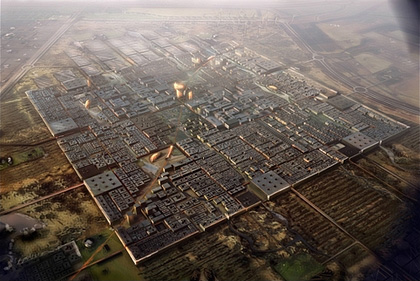
Masdar, overview (artist's conception)
©2007 Foster + Partners

Oil Emirate to Build First New Carfree City

The UK architecture firm of Foster + Partners has announced that the walled city of Masdar in Abu Dhabi, being designed by the firm, will be the world's first zero-carbon, zero-waste city. Masdar is a 6 sq-km (1500 acre) carfree walled city. Abu Dhabi’s Future Energy Company is the project sponsor and will locate its headquarters in the city, which will also include a new university, special economic zones, and an Innovation Center.

Norman Foster said, "The environmental ambitions of the Masdar Initiative - zero carbon and waste free - are a world first. They have provided us with a challenging design brief that promises to question conventional urban wisdom at a fundamental level. Masdar promises to set new benchmarks for the sustainable city of the future." The plans were unveiled 8 May 2007 at the Cityscape conference in Abu Dhabi. Masdar will be a dense, walled development built in two phases. Wind parks, photovoltaic farms, research fields, and plantations will be sited outside the walls, enabling the city to be fully self-sustaining, according to Foster. The development is set to open in late 2009.

Masdar

Masdar, street (artist's conception)
©2007 Foster + Partners

Most interestingly, the project will be based on the traditional planning principles of walled cities, united with new technologies, to achieve the sustainability target. The city will be linked by a network of existing road and new rail and public transport routes to surrounding communities, the center of Abu Dhabi, and the international airport.

The maximum distance to public transport will be 200 meters (about 220 yards), and a compact network of streets will encourages walking. A personal rapid transport system will be constructed. Shaded walkways and narrow streets are expected to create a pedestrian-friendly environment, no mean feat in Abu Dhabi's scorching climate.

"Images: Foster unveils green utopia in the desert"
Building.co.uk
8 May 2007
and
"World's first zero carbon, zero waste city in Abu Dhabi"
Foster + Partners

*****

BBSNews 2008-03-18
-- DUBAI (IRIN) The United Arab Emirates (UAE), which has one of the largest per capita carbon footprints in the world, opened a US$22 billion eco-city project in Abu Dhabi in February 2008.

The project, known as Masdar City, will create the world's first zero-carbon, zero-waste, car-free city, officials say.

"It is a noble project to integrate all the components of a futuristic and eco-friendly city. It hopes to set the trend in property development, renewable energy, sustainable habitat and climate change mitigation all in one project. It is setting the bar high for other initiatives to follow and it will set a benchmark in the fight against further global warming," Habiba al-Marahi, chairperson of Emirates Environmental Group (EEG), a local non-governmental organization, told IRIN.

The UAE is ranked 43rd by the UN Framework Convention on Climate Change but its per capita emissions are among the highest in the world.

The World Wildlife Fund (WWF - also known as the World-Wide Fund for Nature) 2006 report said the average person in the UAE puts greater demand on the global ecosystem than in any other country, because of the huge requirement for air-conditioning, the number of vehicles on the road, energy intensive desalination plants, and rapid development. The USA came second.

Masdar City is a One Planet LivingT project -- a global initiative launched by WWF and environmental consultancy BioRegional. "For projects to achieve the standard, they must have a sustainability action plan that addresses the 10 principles of sustainability as defined by One Planet Living, and must meet specific targets for each of those principles," Eduardo Gonçalves, global communications coordinator for One Planet Living at WWF International told IRIN. The 10 principles include zero carbon, zero waste, sustainable transport, sustainable food and water, and use of local and sustainable materials.

Model for other countries?

According to Masdar City officials, the project will use photovoltaic panels to generate electricity. Cooling will be provided via concentrated solar power, while water will be made available through a solar-powered desalination plant. Landscaping within the city and crops grown outside the city will be irrigated with grey (recycled household) water and treated waste water.

"Every One Planet Living [project] is unique and faces different challenges because of soil, precipitation, climate, geology and existing regulations. For example, in this project it may be how to keep people cool without consuming huge amounts of energy, or feeding people sustainably without having to resort to large amounts of imports, Gonçalves said.

When completed, the project will serve as a model for other countries and will prove that the UAE can achieve high levels of economic development without compromising natural resources, according to Habib al-Habr, director of the UN Environmental Program (UNEP) regional office for West Asia.

"There are many cities in the world which have designated a city or part of a city as zero-emission or carbon-free zones, like London. Several cities also adopted the concept of zero-waste. But the most important thing is to apply such concepts on a larger scale and put policies and measures in place to make existing cities more sustainable," he said.

Environment specialists say Masdar City will face some challenges. "The biggest challenge will be to source the expertise required to help Masdar meet all its objectives and in so doing create the market for high quality and measurably effective green developments," said Razan al-Mubarak, managing director of Emirates Wildlife Society - World Wide Fund for Nature (EWS-WWF).

*****

World's first zero carbon, zero waste city in Abu Dhabi


The first project as a result of the Masdar Initiative is a new 6 million square meter sustainable development that uses the traditional planning principals of a walled city, together with existing technologies, to achieve a zero carbon and zero waste community. Masterplanned by Foster + Partners, the initiative has been driven by the Abu Dhabi Future Energy Company, and will be a centre for the development of new ideas for energy production. Masdar responds to the urban identity of Abu Dhabi while offering a sustainable urban blueprint for the future. Due to be launched at Cityscape Abu Dhabi 2007, it is an ambitious project that will attract the highest levels of international expertise and commerce, providing a mixed-use, high-density city. The exciting programme includes a new university, the Headquarters for Abu Dhabi’s Future Energy Company, special economic zones and an Innovation Center.

Norman Foster said:
“The environmental ambitions of the Masdar Initiative – zero carbon and waste free – are a world first. They have provided us with a challenging design brief that promises to question conventional urban wisdom at a fundamental level. Masdar promises to set new benchmarks for the sustainable city of the future.”

The principle of the Masdar development is a dense walled city to be constructed in an energy efficient two-stage phasing that relies on the creation of a large photovoltaic power plant, which later becomes the site for the city’s second phase, allowing for urban growth yet avoiding low density sprawl. Strategically located for Abu Dhabi’s principal transport infrastructure, Masdar will be linked to surrounding communities, as well as the centre of Abu Dhabi and the international airport, by a network of existing road and new rail and public transport routes.

Rooted in a zero carbon ambition, the city itself is car free. With a maximum distance of 200m to the nearest transport link and amenities, the compact network of streets encourages walking and is complemented by a personalised rapid transport system. The shaded walkways and narrow streets will create a pedestrian-friendly environment in the context of Abu Dhabi’s extreme climate. It also articulates the tightly planned, compact nature of traditional walled cities. With expansion carefully planned, the surrounding land will contain wind, photovoltaic farms, research fields and plantations, so that the city will be entirely self-sustaining.

http://www.fosterandpartners.com/News/291/Default.aspx


Ride a bike and save the world

by David Suzuki with Faisal Moola.

"Every time I see an adult on a bicycle, I no longer despair for the future of the human race." - H.G. Wells

Science has had a tremendous impact on the planet in an incredibly short time. In just the past few hundred of our 150,000 years on Earth, we have invented everything from steam engines, cars, and airplanes to sophisticated weapons and supercomputers. And the pace at which we keep inventing more complex and fascinating machines is increasing. Some of our inventions have been a great boon, some have been harmful, and some, such as cars, have turned out to be a mixed blessing.

But one invention is so efficient, beneficial, and simple that it may be the best thing we’ve ever made. People across the land will celebrate that invention as we ride into June, Bike Month. The "modern" version of the bicycle with pedals and cranks was invented by French carriage-maker Ernest Michaux in 1861. It’s come a long way since then, but whether it’s a high-tech racing bike or a one-gear street cruiser, the bike is still a marvel of ingenuity. In fact, it may well be the most efficient form of transportation yet invented.

The best part of the bike is that you, the rider, are the engine. The fuel is what you eat and drink. Putting the human engine together with the gears, wheels, and frame of a bike gives you a mode of transportation that uses less energy even than walking. As for our most popular method of getting around, the automobile, there’s no comparison. According to the WorldWatch Institute, a bicycle needs 35 calories per passenger mile, while a car uses 1,860. Buses and trains are somewhere in between.

During Bike Month, it’s worth thinking about the potential this amazing invention offers. With oil prices climbing and environmental damage from car emissions increasing, bikes are becoming a more attractive form of urban transportation every day. Cleaner air, reduced congestion, safer streets, and lower noise levels are just a few of the benefits. As more people get out of their cars and onto their bikes, they’ll also become fitter, leading to lower health-care spending. The money that could be saved nationally on things like health care - not to mention the infrastructure required to keep so many cars on the road - reaches into the billions, but the money an individual can save on fuel, insurance, and maintenance costs alone is also substantial. And because biking is a lot of fun, it will probably increase what the people of Bhutan call "gross national happiness"!

But we still have a ways to go. Canadians and Americans use bikes for fewer than one in a hundred trips - although in Vancouver where I live, it’s a bit higher, at about 2.3 per cent. Compare that to the 20 to 35 per cent of trips taken by bike in the European Union and 50 per cent in China. (Unfortunately, the trend is reversing in China as the country embraces car culture.)

Shifting from car dependence will take action at the individual level, with more people simply deciding to get on their bikes, but governments must also do more to make it easier for people to ride bikes. And they can. In just three years, from 1998 to 2001, Mayor Enrique Peñalosa of Bogotá, Colombia, turned his city of 6.5 million from a gridlocked parking lot into a city where public spaces live up to their name. He did this by restricting car use, increasing gas taxes, and building hundreds of kilometres of bike and pedestrian paths, as well as investing in buses.

Making our streets safer for cyclists by giving them space to ride is an essential first step. The investment required is far less than that required for infrastructure for cars. Tax breaks for cyclists also help. Last year in Ontario, Premier Dalton McGuinty removed the provincial sales tax on bike helmets and bikes costing less than $1,000. Bikes are also exempt from PST in B.C., and the province’s $100 carbon-tax rebate could be put toward buying a bike or tuning up your old bike.

Employers can also help out by offering secure bike parking and showers for those who work up a sweat on the way to work.

Of course, cycling isn’t a panacea. In parts of Canada, the weather isn’t always conducive to cycling. And not everyone has the strength to ride up the hills in some of our cities. But if more of us choose bikes whenever possible, using public transport or at least energy-efficient vehicles when we can’t ride, we’d all be much better off.

So, get on your bike in June, and maybe you’ll like it enough to make it your preferred method of transportation year-round.

Take David Suzuki's Nature Challenge and learn more at www.davidsuzuki.org.

Friday, May 30, 2008

Global warming videos

http://videoguides.pegasusteam.com/global_warming/

Global Warming 101
Posted by: NationalGeographic


Video duration: 183 seconds

Global warming could do more than just melt polar ice. It could change our maps, and displace people from cities and tropical islands.
See all National Geographic videos:
http://video.nati onalgeographic.com/v ideo/?source=4001

Related: 101, environment, geographic, global, national, warming, weather


Global Warming
Posted by: elephantologist


Video duration: 222 seconds

Global Warming Music Video I made.
Video clips from BBC Motion
Music by Vanessa Mae (From Vivaldi)
Facts and info from Nature Magazine, National Geographic, Defenders of Wildlife, World Wildlife Fund.

Related: antarctica, artic, global, warming