Wednesday, February 13, 2013

Greening the world economy through cities

Besides comprising a majority of the world’s population, cities concentrate disproportional amounts of the world’s economy and decision-making power. Further, though urban areas cover only around two percent of the Earth’s surface, they consume 75 percent of its resources. Yet as a hub for social and political movements and centres of technological and institutional knowledge and innovation, cities can be a powerful catalyst of greener economies.

The growing size and importance of cities across the globe make them arguably the single most important entities in the fostering of a green economy. Because of their spatial distribution and diversity, the management of cities can be more responsive to urgent problems while being somewhat liberated from competing national interests (e.g., regional development agendas and sector lobbies) and responsibilities (such as national defense costs).
As a result, urban transitional activities are playing an increasingly important role in the implementation of policies regarding global environmental issues like climate change and biodiversity loss. The green economy provides another platform for ambitious cities to promote their green credentials.
The green economy will take on a different character in different cities depending on their level of development and spatial organization. It is important to recognize that cities face different challenges. While urbanization increases at a global scale, when this is differentiated by region the picture that emerges is unique to each individual city.
Cities in developed countries seek to grow by generating new jobs and industry. As a result, some cities are declining as they lose the battle for investment and talent. African and Asian cities have some of the highest growth rates and their development path will have a crucial influence on global development in the 21 st century.
The way out of the urban development vs. environmental degradation dilemma is not necessarily to stop urban growth, but to harmonize the resulting opportunities and challenges.
For those cities embarking on development transitions, it is important to remember that infrastructure lasts at least 30 years, but often much longer. Once in place, many management options become technical adaptation and retrofitting rather than new design. Therefore the need to understand the relative importance of different tools available to cities is crucial if the green economy is to become a precursor to sustainable development.
The way out of the urban development versus environmental degradation dilemma is not necessarily to stop urban growth, which is almost impossible in some cases, but to reconcile and harmonize the resulting opportunities and challenges.
History has proven that urbanization can be managed in a way that promotes both the economy and human well-being. Because of the concentration of people, resources, knowledge and economic activities in urban areas, a properly managed cities-led green economy could provide the economy of scale, political momentum and efficiency gains necessary to lower the use of resources and energy.
The opportunities and the obstacles for a greener economy in cities are analyzed by looking at the specific economic processes that take place in cities, namely transformation of space (urban development), production and consumption, circulation (trade and transportation) and the production of ecosystem services, social services and knowledge. Understanding how to green those processes can have huge social, economic and environmental impacts on the cities and beyond.
Transformation of space: urban development
Physical and spatial development of cities are among the most significant components of urban economy. Urban development transforms natural environment and resources into man-made superstructures and infrastructure and this transformation places significant stress on the remaining natural environment.
The way we build our cities also influences how we spend and distribute our economic resources. Urban forms and spatial distribution of urban functions play a critical role in this respect. Sprawled cities, where low-density is the norm and urban functions are distantly located, increase the consumption of energy and natural resources including both terrestrial and aquatic resources.
The cost of urban development is high in dispersed cities, as relatively large land areas are dedicated to urban infrastructure and utilities. For instance, 70 percent of the cost of urban water supply systems goes towards piping, and 30 percent of urban energy consumption goes towards the pumping of water and the collection of wastewater. Therefore a smaller land-use area can result in lower utility operation costs.
Similar conclusions can also apply to transportation infrastructure. Compact cities with high density and mixed-use urban quarters (e.g., concentrating and combining retail, office and residential activities) can reduce travel activity and therefore result in energy-savings and lower levels of land-use change.
Overall, through the preservation of surrounding agricultural and forest land (for example, by combining agrarian activities and residential land use) cities can benefit from the ecosystem services provided by these areas, potentially reducing certain infrastructure costs while increasing the quality of life of its residents.
A key component of urban development that can promote the transition to a green economy is the superstructure: more specifically, the buildings. The building sector is one of the main contributors to carbon emissions, utilizing approximately 40 percent of global energy consumption; it consumes 12 percent of all fresh water and generates 40 percent of the total volume of waste. One of the key goals of the green urban economy is to promote energy and resource efficiency and to provide high quality, healthy and affordable buildings for urban residents.
Consumption and production in cities
In an increasingly urbanized world challenged by global environmental change and pervasive inequalities, cities are looking for new pathways to provide human well-being while using natural resources sustainably. Developing a green economy for urban areas is a response to those challenges. Such an approach should take into account sustainable production and consumption issues, as cities consume vast amounts of resources to meet increasing demands for goods and services, which can lead to environmental impact and economic exploitation in the non-urban supply areas.
Sustainable consumption and production should aim to transform current environmental challenges faced by cities into economic opportunities.
Sustainable consumption and production should aim to transform current environmental challenges faced by cities into economic opportunities by boosting the demand for more sustainable products and technologies, improving the environmental performance of products throughout their lifecycle, helping consumers to make informed choices, and by promoting awareness and lifestyle changes that help individuals to adapt their urban life to today’s challenges.
By enhancing local ecosystem services, urban areas can provide well-being for their residents while reducing their consumption footprints, thus creating opportunities for greening both their economies and their landscapes. From heat island control to flood mitigation, from local food provisioning to water purification, managing local ecosystems to increase their functionality will create innovative economic opportunities for clean development and ultimately render cities and local economies visibly greener.
Circulation: trade and transportation
Transportation is fundamental to a city’s economic productivity as it determines the accessibility and efficient urban circulation of people, resources and goods. Transportation can also be an effective countermeasure against the spatial mismatch of labour and workplace and housing and services.
The availability of transport infrastructure influences the location of activity centres, including industrial, commercial, and residential areas. Thus, an improved urban transportation system can decrease travel time and increase cost-effectiveness allowing for reliable, quick, and low-cost freight movement and convenient access for employees and residents. Additionally, the transport sector (including green transport) is a source of investment and urban employment (e.g., infrastructure development and management).
To align trade and transport goals requires a mix of the three pillars of transport policy options: avoid, shift and improve. The first priority is to avoid movements of people and goods without reducing the economic efficiency. For example, working remotely — a benefit of advances in information technology —  can increase efficiency and reduce travel.
The second pillar is to promote a shift to efficient modes of transport. The use of public transport and non-motorized vehicles can be promoted by improving the design of a city-wide public transport network — enhancing its flow, improving multimodal connectivity and ensuring the safety, security, convenience (barrier-free) and affordability of public transport.
A challenge to this shift is that most public transport systems are not financially sustainable and are heavily subsidized. Increasing ridership to help with cost recovery requires ‘soft’ measures to change people’s preferences for private and informal transport. These are helpful because the factors that influence people’s mode choice go beyond the existence of alternatives, with convenience and cost being prime elements.
Particularly in the context of developing countries, the economic role of informal transport is significant as a source of mobility and employment particularly for the urban poor. In fact, these modes — including rickshaws, motorcycle taxis, and small vans — provide flexible, low-cost, door-to-door transportation and movement of goods, that can service difficult-to-reach streets and narrow passageways. Policies that restrict the use of informal transportation may unintentionally disrupt some urban economic activity.
The third pillar is to improve the efficiency of road vehicles through technological improvements such as fuel-efficient vehicles, alternative power sources and efficient driving methods (for example, reduced idling). However, technology introduces the issue of cost equity. A green urban economy can be stimulated through investment in and promotion of green technologies but these have to be considered as only part of the solution, recognizing that not everyone can afford them.
Ecosystem, social and knowledge services
Some of the most important parts of a city economy are those not captured directly by the market or prices, such as ecosystem services, social services (e.g., community-based social capital) and knowledge-based activities (e.g., education, and human/intellectual capital).
One of the biggest challenges to achieving a greener city economy is to shift the focus of urban development policy away from traditional measurements of GDP (such as building houses, factories or roads) and direct attention to ways we value and manage non-monetary resources and their influences beyond city boundaries.
Urban ecosystems provide a series of benefits to the local population such as recreation, culture-based services (e.g., traditions based on biodiversity), water and food provision, flood control services, energy and climate change mitigation (carbon and heat island management). Moreover, preserving the quantity and quality of those services can be fundamental for poverty eradication in the city since the poorest populations primarily make use of these resources as they are often denied access to services from the built infrastructure of cities (especially in terms of energy and sanitation).
Cities have both dependence and significant impact on the ecosystems beyond their boundaries. For example, many city-based financial institutions provide capital for activities beyond city boundaries (most notably extractive industries of mining and oil production operations). Whilst wider structural changes to the economy would need to occur, this could be accelerated if those institutions dedicated more of their resources towards greening the economy.
Cities are also responsible for a large part of the greenhouse gases (GHGs) produced worldwide, which affect a wide swath of urban, rural and forest environments globally. Thus, it is crucial to create mechanisms that facilitate green economic links beyond city boundaries.
Challenges ahead: Building the urban governance mechanisms
Greening the economy of cities is a necessary pre-condition to achieving a greener global economy that leads to poverty eradication. Steering the governance within and beyond cities is needed to divert cities’ huge physical, financial, human, social, natural and intellectual capital towards the objective of a greener economy.
The green economy has also emerged as a central development theme because of a deep-seated belief that sustainable progress will fail if we do not focus on economic gains; and cities are fundamental economic centres. What is important to recognize is that if the green economy is to be a prerequisite for sustainable development then it will have to be different from our current understanding of the economic processes.
If the green economy is to be a prerequisite for sustainable development then it will have to be different from our current understanding of the economic processes.
A green economy goes beyond simply greening parts of the conventional economy. It will require a broader understanding of how the economy functions, including not only the appropriate pricing of environmental externalities, but also the creation of the right institutions that steer the economy in this direction.
Much of the conceptualisation regarding the green economy has been in development for quite some time. Indeed substantial progress has been made on how to attribute economic values to nature, most recently through The Economics of Ecosystems and Biodiversity and many solutions and pathways are laid out in the United Nations Environment Programme’s 2011 Green Economy Report. The challenge is therefore not in finding solutions or best practices but rather to develop the governance mechanisms to move the economy in the proper (green) direction that results in benefits throughout the whole of society including the poor and most vulnerable.
To do so, we need to create the right institutions in and boost the organizational capacity of cities. This involves not only local governments, but also non-governmental actors and networks beyond cities. We need the appropriate flow of knowledge, information and resources from local to local, and from local to global, to facilitate the processes of change.
Cities are highly complex entities. They cannot exist in isolation and are therefore underpinned by a host of internal and external linkages. Very often these linkages are invisible at the city level but are precisely those that need to be considered when we talk of cities, governance and the green economy.
Most cities or groups within cities guard their governance boundaries tightly, sometimes in a very unfair and selfish, inward-looking manner. The benefits of good public transportation, sustainable affordable buildings/housing, renewable decentralized energy sources and sustainable consumption patterns can make cities better, not only for their own citizens, but also for the wider society.
If we fail to recognize and govern the links between cities and the local and global environment, we will be undermining the viability of cities in the long term, with unthinkable consequences to humanity, the majority of which today live in cities.
• ♦ •
For an in-depth focus on this article’s topic please see the related UNU-IAS Policy Report: “ Governance Challenges for Greening the Urban Economy: Understanding and Assessing the Links between Governance and Green Economy in Cities“.

What a Waste: A Global Review of Solid Waste Management

Source: World Bank


As the world hurtles toward its urban future, the amount of municipal solid waste (MSW), one of the most important by-products of an urban lifestyle, is growing even faster than the rate of urbanization. Ten years ago there were 2.9 billion urban residents who generated about 0.64 kg of MSW per person per day (0.68 billion tonnes per year).
This report estimates that today these amounts have increased to about 3 billion residents generating 1.2 kg per person per day (1.3 billion tonnes per year). By 2025 this will likely increase to 4.3 billion urban residents generating about 1.42 kg/capita/day of municipal solid waste (2.2 billion tonnes per year).
This report provides consolidated data on MSW generation, collection, composition, and disposal by country and by region. Despite its importance, reliable global MSW information is not typically available. Data is often inconsistent, incomparable and incomplete; however as suggested in this report there is now enough MSW information to estimate global amounts and trends. The report also makes projections on MSW generation and composition for 2025 in order for decision makers to prepare plans and budgets for solid waste management in the coming years. Detailed annexes provide available MSW generation, collection, composition, and disposal data by city and by country.
What A Waste Cover Pre-Pub
See related report on e-waste: Wasting no opportunity: the case for managing Brazil's electronic waste 

Full Publication 

Table of Contents (the links below are to PDF files)
Front Matter
Chapter 2. Global Waste Management Practices
Chapter 3. Waste Generation
Annexes


Sunday, February 10, 2013

A City Education: Students Need Empathy

"Empathy—the ability to envision yourself in another person's place—requires patience and an open mind. It shouldn’t be confused with sympathy. "I feel sorry for you" is a sympathetic response to someone's struggle; the empathic response is "I feel your pain."

Through empathy, we strive to show students that everyone is worthy of respect. It's easy to get frustrated with a student who’s slacking off or acting out. By empathizing with them though, we show understanding of their difficulties and appreciation for their efforts. Students who are shown respect have a much easier time respecting others. They're also much more likely to respect themselves enough to try their best at school.

Empathy is similarly vital for teaching socio-emotional skills. For example, when my teammates and I see students putting each other down, we try to avoid simply telling them off. We prefer to start a conversation on where the putdowns are coming from."

From "A City Education: Students Need Empathy"

Saturday, February 2, 2013

Green Cities, Cities and Climate Change, Inclusive Cities


Green Cities

Date:November 2012
Type:Books
Subject:
Series:Urban Development Series
ISBN:978-92-9092-896-6 (print), 978-92-9092-897-3 (web)

http://www.adb.org/publications/green-cities 

Description

Asia's cities have been the drivers of the economy and have lifted millions out of poverty. However, the environmental consequences of this rapid development are apparent, and the citizens of Asia’s urban areas are increasingly insistent that something should be done. And there is an investment deficit in Asian cities’ infrastructure spending, mostly in environmental infrastructure, of some $100 billion per annum.

ADB's Vice President for Knowledge Management and
Sustainable Development Bindu Lohani on COP18
Asian cities can be more environmentally friendly. The resources are there to achieve this. Up to 80% of gross domestic product today comes from urban areas in Asia, and its megacities are nation-sized in population and economic product. New cities, such as the innovative "eco-towns" in Japan and "eco-cities" in the People’s Republic of China (PRC), have begun to put into action a sustainable urban development model.
 ADB's Role
To support its developing member countries in more sustainable urban development, the Asian Development Bank (ADB), under its new Urban Operational Plan, will analyze the urbanization process in the context of a country’s economic development and identify the main environmental, social, and economic development issues relating to the urban sector—as well as how ADB can add value in the sector—and the proposed areas of investment focus.
ADB will endeavor to develop longer-term engagements in focus urban regions. This will provide the opportunity to develop an integrated plan based on assessments of the environmental, social, and economic priorities for these regions. The assessment process will identify the key environmental issues of a city and prioritize investments to address them in an integrated way across infrastructure sectors to achieve a Green City. ADB, together with public and private partners, will be involved in investments in water supply, waste water, solid waste, district heating/cooling, urban transport (including roads), and energy efficiency. Under ADB’s Urban Operational Plan (2012), a number of innovative financial products are proposed in support of the transition to Green Cities. These include:
  • guarantees for green investments to be used by national public or private financing institutions; and
  • preferential public sector lending in support of clean energy, green transport, and green buildings.

Conclusion

Currently, the notion of Green Cities exists in the real world in the form of individual experiments with Green City technologies that are more or less equally distributed across the world’s regions. This bodes well for the scaling-up of such technologies, particularly in rapidly urbanizing Asia. The fact that the region’s population densities are expected to grow substantially over the coming decades suggests that scale economies could significantly reduce the costs of transitioning to green technologies, thus incentivizing their uptake on a large scale.
Transformation of today’s cities will not occur overnight. Global-scale application of green technologies is thus likely to be an evolution rather than a revolution. But as the rapid spread of communications-based products has demonstrated, new technologies can spread very quickly, particularly when costs fall rapidly, thus enabling scale economies in production, and hence decrease in price to levels that make such products affordable on a mass scale. Furthermore, as the continuing transformation of the older industrial urban areas of Europe and the United States has demonstrated, industrial blight and dilapidated buildings can be replaced within a few decades. This suggests a similar trajectory of transition to green city status for Asia’s urban areas, once affordable green technologies come to market and consumer preferences turn toward products based on such technologies as a result of their quality, low cost, and inherent environmental benefits.

Contents

  • Preface
  • Foreword
  • Introduction
  • Spatial Development and Technologies for Green Cities
  • Urban Metabolism and the Zero-Waste City: Transforming Cities through Sustainable Design and Behavior Change
  • Energy Strategy for Green Cities
  • Transport for Green Cities
  • Green Cities: A Water-Secure Future
  • Green City Solid Waste Management
  • Financing Sustainable Cities
  • Smart Concepts for Greener Cities
  • References
  • Conclusion: Green Cities Will Become a Reality


Inclusive Cities

Date:April 2011
Type:Books
Country:
Subject:
Series:Urban Development Series
ISBN:978-92-9092-293-3 (print), 978-92-9092-294-0 (web)

Description

"...by recapturing slum rehabilitation in its different forms as a core element of an inclusive urban development agenda, this book proves relevant for both Asia and other parts of the developing world facing similar challenges of improving the lives of slum dwellers..."
— Claudio Acioly Jr., Chief, Housing Policy Section, UN-HABITAT
Slums, informal settlements, and dilapidated inner-city tenements are problems that many cities in Asia and the Pacific struggle with while their economies try to modernize and develop. Their existence puts at risk not only these economies but also poor people occupying vulnerable areas that climate change and natural disasters will only make worse. Slums are being addressed in countries in Asia and the Pacific but not yet at the rate required to create livable cities. ADB’s Strategy 2020 aims for “livable cities” and will address the range of problems resulting from rapid urbanization and the limited capacity of basic service delivery associated with present and future urban growth. To accomplish the vision of livable cities, livelihood opportunities and shelter options of incremental land and housing development are important. ADB’s developing member countries will look for viable lending opportunities to finance inclusive cities.

Contents

  • Foreword
  • Toward Livable Cities through Inclusive Urban Redevelopment: An Introduction
  • India: ADB’s Involvement in Slum Rehabilitation
  • Indonesia: Neighborhood Upgrading and Shelter Sector Project—Toward Cities without Slums
  • Philippines: Strategic Private Sector Partnerships for Urban Poverty Reduction in Metro Manila
  • Inclusive Urban Redevelopment: Toward Livable Cities
  • http://www.adb.org/publications/inclusive-cities 

Cities and Climate Change

International Financing Options for City Climate Change Interventions
An Introductory Guide
This study offers a structured overview of financial instruments available to cities to fund climate change adaptation and mitigation measures. By doing so the assignment contributes to:
  • Raising awareness in relation to climate change funding for senior local government administration officials and consultants in the field of urban development and environmental management;
  • Providing practical suggestions and ideas to local governments on how to use existing financial instruments as well as generating new financial resources for climate change adaptation and mitigation;
  • The International Financing Options for City Climate Change Interventions-An Introductory Guide is co-financed by the Cities Development Initiative for Asia (CDIA) and Policy Advise for Environment and Climate Change (PAKLIM).
    To download a copy of the publication, please click the following link:
    International Financing Options for City Climate Change Interventions-An Introductory Guide

    Climate Change Plans and Infrastructure in Asian Cities
    Climate change is an urgent issue that affects cities and its people across the globe. Growing cities in Asia are faced with one of the biggest environmental challenges in urban development. Unstable weather patterns, immense flooding, landslides and extreme temperature changes are but some of the results of climate change that threaten socio-economic and environmental sustainability.
    The Clean Air Initiative for Asian Cities (CAI-Asia) in collaboration with the Cities Development Initiative for Asia (CDIA) and the Deutsche Gesellschaft für Internationale Zusammenarbeit (GIZ), conducted a survey focusing on the following three main questions:
    1. Is climate change given priority in policies, plans and investments of Asian cities?
    2. Where does the focus lie in relation to climate change mitigation and adaptation?
    3. Are there already infrastructure investments made or planned in relation to climate change?
    The objectives of this baseline survey were to determine:
    • The status of climate change and other relevant plans for Asian cities and their focus on climate change adaptation versus mitigation
    • Where demand for climate change related infrastructure projects exists, based on these plans
    • The role of development agencies and other development partners in prioritizing, planning and investing in urban infrastructure
    To download a copy of the report, please click on the following link: Climate Change Plans and Infrastructure in Asian Cities
  • http://www.cdia.asia/knowledge-materials/cities-and-climate-change

Competitive Cities in the 21st Century: Cluster-Based Local Economic Development

Date:October 2011
Type:Books
Country:
Subject:
Series:Urban Development Series
ISBN:978-92-9092-430-2 (print), 978-92-9092-431-9 (web)
Price:US$40.00 (paperback)

Description

Economic challenges in developing Asian countries have become more complex: urban populations are growing at great cost to the environment, climate change has increased risks of natural disasters, and income gaps within and between developing countries are widening. These factors threaten the sustainable growth and development of urban areas, the drivers of Asia’s economy. A strategic approach for inclusive growth is needed. The City Cluster Economic Development approach provides a strategic framework and a set of analytical tools, which governments, businesses, and communities can use to support the inclusive and sustainable development of competitive urban economies in Asia. Said approach was developed and tested by the Asian Development Bank to improve the basis for integrated planning and development of urban regions in Asia and the Pacific. It also helps urban managers and other city stakeholders identify action plans and determine priority investment areas.

Contents

  • Foreword
  • Preface
  • Contributors of Case Study Reports for the Asian Development Bank’s RETA 6337
  • City Competitivenes sand Cluster-Based Economic Development
  • Factors Shaping the Spatial Agglomeration of Asian Cities
  • Emerging Factors Accelerating Urban Economic Growth
  • The Cluster: Theory, Analysis, and Experience in Agglomerated Asian Cities
  • Building Competitive Local Economies: Approach and Analytical Steps
  • Cluster-Based City Economic Development in Bangladesh
  • Cluster-Based City Economic Development in India
  • Cluster-Based City Economic Development in Sri Lanka
  • Insights Gained from the Three Country Case Studies
  • A New Paradigm of Local Economic Development for Growing Asian Cities
  • References
  • http://www.adb.org/publications/competitive-cities-21st-century-cluster-based-local-economic-development

Wednesday, January 30, 2013

Systems Thinking through Art in Nature


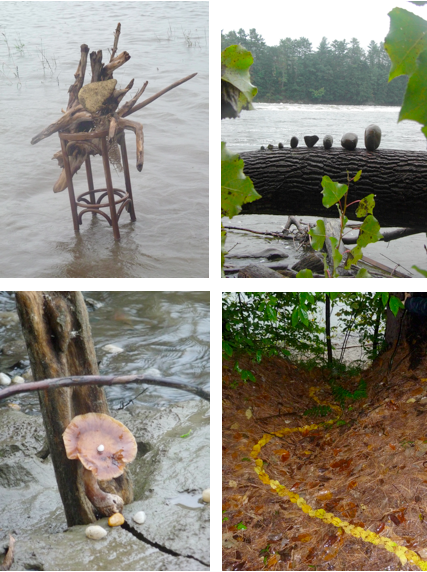
Four pieces
Art pieces by Jay Mead, Michaelyn Bachhuber, Nirmala Nair, and Dominic Stucker
By Dominic Stucker, Program Manager at Sustainability Leaders Network.
Systems thinking and creativity are essential for bringing about the transition to sustainability. Systems thinking helps us assemble diverse stakeholders to better understand the integrated economic, social, and environmental systems we seek to change. Creativity and art help us gain clarity in vision and tap into the breakthrough thinking necessary for innovating a new reality, a new relationship between people and planet. Fortunately, these leadership skills are mutually reinforcing, especially through making art in nature.
Immersing ourselves in nature, sitting quietly, eyes opened, eyes closed, we can hone our skills of observation, noticing patterns and processes that have evolved over millennia. Using all our senses, we can experience and learn from nature. Perhaps we see the streams, brooks, and river in a basin, noticing nature’s nested hierarchies. Or we reflect on the larger water cycle, a process that, instead of linear and polluting, is cyclical and cleansing. Gazing skyward from a soft bed of pine needles, we can observe the forest’s resilience in flexibility, trees swaying in the wind. Or we smell the pungent soil, part of annual cycle that returns sustenance to the trees’ roots. Perhaps we see the genius in a flower, tracking the sun and folding its petals at dusk; or in the capacity of a cactus to store water; or in the design of a feather. We can learn from and co-create with these natural systems.
I have had the privilege and joy of participating in several Art of Sustainability sessions with Vermont artist and educator, Jay Mead. Two that stand out were along the Housatonic River in rural Connecticut and along a wild part of the Connecticut River in Vermont. Jay invites participants to see nature anew through quiet observation, sensing, and play. The invitation includes being fully present, setting aside transient to do lists and deep-seated preconceptions about how the world works. Participants are asked to start from a place of unknowing – playful for some, meditative for others – being open for deeper wisdom to emerge.
Encouraged to accentuate patterns in nature, we created a wide variety of art from found materials. For me, I was drawn to the flow of water in each basin and created pieces that traced these lines (mine is the piece in the lower right, in the image above). Personally, I think I wanted greater flow in my own life, a balance of the dynamism and confidence of water as it makes its way through the world. Professionally, I am now conducting research on how climate change impacts water resources, and how we might cooperate in basins to adapt.
Needless to say, Jay is expert in helping people tap into their own creativity as a way to explore, express, and clarify visions for the future. In addition to personal discoveries, people often gain a greater sense of connection to the group and the place. One participant noted:
The Art of Sustainability session helped me to profoundly reconnect with (a) the natural system in which we live and (b) my own potential as a creative being. The result for me has been a deepening experience of a very powerful way of being in the world – a way of being that creates the space for me to show up for life differently, to connect with people differently, to ask different questions, and to generate different responses to the challenges I encounter. I hesitate to describe this as a NEW way of being – rather, in my heart, it feels like an entirely OLD way of being… but a way of being to which I had lost my connection. – Michael Dupee, Green Mountain Coffee Roasters, Senior Vice President for Corporate Social Responsibility, Vermont
The creative process is one of humility and co-creation with nature, with the vision for the piece often emerging through the process of creating it. Trista Patterson, for example, collected small red berries and wanted to create a heart shape alongside a stream flowing into the Housatonic River. The water, however, pulled some of the berries into the current, carrying them into eddies downstream and highlighting flows not visible to the casual observer. The lesson was one of letting go, of collaboration, of fully participating in the process and being open to an array of outcomes. In reflecting on the piece, Trista pointed out the importance in her own life of eddying out of the current, of taking time for herself in order to keep working at her highest capacity. She described the co-creative process in this way:
If I followed my heart and I put things where I thought they should be, nature would show me the patterns of places where things would eddy out all by themselves. And they would create their own patterns somewhere downstream, maybe not exactly to my intention, but maybe somehow more beautiful or more wild or more consistent with natural principles. – Trista Patterson, United States Forest Service, Ecological Economist, Alaska
Ultimately, the creative process helps us learn about ourselves, learn about our place in the world, and clarify our visions for the future. Another participant described what she got out of the session: “My vision is really powerful around healing work, which is an aspect of sustainability that I think is really important.” – Elaine Kohrman, United States Forest Service, Social Scientist, Oregon.
View this video, by Colleen Bozuwa, documenting our Art of Sustainability session along the Housatonic River.
From a systems perspective, Donella (Dana) Meadows, in her article Dancing with Systems (2002), describes the importance of letting go:
The future can’t be predicted, but it can be envisioned and brought lovingly into being. Systems can’t be controlled, but they can be designed and redesigned… We can listen to what the system tells us, and discover how its properties and our values can work together to bring forth something much better than could ever be produced by our will alone. We can’t control systems or figure them out. But we can dance with them!
Dana goes on to highlight some of the same qualities we practiced in Jay’s Art of Sustainability sessions as guidance for navigating the complex systems we seek to change. At least four are about observation and learning:
  • get the beat
  • listen to the wisdom of the system
  • expose your mental models to the open air
  • stay humble, stay a learner
These encourage us to notice the diversity of stakeholders in a system, flows of information, and behavior of the system over time. Dana encourages us to notice what works well before making changes and, when we intervene, to do so in the spirit of experiment, learning from our mistakes.
She goes on to describe these three nuggets of systems wisdom:
  • expand time horizons
  • expand thought horizons
  • expand the boundary of caring
When creating art with nature, we come to learn that all things are interconnected, that there are, for example, a great many people and natural processes to thank for the food on our plates. By expanding the geographic and temporal scope of care, we inform decisions that we make, decisions that impact people in distant places and futures, thus increasing our collective chances to survive and thrive. As another participant, Maria Carvajal, Founder of SuMar, Choices for Nature in Mexico noted, the larger purpose of social change work is “trying to integrate humans with the patterns of nature.”
These pieces of wisdom, present both in systems thinking and creativity, are essential for addressing the many challenges we face in bringing about a sustainable future for people and planet. They seek meaning, expansive possibilities, and the big picture, offering a profound sense of new possibilities. Sustainability is an art. And art helps us break through old ways of thinking to get to sustainable solutions.